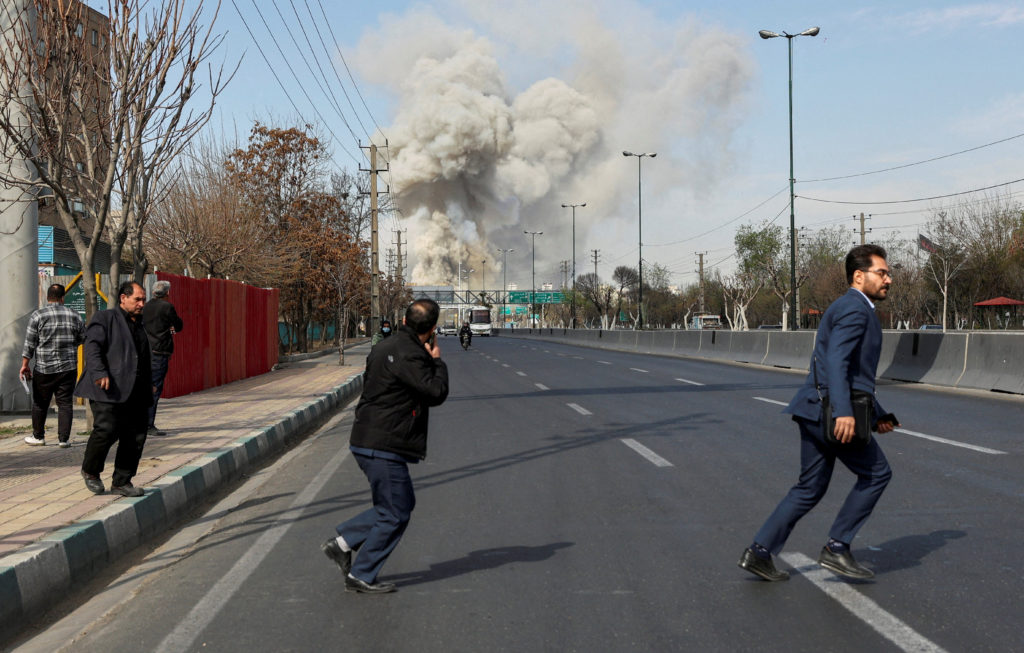
In a significant escalation of regional hostilities, Iran reportedly initiated a fresh series of assaults on Thursday, targeting Israeli positions, American military installations, and various nations across the wider Middle East. This new wave of strikes unfolded as Tehran issued a stark warning to the United States, indicating that Washington would face severe consequences for the alleged torpedoing of an Iranian warship. These expanding retaliatory actions by Iran occurred concurrently with a relentless six-day offensive by Israeli and American forces against Iranian targets. The conflict, which has seen daily intensification, has now reportedly impacted at least 14 additional countries, extending its reach far beyond the immediate flashpoints. Among the recent developments, Azerbaijan accused Iran of deploying drones in an attack on its territory on Thursday, an allegation that Tehran has since denied, further underscoring the volatile and complex nature of the ongoing regional confrontation.
The current widespread conflict has been escalating since its inception on Saturday, marking a period of intense military engagement and profound geopolitical shifts. Reports indicate that the war began with a series of devastating strikes by the United States and Israel against Iran, which notably resulted in the death of Iranian Supreme Leader Ayatollah Ali Khamenei on the very first day. Throughout the past week, American and Israeli leaders have articulated various objectives for their sustained campaign, including the degradation of Iran's military capabilities, the neutralization of its leadership, and the dismantling of its nuclear program. Furthermore, some statements from these leaders have hinted at a broader ambition to potentially effect a change in the Iranian government itself. Adding to the complex web of events, the U.S. Navy confirmed earlier in the week that it had successfully sunk an Iranian frigate in international waters off the coast of Sri Lanka, an incident that has undoubtedly fueled Iran's recent retaliatory posture and deepened the crisis.
As the conflict broadened its geographical scope and intensity, specific areas have witnessed dramatic developments. Israeli authorities, for instance, issued a comprehensive evacuation directive for all residents in the southern suburbs of Beirut, Lebanon, signaling a significant escalation of fighting with Hezbollah militants, who maintain strong ties to Iran. Concurrently, United Nations peacekeeping forces stationed in the region have documented active ground combat unfolding in southern Lebanon, indicating a dangerous new front in the hostilities. Reports also confirm that additional Israeli troops have crossed into Lebanese territory, further intensifying the military presence and raising concerns about a wider ground war. Meanwhile, the United States and Israel have continued their extensive bombardment of Iran, executing nationwide strikes aimed at crippling the country's military infrastructure, leadership command centers, and critical components of its nuclear development program, reflecting a sustained effort to achieve their stated strategic objectives.
The evolving dynamics of this conflict present a deeply concerning and increasingly unpredictable scenario for regional stability. Analysts suggest that the stated aims and operational timelines of the involved parties have shown considerable fluidity, contributing to an impression that the hostilities are becoming open-ended with no clear resolution in sight. Expert observers note that the death of Supreme Leader Ayatollah Ali Khamenei at the outset of the war introduces a significant variable into Iran's internal political landscape and its future strategic decisions, potentially leading to unforeseen shifts in its foreign policy and military actions. The widespread nature of the conflict, now impacting over a dozen countries, underscores the profound risk of further regional destabilization, with the potential for new actors to be drawn into the fray. This prolonged and expanding confrontation carries severe implications for global energy markets, international shipping lanes, and the broader geopolitical balance, signaling a protracted period of uncertainty and potential for humanitarian crisis.
In summary, the Middle East is currently gripped by an escalating cycle of military actions, with Iran launching new attacks in response to sustained Israeli and American bombardments. The conflict, now in its sixth day, has witnessed significant events, including the reported death of Iran's Supreme Leader and the U.S. sinking of an Iranian frigate, alongside a widening geographical impact across more than 14 nations. The situation remains highly volatile, characterized by shifting objectives and an increasingly open-ended trajectory, as indicated by various reports. Moving forward, observers will be closely monitoring for any further military escalations, potential diplomatic interventions—or the lack thereof—and the internal political ramifications within Iran following the loss of its top leader. The immediate future holds the potential for continued regional instability and the grave risk of a broader, more devastating conflagration.