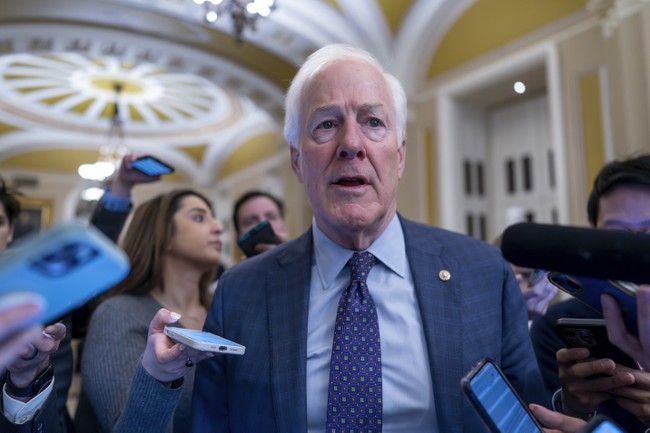
Former President Donald Trump has made an unprecedented intervention in the ongoing Republican primary runoff for the United States Senate in Texas, publicly demanding an immediate cessation of the contest. Citing concerns over party unity and the strategic allocation of resources, Trump announced his intention to endorse one of the candidates and called for the other to withdraw from the race without further delay. This directive, issued even before the runoff battle officially commenced, underscores a significant effort to consolidate Republican strength ahead of the general election. The primary pits seasoned Republican figures, incumbent Senator John Cornyn and current Texas Attorney General Ken Paxton, against each other in what has been described as a potentially costly and divisive intra-party struggle. According to statements from the former president, the continuation of this runoff is detrimental to the Republican Party's broader objectives and its ability to effectively challenge the Democratic nominee, James Talarico, whom Trump characterized as a 'Radical Left Opponent' who requires the party's undivided focus.
The backdrop to Trump's intervention reveals a complex strategic calculation within the Republican Party regarding the Texas Senate seat. Initially, some Republican strategists reportedly harbored hopes that Jasmine Crockett, a progressive figure, would emerge victorious from the Democratic primary. This outcome, sources indicated, was seen as potentially paving the way for an easier Republican victory in the general election, regardless of their own nominee, as Crockett's rhetoric was anticipated to become a focal point for national Republican campaigns aiming to portray the Democratic Party's leftward leanings. However, the unexpected victory of James Talarico in the Democratic primary has fundamentally altered this calculus. Talarico is perceived as presenting a more formidable challenge, with some observers noting his political style, described as 'Beto-ism,' could enable him to gain traction against a Republican Party potentially fractured by an acrimonious primary. The prospect of Senator Cornyn and Attorney General Paxton engaging in a protracted and expensive runoff, reportedly costing tens of millions of dollars, is viewed as a significant drain on resources that the GOP could otherwise deploy in other crucial midterm races across the nation, thereby weakening their overall electoral position.
In his forceful declaration, former President Trump emphasized his deep affection for Texas, a state he claims to have won by record margins on three occasions, asserting these were the highest vote totals ever recorded. He articulated that for the collective good of the Republican Party and the nation, the primary contest in Texas could not be permitted to continue. Trump's statement underscored the urgent need for Republicans to unify and concentrate their efforts entirely on defeating the Democratic challenger. He acknowledged that both John Cornyn and Ken Paxton had conducted strong campaigns but implied their performances were insufficient to warrant a prolonged and damaging runoff. The financial implications of this intra-party battle are a central concern, with reports suggesting that the candidates would expend substantial sums, potentially reaching tens of millions of dollars, in attacking each other. This expenditure is seen as a misallocation of vital funds that could otherwise be directed towards bolstering Republican candidates in other competitive races nationwide, particularly given the perceived strength of the Democratic opponent, James Talarico, whose political approach is viewed by some as a significant threat.
Trump's direct intervention in a state-level primary race, demanding a candidate's withdrawal, signals a powerful assertion of his continued influence within the Republican Party. This move highlights a broader tension between traditional party processes and the desire for top-down strategic alignment, particularly in high-stakes elections. Analysts suggest that such a public demand could test the loyalty of the candidates involved and the party apparatus in Texas, potentially setting a precedent for future intra-party disputes. The former president's emphasis on resource conservation and party unity against a 'radical left' opponent reflects a strategic imperative to avoid self-inflicted wounds that could jeopardize a crucial Senate seat. Should one candidate comply with Trump's demand, it would demonstrate the enduring weight of his endorsement and his capacity to shape electoral outcomes even after leaving office. Conversely, a refusal could lead to a more entrenched and bitter contest, further dividing the party and potentially emboldening the Democratic challenger, James Talarico, who might capitalize on Republican disunity and financial exhaustion.
The immediate future of the Texas Republican Senate primary now hinges on the responses of Senator John Cornyn and Attorney General Ken Paxton to former President Trump's unequivocal demand. This unprecedented intervention has transformed a conventional primary runoff into a high-stakes test of party loyalty and strategic discipline. The outcome will not only determine the Republican nominee for the Texas Senate seat but will also serve as a significant indicator of the former president's ongoing sway over the party's direction and internal dynamics. As the Republican Party navigates a challenging midterm election cycle, the ability to unify quickly and efficiently allocate resources against perceived threats like James Talarico will be paramount. All eyes will now be on Texas to see whether Trump's call for an immediate halt to the runoff will be heeded, and what implications this will have for the broader Republican strategy moving forward.