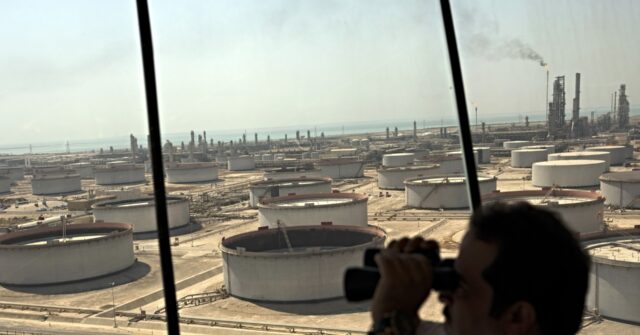
Saudi Arabia's critical Ras Tanura oil refinery, recognized as the nation's largest, has reportedly initiated a temporary shutdown following an alleged Iranian drone attack. Reports on Monday detailed dramatic visuals of smoke emanating from the facility, prompting immediate assessments of the damage. Sources close to the refinery indicated that the closure was a precautionary measure to evaluate the full extent of the impact from what is widely believed to be an assault by Iranian unmanned aerial vehicles. This incident unfolds amidst a period of heightened regional instability, closely following the launch of "Operation Epic Fury," a United States military initiative aimed at curtailing Iran's capacity to project power and engage in hostile actions. The strategic importance of the Ras Tanura facility, a key asset of the state oil company Aramco, underscores the gravity of this development for both regional security and global energy markets, even as initial assessments suggest no immediate widespread disruption to oil supplies.
The alleged strike on the Ras Tanura refinery is set against the backdrop of "Operation Epic Fury," a significant US military undertaking announced by President Donald Trump over the weekend. This operation, described as an effort to neutralize the world's leading state sponsor of terrorism's ability to inflict harm, has already yielded profound geopolitical shifts. President Trump confirmed on Saturday the death of Iran's elderly 'supreme leader,' Ayatollah Ali Khamenei, a development that has effectively left the Islamic Republic without its top spiritual and political authority. In the wake of this leadership vacuum, Iran's armed forces have reportedly targeted at least nine countries, including Saudi Arabia, over the weekend. The Ras Tanura refinery, with its immense capacity, represents a cornerstone of Saudi Arabia's oil infrastructure and a vital component of global energy supply chains, making it a highly symbolic and strategically significant target in the escalating regional conflict.
Specific details emerging from various news outlets paint a clearer picture of the incident. Bloomberg News, citing individuals familiar with the situation, reported that the Ras Tanura plant, which possesses a refining capacity of 550,000 barrels of oil daily, was shut down by Aramco as a precautionary measure while damage assessments were underway. The Saudi government subsequently confirmed that a "limited" fire had erupted within the refinery complex. Further corroboration came from The Times of Israel, which, referencing an anonymous industry source, attributed the blaze to an Iranian drone strike. Separately, Saudi officials explicitly stated that the Ras Tanura facility had been struck by two Iranian drones. Visual evidence, including video footage circulating from Saudi Arabia, depicted a massive plume of smoke engulfing the facility, reportedly filmed by a passing vehicle, while Reuters published images showing refinery workers assisting in the evacuation of local residents from areas surrounding the complex.
The implications of an attack on a facility as crucial as Ras Tanura are far-reaching, though early reports indicate no immediate significant impact on global oil supply or Saudi Arabia's overall capacity to export crude. However, this situation remains fluid, and prolonged disruption could alter the market landscape. The targeting of such vital energy infrastructure by Iran, especially in the context of "Operation Epic Fury" and the reported death of its supreme leader, signals a dangerous escalation of regional tensions. Analysts suggest that Iran's actions could be interpreted as a retaliatory measure or an attempt to demonstrate its continued capability to project power despite the internal leadership upheaval. The incident underscores the fragility of stability in the Middle East and highlights the potential for critical energy assets to become flashpoints in broader geopolitical conflicts, demanding close observation of both the repair timeline for Ras Tanura and Iran's subsequent strategic moves.
In summary, the temporary shutdown of Saudi Arabia's Ras Tanura oil refinery following an alleged Iranian drone attack marks a significant escalation in regional hostilities. This incident is inextricably linked to the broader "Operation Epic Fury," a US military initiative that has already seen the reported death of Iran's Supreme Leader, Ayatollah Ali Khamenei, and subsequent Iranian retaliatory actions across multiple nations. While initial assessments suggest no immediate widespread impact on global oil markets, the strategic importance of Ras Tanura, one of the world's largest refineries, means that any prolonged disruption could have substantial consequences. Observers will be closely monitoring the progress of damage assessment and repairs at the facility, as well as the evolving geopolitical landscape in the Middle East, particularly how the power vacuum in Iran and the ongoing US operation influence future actions and regional stability.