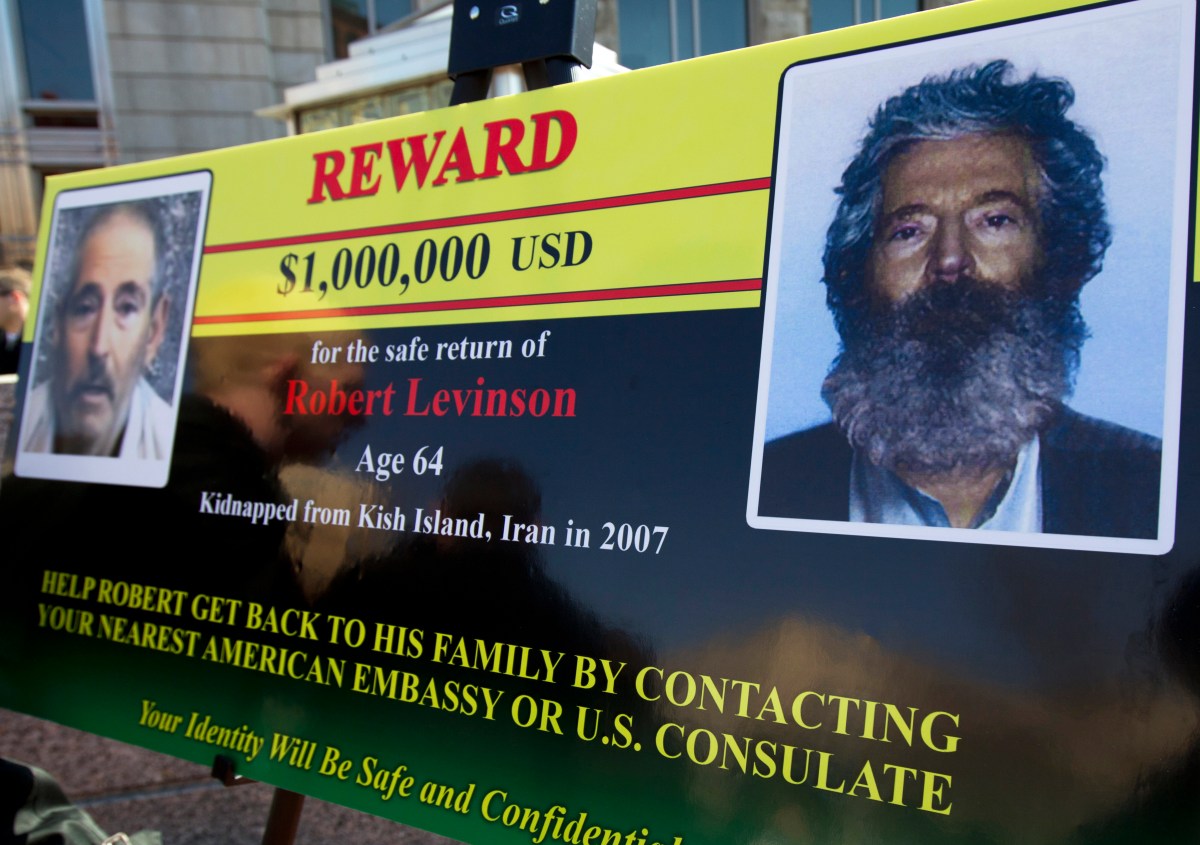
The relatives of Robert Levinson, a former U.S. Federal Bureau of Investigation agent who disappeared in Iran in 2007 and is widely believed to have perished while detained by Iranian authorities, are intensifying their plea to the United States government. They are advocating for the inclusion of specific conditions within any prospective nuclear agreement with Tehran: the repatriation of Levinson's remains and a comprehensive accounting for the circumstances surrounding his death. This renewed call for action follows the passing of Ayatollah Ali Khamenei, Iran's Supreme Leader, whose tenure oversaw the very administration the family holds culpable for Levinson's abduction, subsequent imprisonment, and ultimate demise. The family's public statement underscores their unwavering commitment to justice, asserting that the leader's death does not absolve Iran of its actions nor diminish their resolve in seeking full transparency and closure after nearly two decades of uncertainty regarding their loved one's fate.
Levinson's ordeal began on March 9, 2007, when he vanished from Kish Island, an Iranian territory, where he had reportedly traveled to meet with a confidential contact. For an extended period following his disappearance, U.S. government officials maintained that Levinson was engaged in a private investigation, operating independently. However, a comprehensive inquiry conducted by the Associated Press in 2013 brought to light a significantly different narrative, indicating that he had been dispatched on an unsanctioned mission by the Central Intelligence Agency. The U.S. government officially declared in 2020 that Levinson had died while in Iranian custody, a pronouncement that, tragically, has not been accompanied by the return of his physical remains or any official explanation from Iran regarding the specifics of his death or the location of his body, leaving his family in a prolonged state of anguish and uncertainty.
In their recent impassioned declaration, shared publicly on social media, the Levinson family articulated their profound frustration and their steadfast demand for answers. They emphasized that the passing of Iran's Supreme Leader, while significant, does not diminish the gravity of the actions taken against their father by the Iranian state, nor does it conclude their persistent struggle for truth and accountability. The family explicitly urged Iran to finally fulfill obligations it has evaded for almost two decades: to provide a complete and transparent account of what transpired, to facilitate the return of his remains to his grieving relatives, and to disclose the full truth surrounding his initial kidnapping, subsequent imprisonment, and eventual death. His son, Daniel Levinson, conveyed last year that the family firmly believes Iranian authorities possess precise knowledge regarding the whereabouts of his father's remains and the full details of his tragic end, highlighting the deep-seated conviction that Iran holds the key to their long-awaited closure.
The family's strategic timing in linking their demands to potential nuclear negotiations introduces a significant humanitarian dimension into the complex U.S.-Iran diplomatic landscape. Observers suggest that such a move aims to elevate Levinson's case from a purely individual tragedy to a critical component of broader international relations, potentially leveraging the prospect of a nuclear accord to compel Iranian cooperation. The death of Ayatollah Ali Khamenei, who presided over the Iranian system for decades, may be seen by the family as an opportune moment to press for a new approach from Tehran, hoping that a change in leadership might foster greater openness or a willingness to resolve long-standing humanitarian issues. However, analysts note that incorporating the return of remains and full accountability into a nuclear deal presents considerable challenges, given Iran's historical reluctance to concede on such matters and the intricate nature of these high-stakes negotiations, where each party seeks maximum leverage.
As the Levinson family continues its nearly two-decade-long quest for truth and closure, their recent appeal underscores the enduring pain and the unresolved questions surrounding Robert Levinson's fate. Their unwavering resolve to connect these humanitarian demands to any future nuclear discussions with Iran places significant pressure on U.S. policymakers to prioritize the return of his remains and a full accounting of his death. The coming months will reveal whether this renewed push, particularly in the wake of leadership changes in Iran, can finally break the long-standing impasse and bring the Levinson family the answers and the peace they have tirelessly sought. The international community will be watching closely to see if this deeply personal tragedy can find resolution amidst the broader geopolitical currents.