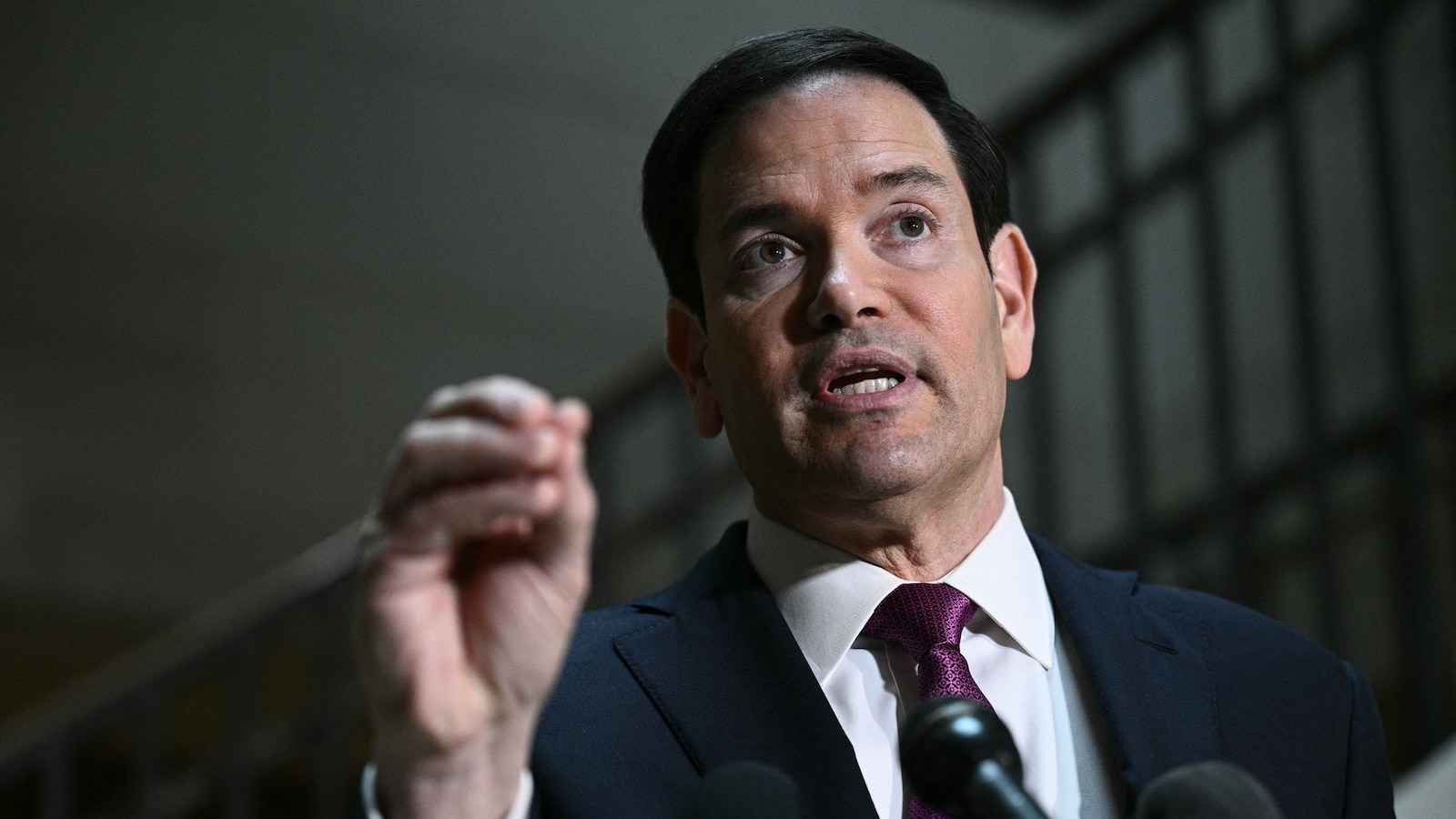
Secretary of State Marco Rubio offered a new explanation on Monday regarding the Trump administration's decision to undertake military action against Iran. According to Rubio, the United States launched its strike out of concern that Iran posed an "imminent threat" of retaliating against American interests. This anticipated retaliation, officials indicated, was expected to occur if Iran itself came under attack, specifically mentioning a potential strike by Israel. Speaking to journalists prior to a crucial briefing with the bipartisan 'Gang of 8' congressional leaders on Capitol Hill, Rubio clarified that Israel's actions did not compel the U.S. hand in this instance, nor was regime change in Iran the objective of the military engagement. He emphasized that the administration possessed intelligence suggesting Iran would respond aggressively against the U.S. if it perceived an attack from any quarter, including its regional adversaries.
This recent justification from the Trump administration adds a new dimension to the ongoing complexities of U.S.-Iran relations and regional stability. For years, tensions between Washington and Tehran have simmered, often escalating due to proxy conflicts and disputes over Iran's nuclear program and regional influence. The 'Gang of 8' briefing, which includes the House Speaker, Senate Majority and Minority Leaders, and the Chairs and Ranking Members of the House and Senate Intelligence Committees, underscores the gravity of the intelligence and the decision-making process involved in such military actions. Historically, U.S. policy in the Middle East has sought to deter aggression and protect allies, but this explanation suggests a pre-emptive posture based on anticipated enemy reactions rather than direct, immediate aggression against U.S. forces. The context of potential Israeli involvement further complicates the regional dynamic, highlighting the intricate web of alliances and rivalries that define the Middle East.
Elaborating on the administration's rationale, Secretary Rubio asserted that the threat was unequivocally "imminent." He explained that the United States possessed clear intelligence indicating that if Iran were to be attacked by any entity – whether the U.S., Israel, or another party – Tehran's immediate response would be directed against American assets. According to Rubio, the command structure within Iran had already delegated orders down to field commanders, preparing them for such a retaliatory scenario. He firmly stated that the U.S. was unwilling to "sit there and absorb a blow before we respond," suggesting a proactive stance to neutralize the perceived threat. Following Rubio's briefing, House Speaker Mike Johnson publicly supported this new justification, concurring that the potential consequences for the United States would have been "staggering" had the U.S. not acted concurrently with or in anticipation of an Israeli strike, thereby reinforcing the administration's claim of a necessary pre-emptive measure.
The implications of this stated doctrine — striking based on the anticipation of an adversary's retaliation to a third-party attack — are significant for international relations and U.S. foreign policy. Experts suggest that such a strategy, while framed as defensive, could be interpreted as a substantial expansion of pre-emptive strike justifications, potentially lowering the threshold for military engagement. This approach relies heavily on intelligence assessments of an adversary's intent and capabilities, raising questions about the certainty required for such decisive action. Furthermore, it could set a precedent for other nations to justify similar pre-emptive strikes based on perceived future threats, potentially increasing regional instability. The administration's emphasis on not seeking regime change and not being forced by Israel aims to control the narrative, but the broader impact on the delicate balance of power in the Middle East remains a critical area for analysis and observation.
In conclusion, Secretary of State Marco Rubio's recent statements provide a detailed, albeit controversial, insight into the Trump administration's reasoning behind its military action against Iran. The core justification centers on the belief that Iran posed an imminent threat of retaliating against U.S. interests if attacked, even by an ally like Israel. Officials maintained that the U.S. acted to prevent absorbing an anticipated blow, rather than being compelled by Israel or seeking a change in Iran's government. As this new rationale is absorbed by Congress and the international community, the focus will undoubtedly shift to monitoring Iran's response, assessing the long-term implications for regional stability, and scrutinizing the intelligence that underpinned such a significant pre-emptive decision in the volatile Middle East.