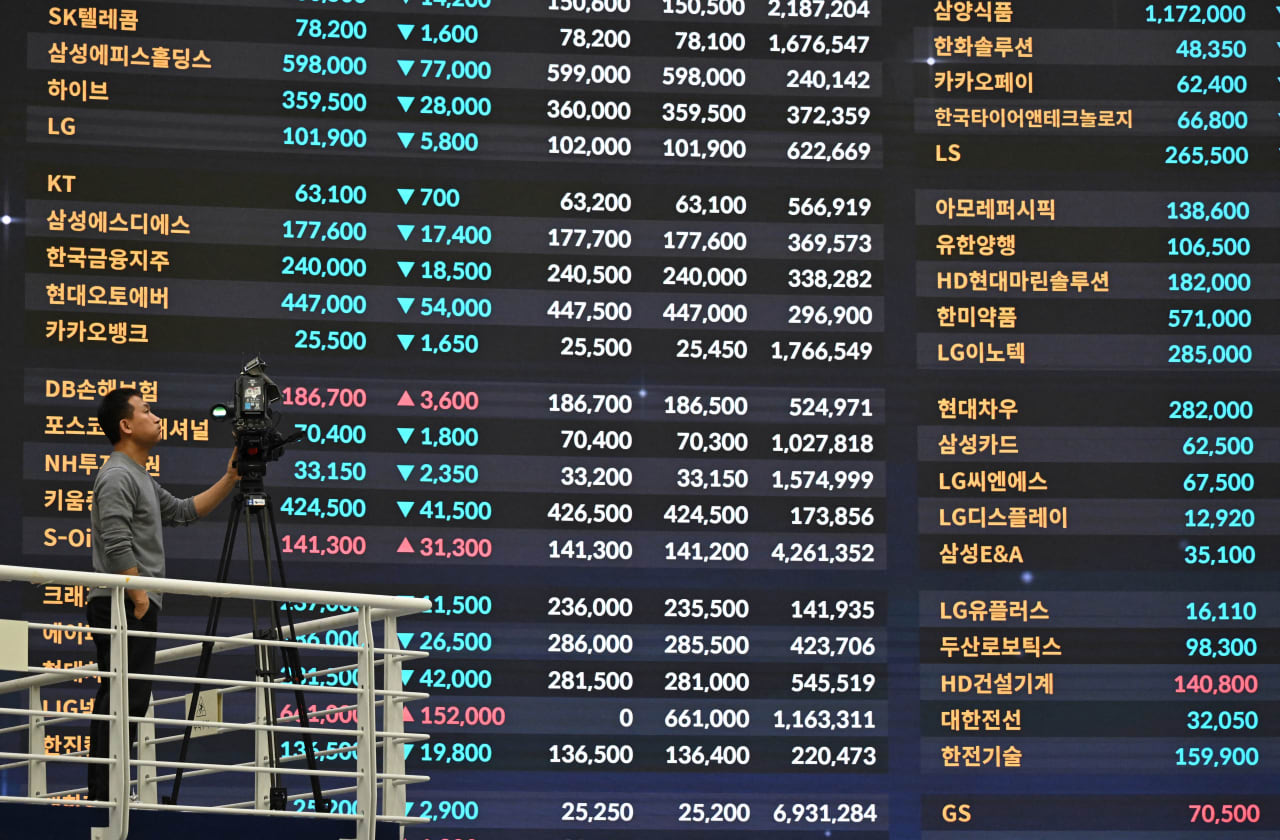
South Korea's benchmark stock index, the KOSPI, has experienced a precipitous decline, reportedly shedding a significant 20% of its value over just two trading sessions. This sharp downturn has been characterized as a market rout, with reports indicating that the severity of the selloff included a one-day drop of a magnitude not witnessed since the global financial crisis of 2008. The dramatic fall is primarily attributed to a cascade of events stemming from what market observers describe as excessive leverage among retail investors. As share prices tumbled, these highly leveraged positions triggered widespread margin calls, compelling individual investors to either inject more capital or face the involuntary liquidation of their holdings, thereby intensifying the downward pressure on the market. This rapid unwinding of positions by a crucial segment of the market has fueled concerns about broader financial stability and investor confidence in the region, marking a critical period for South Korea's equity landscape.
The KOSPI, or Korea Composite Stock Price Index, serves as a vital barometer for the economic health of South Korea, encompassing a broad range of its largest and most liquid companies. Its recent performance marks a stark departure from previous trends, highlighting underlying vulnerabilities within the market structure, particularly concerning the participation of individual investors. The concept of 'excess leverage' refers to the practice where investors borrow substantial amounts of money to amplify their investment capacity, a strategy that can significantly magnify returns during bull markets but equally exacerbate losses during downturns. The comparison to 2008 underscores the historical significance of this event, recalling a period of immense global financial turmoil. During that crisis, markets worldwide experienced severe contractions, and the current situation in South Korea, while distinct in its immediate triggers, evokes similar levels of investor anxiety and rapid value destruction, particularly impacting the retail segment that has increasingly utilized borrowed funds to participate in market rallies.
The mechanics behind the KOSPI's rapid descent are rooted in the interplay of leverage, margin calls, and forced liquidations. When investors purchase securities using borrowed funds, they are required to maintain a certain equity percentage in their accounts, known as the margin. A sharp market decline, such as the 20% drop reported over two sessions, can quickly erode this equity, causing brokerage firms to issue margin calls. These demands require investors to deposit additional funds to meet the minimum margin requirement, typically within a very short timeframe. Failure to do so results in 'forced liquidation,' where the brokerage automatically sells the investor's holdings to cover the outstanding debt. According to reports, this cycle of margin calls leading to involuntary selling by retail investors has created a powerful feedback loop, accelerating the selloff and transforming what might have been a significant correction into a full-blown market rout, as indicated by the story title's reference to the largest one-day drop since 2008.
The implications of such a sharp, leverage-driven market decline extend beyond the immediate financial losses incurred by retail investors. Market analysts suggest that this event could signal a shift in investor sentiment, potentially leading to a more cautious approach to risk-taking across the board. The substantial unwinding of retail positions, particularly those fueled by borrowed capital, often reflects a broader loss of confidence and can have ripple effects on consumer spending and overall economic activity in South Korea. While the source material focuses on the mechanics of the selloff, the magnitude of the KOSPI's drop, especially when compared to the 2008 crisis, raises questions about the resilience of the market and the potential for regulatory bodies to review policies concerning retail investor leverage. Such a significant market event could prompt a re-evaluation of risk management practices among financial institutions and individual investors alike, aiming to mitigate the systemic risks associated with highly leveraged trading.
In summary, the South Korean KOSPI index has endured a severe market rout, experiencing a 20% loss over two trading sessions, including a single-day decline of a magnitude not seen since 2008. This dramatic downturn is primarily attributed to the widespread use of excess leverage by retail investors, which triggered a wave of margin calls and subsequent forced liquidations, creating a self-reinforcing cycle of selling pressure. The event underscores the inherent risks associated with leveraged trading and its potential to amplify market volatility. Going forward, market participants and observers will be closely watching for signs of stabilization, the potential for policy responses aimed at market stability, and any shifts in retail investor behavior. The long-term impact on investor confidence and the broader South Korean economy remains a key area of focus following this significant market upheaval.