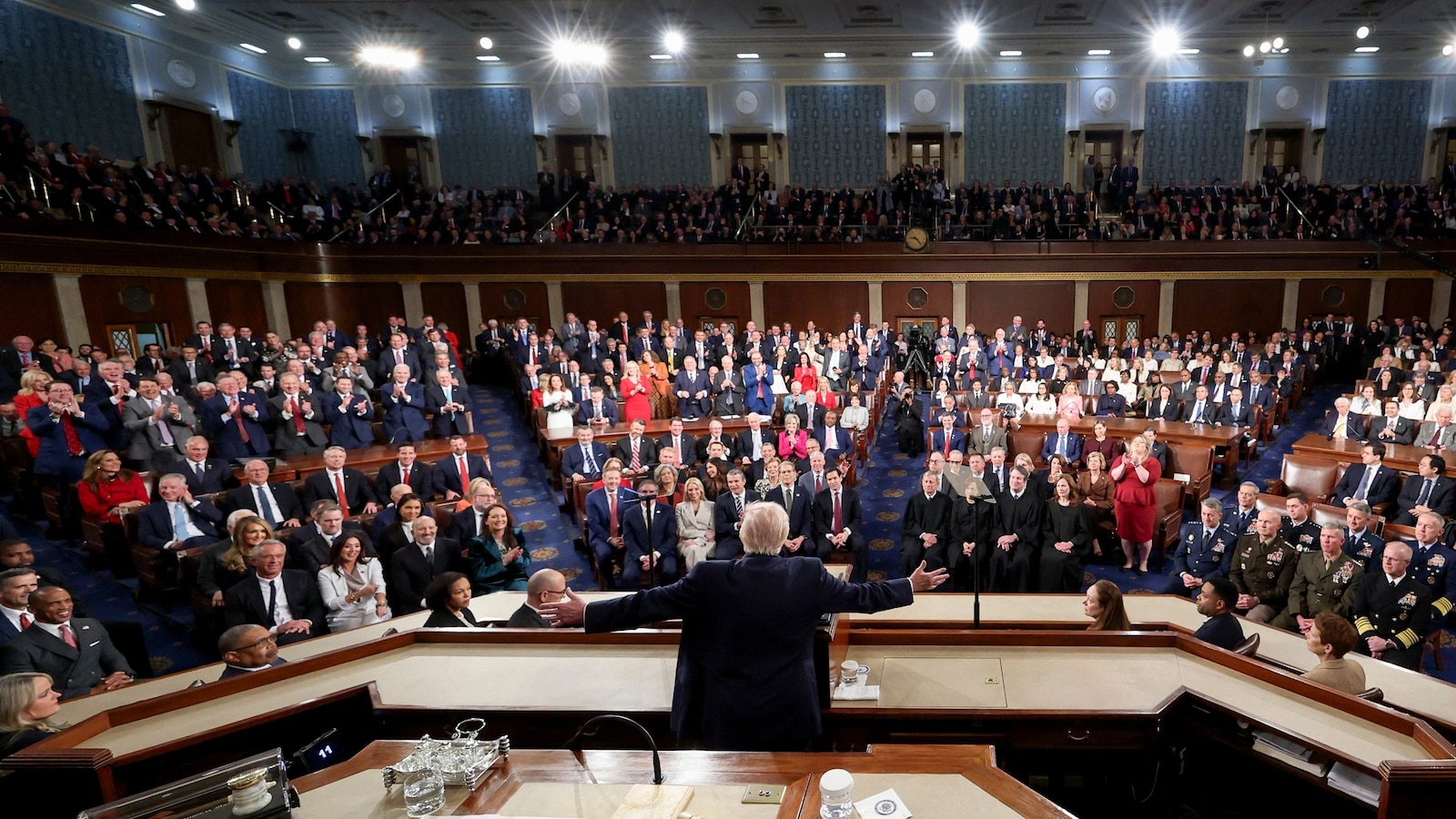
Following significant military operations conducted by the United States and Israel against targets within Iran on Saturday, a broad spectrum of reactions has emerged from members of the U.S. Congress. Reports characterized these actions as 'massive' in their scope and intensity, immediately igniting a fervent debate across Capitol Hill. While numerous Republican lawmakers have expressed robust approval for the decision, attributing it to former President Donald Trump and framing it as a decisive and necessary measure, their Democratic counterparts have largely called for increased transparency and comprehensive explanations regarding the nature and objectives of these strikes. This unfolding situation has also presented a rare instance of bipartisan consensus, with at least one prominent Democrat publicly endorsing the military intervention. The varied responses underscore profound divisions within Washington concerning foreign policy and engagement in the Middle East, as policymakers and international observers alike continue to assess the immediate and long-term implications of these forceful operations.
The recent military engagements unfold against a complex and long-standing backdrop of geopolitical tensions in the Middle East. For many years, Iran has been consistently identified by various international bodies and successive U.S. administrations as a significant destabilizing force across the region. The nation has frequently faced accusations of providing support to proxy groups and engaging in activities widely considered detrimental to regional stability and peace. Supporters of the recent strikes, particularly within the Republican party, have often highlighted deep concerns regarding the Iranian regime's internal governance and human rights record. For instance, according to reports, Representative Nancy Mace referenced allegations of the Iranian government's violent suppression of its own citizens, claiming that thousands have been 'slaughtered' in recent days. This perspective frequently frames military action as an essential countermeasure against what they describe as a 'state sponsor of terror,' aiming to curb its perceived malign influence.
The scale of the operations, described as 'massive' in initial reports, has intensified the congressional divide. Republican lawmakers, in their expressions of strong approval, have lauded the former President's decision as a demonstration of strength and resolve against a persistent adversary. They view the strikes as a critical step in deterring further Iranian aggression and protecting U.S. interests and allies in the region. Conversely, Democratic members of Congress have emphasized the critical need for accountability and detailed justification for such significant military actions. Their calls for greater transparency reflect concerns about potential escalation, the legal basis for the strikes, and the broader strategic objectives. The unusual bipartisan alignment, where a notable Democrat publicly supported the intervention, highlights the nuanced and often unpredictable nature of foreign policy discussions, even within deeply partisan environments. The swift and forceful character of these operations has undeniably sparked an intense and ongoing discussion among lawmakers, reflecting the profound gravity of the current geopolitical developments.
The differing reactions from Capitol Hill underscore the deep-seated ideological rifts concerning U.S. foreign policy and its role in the Middle East. This event is likely to fuel ongoing debates about the extent of executive power in initiating military action, the necessity of congressional authorization, and the criteria for intervention in complex international conflicts. Analysts suggest that the immediate implications, currently being assessed by international observers, could range from heightened regional instability to a potential recalibration of diplomatic efforts. The praise from Republicans, particularly for former President Trump's decisive action, signals a continued preference for assertive military solutions in countering perceived threats. Meanwhile, the Democratic emphasis on transparency and detailed explanations suggests a desire for a more cautious, deliberative approach, prioritizing de-escalation and a clear understanding of strategic outcomes before engaging in military force. This divergence indicates that future U.S. engagement in the Middle East will remain a contentious and highly scrutinized issue.
In summary, the recent substantial military actions by the United States and Israel against targets in Iran have triggered a significant and largely partisan response within the U.S. Congress. While Republican lawmakers have broadly endorsed the operations as a decisive move, Democrats have predominantly called for greater transparency and detailed justifications. This event, marked by its 'massive' scale according to reports, underscores the enduring divisions in Washington regarding foreign policy in the Middle East, even as it produced a rare moment of bipartisan agreement from one prominent Democrat. As international observers and policymakers continue to evaluate the immediate fallout, the debate on Capitol Hill is expected to intensify, focusing on the broader implications for regional stability and the future direction of U.S. engagement in a volatile part of the world. The demand for clarity and accountability will likely remain a central theme in the discussions to come.