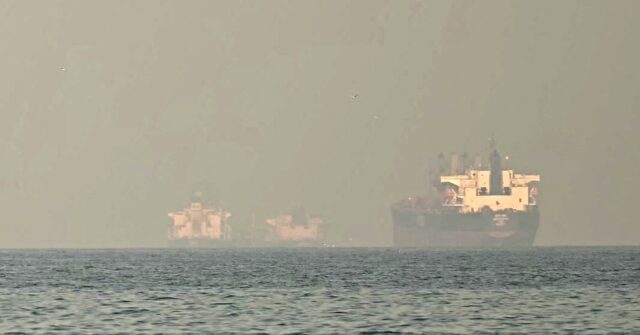
South Korean lawmaker Kim Young-bae recently disclosed that seven oil tankers, operated by the nation's refining companies, are currently immobilized within the critical Strait of Hormuz. This revelation, made on Thursday, highlights a rapidly escalating regional crisis that has effectively halted the passage of these vital vessels. The predicament stems from severe threats issued by the Iranian regime this week, which vowed to "burn" any oil tanker attempting to navigate the strategic waterway. These threats emerged in the wake of a series of targeted operations conducted by the United States and Israel against high-profile figures within the Iranian leadership. According to reports, these international actions have led to the deaths of several key members of the regime, including its most prominent figure, Supreme Leader Ayatollah Ali Khamenei. The prolonged immobilization of these tankers poses a significant risk to South Korea's national crude oil supply, prompting urgent calls for countermeasures from the business community.
The current standoff in the Strait of Hormuz is a direct consequence of a dramatic escalation in regional tensions, particularly following the "Operation Epic Fury" category of actions undertaken by the United States and Israel. These operations specifically targeted senior figures within the Iranian regime, leading to a profound shift in the geopolitical landscape. Among the casualties, as confirmed by various reports, was the Islamic Republic's Supreme Leader, Ayatollah Ali Khamenei, alongside other influential members of the leadership. This unprecedented targeting of the highest echelons of power has evidently provoked a forceful and aggressive response from Tehran. The Iranian regime's subsequent declaration to "burn" any oil tanker attempting to traverse the Strait of Hormuz is a clear and severe warning, designed to assert control and retaliate against perceived aggressions. The Strait itself is one of the world's most vital maritime chokepoints, through which a substantial portion of global oil supplies passes daily, making any disruption here a matter of international concern and economic instability.
During an emergency meeting of the ruling leftist Democratic Party on Thursday, lawmaker Kim Young-bae, who serves as a spokesperson on the National Assembly’s Foreign Affairs and Unification Committee, provided granular details on the unfolding situation. Kim explicitly stated that the seven South Korean-flagged tankers, all laden with crude oil destined for local refineries, are "effectively stranded" due to the "deteriorating regional conditions." He further elaborated on the immense cargo each vessel carries, noting that each tanker is transporting up to two million barrels of crude oil. This quantity, according to Kim, is equivalent to South Korea's entire daily petroleum consumption. Collectively, the seven immobilized ships represent a staggering seven days' worth of the nation's crude oil supply. As reported by the South Korean newspaper Chosun, Kim conveyed the business community's urgent appeal for "countermeasures" to mitigate the potential disruption to national oil consumption. A source from the business community, also speaking to Chosun, confirmed that the ships are "immobilized near the strait and cannot enter the route back to South Korea," underscoring the severe implications if the situation is "prolonged." The gravity of the situation was further highlighted by the presence of representatives from major South Korean conglomerates and industry associations at the emergency meeting, including Samsung Electronics, Hyundai Motor Company, LG, HD Hyundai Oilbank, SK, GS Caltex, Hanwha Ocean, the Federation of Korean Industries, and the Korea International Trade Association, all keenly monitoring the crisis.
The immobilization of South Korean oil tankers in the Strait of Hormuz signifies a dangerous escalation in Middle Eastern geopolitics, with profound implications extending far beyond regional borders. The targeted elimination of Supreme Leader Ayatollah Ali Khamenei, a figurehead of the Iranian regime for decades, represents an unprecedented blow that could destabilize the entire region for years. Analysts suggest that Iran's aggressive rhetoric and threats against shipping are a desperate attempt to reassert its influence and demonstrate its capacity for retaliation, potentially aiming to draw international attention away from its internal vulnerabilities post-Khamenei. For South Korea, the immediate concern is the security of its energy supply, as the nation is heavily reliant on imported crude oil. A prolonged disruption could trigger significant economic repercussions, impacting industries from manufacturing to technology, as indicated by the presence of diverse business leaders at the emergency meeting. The international community now faces the delicate task of de-escalating tensions while ensuring the freedom of navigation through a critical global artery. Experts are weighing potential responses, ranging from diplomatic interventions and multilateral negotiations to the possibility of naval escorts, though the latter carries inherent risks of direct confrontation with Iranian forces. The situation underscores the fragility of global supply chains in the face of geopolitical volatility.
In summary, the revelation of seven South Korean oil tankers stranded in the Strait of Hormuz underscores a critical juncture in regional and global affairs. The immediate challenge for South Korea is to secure the safe passage of these vessels and prevent a significant disruption to its vital crude oil supply, which could have cascading effects across its industrial economy. This crisis is a direct consequence of the Iranian regime's heightened threats, issued in retaliation for recent US and Israeli operations that resulted in the deaths of key Iranian figures, including Supreme Leader Ayatollah Ali Khamenei. Moving forward, the international community, particularly South Korea and its allies, will be closely watching for diplomatic initiatives aimed at de-escalation. The potential for further Iranian actions in the Strait, and the responses from the United States and Israel, remain key variables. The coming days will be crucial in determining whether this standoff can be resolved peacefully or if it will further exacerbate the already volatile geopolitical landscape of the Middle East, with significant ramifications for global energy markets and maritime security.