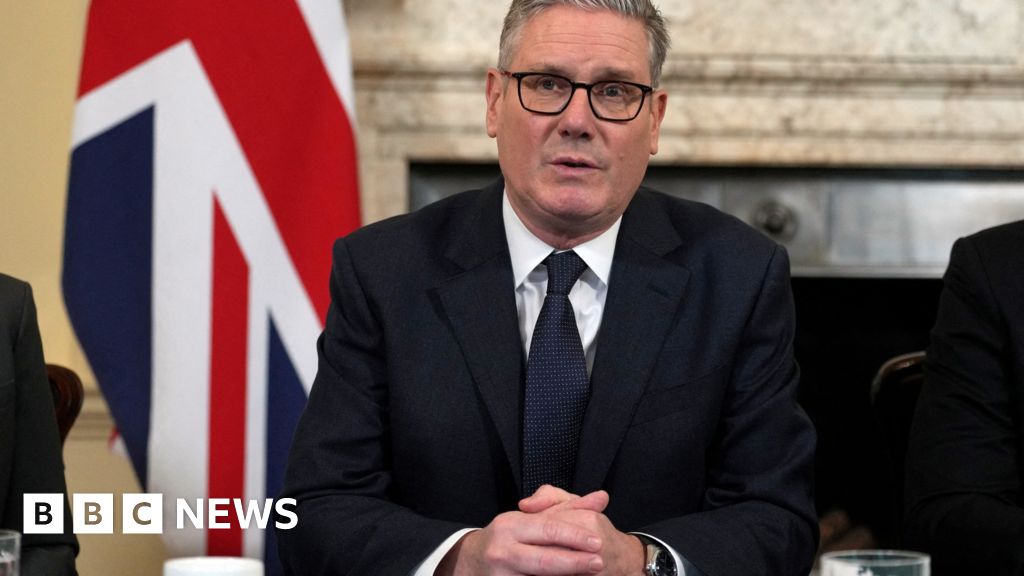
Prime Minister Sir Keir Starmer has convened an urgent Cobra committee meeting to address the significant repercussions of reported air strikes carried out by the United States and Israel against targets within Iran. This critical gathering of senior government ministers and officials was prompted by multiple accounts indicating explosions across at least five Iranian urban centers, including the capital city of Tehran, on Saturday. These military actions, according to various reports, occurred in the wake of a breakdown in diplomatic discussions earlier in the week, which had aimed to curb Iran's nuclear ambitions. Officials have confirmed that the United Kingdom played no part in these military operations, with a government spokesperson underscoring the nation's steadfast commitment to safeguarding British interests throughout the volatile region. The spokesperson further articulated a clear position against any additional escalation, expressing a strong desire to prevent the current situation from deteriorating into a broader regional conflict, according to official reports.
The decision by Prime Minister Starmer to personally chair a Cobra meeting highlights the profound seriousness with which the British government views these latest developments. A Cobra meeting, an acronym for Cabinet Office Briefing Room A, serves as an emergency committee where high-ranking ministers and officials converge to coordinate the government's strategic response to critical and rapidly evolving situations. These can range from grave national security threats to major domestic disasters. The immediate backdrop to these recent strikes is a long-standing international endeavor to prevent Iran from developing nuclear weapons, a strategic objective consistently championed by the United Kingdom. For several weeks leading up to the strikes, diplomatic channels had been engaged in sensitive negotiations designed to impose limits on Iran's nuclear program, a complex process that ultimately concluded this week without achieving a consensus. This failure to secure a negotiated agreement has markedly heightened anxieties regarding regional stability, rendering the subsequent military actions a significant point of concern for international observers.
Reports from Saturday detailed a series of explosions impacting at least five distinct urban centers across Iran, with the capital city of Tehran specifically identified among the affected locations. While the full extent of the damage and precise nature of the targets remain under assessment, the widespread nature of the reported incidents underscores the gravity of the military actions. The UK government, through its official channels, has been unequivocal in stating its non-involvement in these specific operations. A spokesperson for the government reiterated the nation's primary focus on protecting its citizens and assets within the Middle East, emphasizing that British foreign policy prioritizes stability. Furthermore, the official communication stressed a resolute stance against any further intensification of hostilities, articulating a clear objective to avert a wider conflagration in an already volatile part of the world. This position reflects a cautious approach aimed at de-escalating tensions rather than contributing to their rise, particularly in light of the recent diplomatic failures.
The convening of a Cobra meeting by the Prime Minister serves as a critical indicator of the perceived threat level and the potential for wider geopolitical ramifications. Such high-level emergency sessions are reserved for events deemed to pose a direct or indirect threat to national security or significant British interests. The failure of diplomatic efforts to constrain Iran's nuclear program, preceding these strikes, is widely seen as having removed a crucial barrier to military action and significantly increased the risk of miscalculation. Expert perspectives suggest that without a clear diplomatic off-ramp, the region faces an elevated danger of spiraling into a broader conflict, a scenario the UK government explicitly seeks to avoid. The reported strikes, therefore, are not merely isolated incidents but represent a potentially transformative moment in the ongoing tensions surrounding Iran's nuclear ambitions and its role in regional dynamics, demanding a coordinated international response.
In summary, Prime Minister Sir Keir Starmer's swift action to convene an emergency Cobra meeting underscores the British government's profound concern over the reported US-Israeli air strikes on Iran. These military operations, occurring shortly after the collapse of diplomatic negotiations aimed at limiting Iran's nuclear program, have significantly elevated regional tensions. The United Kingdom has clearly stated its non-participation in the strikes and its commitment to de-escalation, prioritizing the protection of British interests and the prevention of a wider conflict. Moving forward, the international community will be closely monitoring the situation for any signs of further escalation or renewed diplomatic efforts. The immediate challenge remains to manage the fallout from these strikes and to find a pathway back to stability in a region already fraught with complex geopolitical challenges.