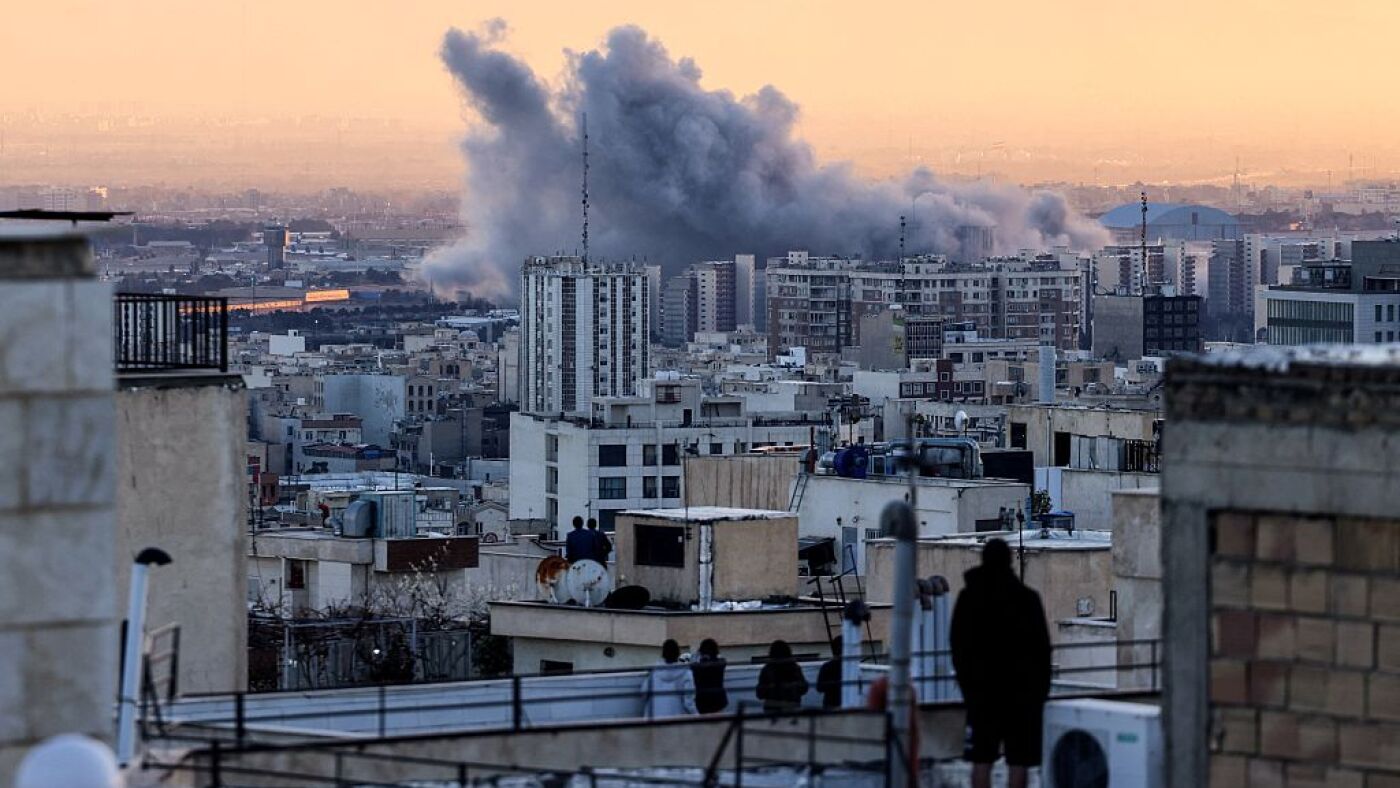
A new wave of Israeli military strikes targeted Tehran on Wednesday, marking the fifth consecutive day of escalating conflict in the region. These latest operations, described by the Israeli military as a "broad wave of strikes," focused on internal security command centers within the Iranian capital, alongside missile launchers and other critical systems. Concurrently, U.S. Central Command (CENTCOM) announced late Tuesday that Iran's defensive capabilities, including its air defense infrastructure and numerous ballistic missile launchers and drones, had been "severely degraded" following extensive U.S. and Israeli military actions against approximately 2,000 targets. Amidst these developments, Iranian authorities made the decision to postpone public mourning rituals for the recently deceased supreme leader, Ayatollah Ali Khamenei, which were initially scheduled to commence Wednesday evening, with Iran's state media attributing the delay to an "overwhelming response" from the public.
The ongoing hostilities represent a significant escalation in the protracted tensions between Iran and the allied forces of the United States and Israel. U.S. Central Command's assessment highlighted the substantial impact of the joint military campaign, with Admiral Brad Cooper, the commander of CENTCOM, stating in a video message that the U.S. operation was proceeding "ahead of our game plan." According to Cooper, U.S. forces successfully neutralized 17 Iranian vessels, notably including what he characterized as Iran's "most operational" submarine. In response to these actions, Iranian forces have reportedly launched over 500 ballistic missiles and more than 2,000 drones, indicating a robust, albeit potentially hampered, retaliatory capacity. This extensive military engagement has been accompanied by a substantial deployment of U.S. forces, marking the largest buildup in the Middle East since the 2003 Iraq War, underscoring the gravity and potential for further expansion of the conflict.
The Israeli military's renewed offensive in Tehran specifically targeted key infrastructure, including internal security command centers, which are vital for Iran's domestic stability and response mechanisms. The strikes also aimed at missile launchers and other strategic systems, suggesting an effort to further diminish Iran's offensive and defensive capabilities. The postponement of the three-day funeral ceremonies for Ayatollah Ali Khamenei, initially planned to begin on Wednesday evening, was a notable domestic consequence of the ongoing situation. According to reports from Iran's state media, the decision was made due to an "overwhelming response," though a new date for the mourning rituals has not yet been announced. On the U.S. side, officials confirmed the deployment of a formidable military contingent to the Middle East, comprising approximately 50,000 troops, 200 fighter jets, and two aircraft carriers, with Admiral Cooper indicating that "more capabilities were on the way" to reinforce the regional presence.
The intensification of military operations and the significant U.S. force deployment have prompted serious discussions and sharpened questions within Washington regarding the potential for the conflict to expand. Policymakers are grappling with the broader implications of such a large-scale engagement. Following a private briefing with senior Trump administration officials on Wednesday, Senator Richard Blumenthal (D-Conn.) expressed profound concern, stating he was "more fearful than ever" that the United States could ultimately find itself committing ground troops to the region. This sentiment reflects growing apprehension about the conflict's trajectory and the possibility of deeper U.S. involvement. The U.S. Central Command's assertion that Iran's defenses have been "severely degraded" could suggest a strategic advantage for the allied forces, but it also raises questions about Iran's future response capabilities and the potential for a prolonged, asymmetric conflict, further complicating the path to de-escalation.
In summary, the Middle East finds itself at a critical juncture as Israeli strikes resume on Tehran, coinciding with U.S. Central Command's claims of significantly degraded Iranian military capabilities. The postponement of public mourning rituals in Iran underscores the domestic impact of the ongoing hostilities, which have seen extensive U.S. and Israeli operations against Iranian targets and a robust, albeit potentially hampered, retaliatory response from Iran. The substantial U.S. military buildup in the region, unparalleled since the 2003 Iraq War, highlights the scale of the current engagement and fuels concerns among U.S. policymakers about the potential for further escalation, including the prospect of ground troop deployment. As the conflict enters its fifth day, the region remains volatile, with international observers closely watching for any signs of de-escalation or, conversely, a widening of the confrontation.