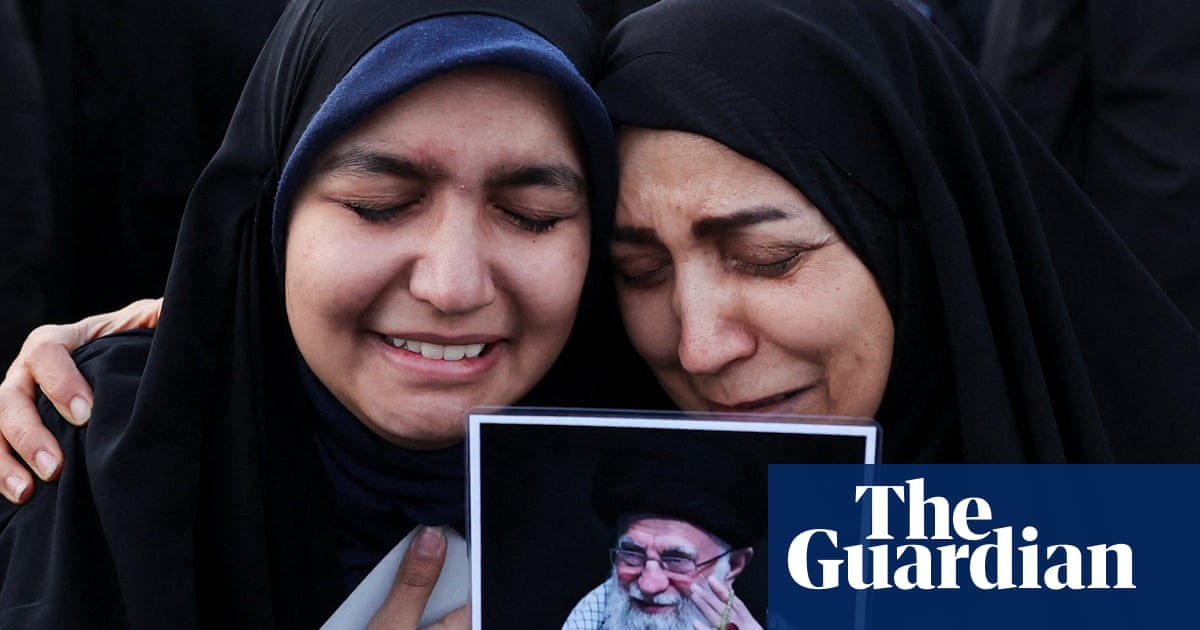
Ayatollah Ali Khamenei, Iran's revered Supreme Leader, has been confirmed dead following a significant assault attributed to the United States and Israel, as reported by Iranian state media early on Sunday. The attack, which reportedly targeted his compound in the heart of Tehran, marks a dramatic escalation in regional hostilities and casts profound uncertainty over the future trajectory of the Islamic Republic. Hours prior to the official confirmation from Tehran, former President Donald Trump publicly acknowledged Khamenei's demise, asserting that this event presented the Iranian populace with an unprecedented opportunity to reclaim their nation. In response, Iranian authorities have vehemently condemned the strike as a 'great crime' and have unequivocally vowed severe retribution. The paramilitary Revolutionary Guards have further escalated rhetoric, threatening to unleash their most potent offensive operation to date against American and Israeli installations, signaling a perilous new phase in the ongoing conflict.
The death of the 86-year-old Supreme Leader unfolds amidst what has been characterized by some observers as an ongoing US-Israeli campaign aimed at regime change within Iran. Khamenei, who held the ultimate political and religious authority in the country since 1989, represented the ideological bedrock of the Islamic Republic. His unexpected removal from power through military action fundamentally alters the geopolitical landscape of the Middle East, potentially igniting a power vacuum and intensifying existing regional rivalries. This incident follows a period of heightened tensions, with reports indicating a sustained effort by the US and Israel to undermine Tehran's influence and nuclear ambitions. The strategic implications of targeting such a high-profile figure are immense, suggesting a deliberate and calculated move within a broader, unfolding conflict that has now entered a critical and volatile 'day two' phase, as described by various international analyses.
Specific details emerging from the ground indicate that the fatal incident involved an airstrike directly hitting Ayatollah Khamenei's compound located in downtown Tehran. Visual evidence, including satellite imagery from Airbus, reportedly corroborates the extent of the damage, showing significant bombing at the site. Iranian state television, while confirming his death, framed the event with a narrative emphasizing his dedication, stating that his demise at his office demonstrated his unwavering commitment to his people and his responsibilities, particularly in confronting what Iranian officials term 'global arrogance.' Following the initial strikes, Iran reportedly launched its own counterassault. The Iranian cabinet, in a strongly worded statement, declared that this 'great crime will never go unanswered,' signaling an intent for a robust response. Furthermore, the Revolutionary Guards, a powerful military branch, issued a stark warning, indicating preparations for their 'most intense offensive operation' ever, explicitly targeting Israeli and American bases across the region.
The assassination of Ayatollah Khamenei carries profound implications for regional stability and the future of the Islamic Republic. Analysts suggest that the sudden vacuum in leadership could trigger internal power struggles within Iran, potentially leading to unpredictable shifts in domestic and foreign policy. The explicit attribution of the attack to the United States and Israel by Iranian state media, coupled with Tehran's vows of 'most intense' retaliation, significantly heightens the risk of a wider, more direct military confrontation across the Middle East. President Trump's statement, urging Iranians to 'take back' their country, could be interpreted as a direct endorsement of regime change, further fueling Iranian resolve for retribution. International observers are now closely watching for signs of succession within Iran's clerical establishment and the immediate military responses from all involved parties, as the situation threatens to spiral into an unprecedented regional conflict.
As the world grapples with the confirmed death of Iran's Supreme Leader Ayatollah Ali Khamenei, the immediate focus remains on the escalating military and political fallout. The alleged US-Israeli strike on his Tehran compound has undeniably plunged the region into a state of extreme uncertainty. With Iran's cabinet and the Revolutionary Guards pledging severe and unprecedented retaliation against American and Israeli targets, the potential for widespread conflict is alarmingly high. The coming days will be critical in observing the nature and scale of Iran's promised 'most intense offensive operation,' as well as the international community's response to this dramatic escalation. The future of the Islamic Republic, now without its long-serving spiritual and political guide, hangs in the balance, with profound consequences for global security.