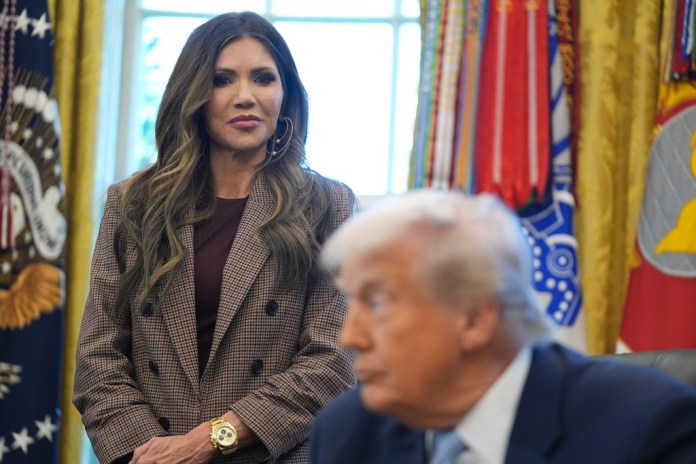
A wave of profound relief and even emotional celebration reportedly swept through offices of the Department of Homeland Security (DHS) on Thursday afternoon, following news that President Donald Trump had dismissed Secretary Kristi Noem from her high-profile position. Administration insiders, including senior DHS officials, conveyed to The Washington Examiner that while the initial announcement of Noem's sudden replacement at the helm of the nation's third-largest federal department caused momentary astonishment, this shock quickly gave way to widespread elation. The reported jubilation among those who had served under and alongside Noem and her special government employee adviser, Corey Lewandowski, was attributed to several months marked by controversy and negative media attention surrounding her leadership. One individual, speaking on condition of anonymity to discuss internal sentiments, described a scene where "people in the office are actually crying out of happiness," underscoring the depth of the positive reaction to the leadership change.
Kristi Noem had served in her capacity as Secretary for just over thirteen months, a period during which she played a central role in implementing the White House's significant mass deportation initiatives. Her public persona was frequently characterized by appearances before cameras and starring roles in visually engaging social media videos, projecting an image of active engagement and leadership. However, according to reports from senior officials both within Washington D.C. and across various field offices, the internal reality behind closed doors presented a stark contrast. These officials indicated that the operational environment under Noem and her team made their professional duties exceptionally challenging. The reported difficulties and the ensuing negative press had, according to these sources, created an untenable situation that ultimately led to the widespread relief observed upon her departure.
The internal discontent extended beyond mere operational friction, with specific criticisms pointing to a perceived detriment to the department's standing. A senior DHS official, in a text message reviewed by The Washington Examiner on Thursday afternoon, articulated a profound disillusionment with Noem's tenure. This official noted that while they typically harbored sympathy for principals facing public scrutiny and often believed negative narratives to be exaggerated or inaccurate, such a sentiment could not be applied in this particular instance. The official explicitly stated that Noem's actions had directly contributed to a "reputational loss of the DHS," suggesting a significant erosion of trust and public perception under her leadership. This sentiment highlights a deep-seated frustration among career professionals who felt their department's integrity and effectiveness were being undermined by the very leadership appointed to guide it, further explaining the intense emotional reaction to her removal.
The reported outpouring of joy and relief within the Department of Homeland Security following Secretary Noem's departure offers a compelling insight into the profound impact leadership styles can have on organizational morale and effectiveness, particularly within critical federal agencies. The stark contrast between Noem's public visibility and the internal difficulties cited by senior officials suggests a significant disconnect between external perception and internal reality. This situation underscores the challenges inherent in managing a vast department like DHS, which is responsible for national security and immigration enforcement, requiring not only policy acumen but also adept internal management and strong relationships with career staff. The alleged "reputational loss" attributed to her actions by a senior official indicates that the issues extended beyond mere personality clashes, potentially affecting the department's credibility and its ability to execute its vital mission. Moving forward, the administration will likely face the task of not only appointing a new Secretary but also addressing the underlying issues of morale and internal cohesion that appear to have plagued the department during Noem's tenure, aiming to restore confidence and operational stability.
In conclusion, President Trump's unexpected decision to remove Secretary Kristi Noem from her position at the Department of Homeland Security has reportedly been met with an overwhelming sense of relief and celebration among many within the agency. After more than a year marked by internal strife, challenging working conditions, and perceived damage to the department's reputation, officials and insiders expressed profound satisfaction with the change. The events highlight the critical importance of effective leadership and internal relations within large federal departments. As the administration now seeks a new leader for DHS, the focus will undoubtedly shift to how the incoming Secretary will address the reported morale issues and work to rebuild trust and operational efficiency within the nation's third-largest federal agency, ensuring its vital functions are carried out without internal impediments.