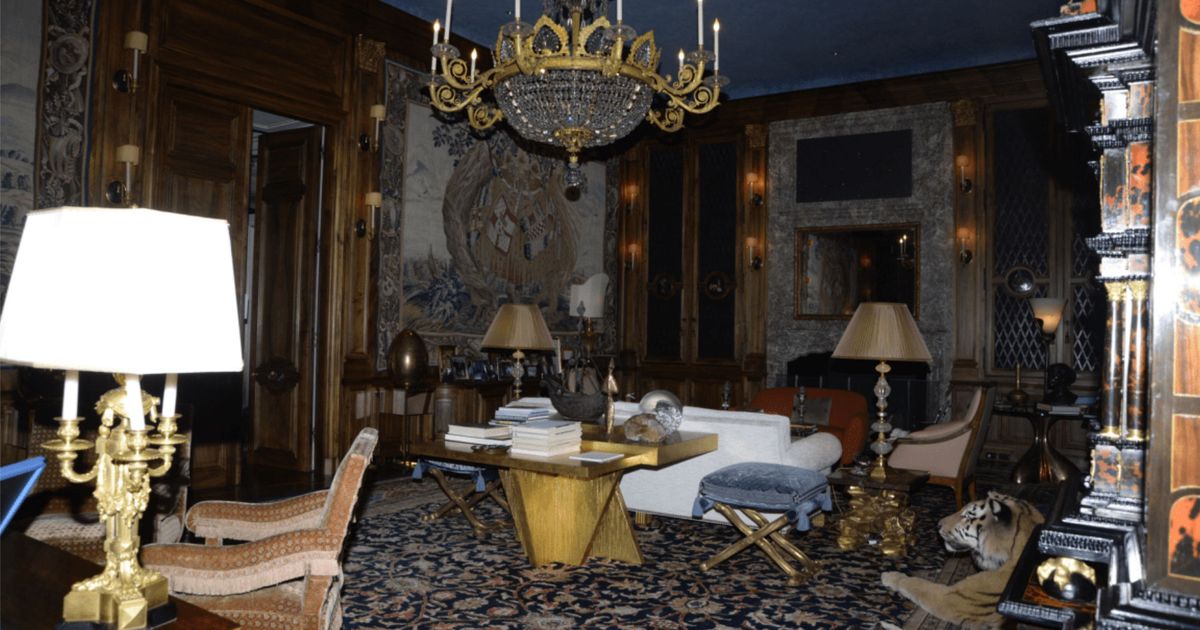
Recent disclosures have brought to light the extensive, previously understated involvement of the globally renowned interior design firm, Alberto Pinto, in furnishing the properties of convicted sex offender Jeffrey Epstein. A three-day auction held by a New Jersey auction house late last year featured nearly a thousand art and antique lots, many of which were identified by the New York Post as originating from Epstein's infamous East 71st Street townhouse. Among these items were a grand Viennese desk and a striking bronze sculpture depicting a life-sized nude woman. Notably, a significant number of these objects, including a bespoke tooled-leather bed frame from Epstein's private quarters and an ornate giltwood table from his office, bore descriptions such as 'ex-Alberto Pinto' or 'supplied by Alberto Pinto.' These attributions, according to reports, underscore the profound role the prestigious French-Moroccan designer played in shaping Epstein's living environments and highlight the enduring value associated with the Pinto brand, even amidst its association with such a controversial figure.
Alberto Pinto, who passed away in 2012, helmed one of the world's most esteemed interior design companies, catering to an exclusive clientele that included heads of state like former French President Jacques Chirac and King Hassan of Morocco, as well as royal families from Saudi Arabia and Qatar, prominent Russian oligarchs, and billionaires such as David Koch. The firm was celebrated for its meticulous customization of luxurious spaces, ranging from opulent homes to private jets and yachts, all tailored to the exacting specifications of its elite patrons. While a 2003 Vanity Fair profile had previously identified Pinto as the interior designer behind Epstein's New York townhouse, the full scope of their relationship remained largely unexamined for two decades. Following Alberto's passing, his sister, Linda Pinto, continued to lead the acclaimed firm, maintaining its reputation for unparalleled luxury design.
The depth of the connection between Epstein and the Pinto firm has become clearer with the recent release of documents by the Justice Department. This extensive cache, according to sources familiar with the materials, comprises nearly a thousand individual items, including emails, faxes, detailed invoices, conceptual mood boards, and photo CDs directly related to the Pintos. These records provide unprecedented insight into the prolonged and comprehensive engagement between Epstein and the design firm, far surpassing what was previously understood. The sheer volume of correspondence and project documentation indicates a relationship that was not merely transactional but deeply embedded in the creation and maintenance of Epstein's personal spaces. The auction items, explicitly labeled with Pinto's name, serve as tangible evidence of this enduring professional relationship, connecting the firm's high-end aesthetic directly to Epstein's controversial properties.
The revelation of such an extensive collaboration between a design firm of Alberto Pinto's international stature and Jeffrey Epstein raises significant questions about the networks and services available to individuals of extreme wealth, regardless of their moral standing. While other prominent names in architecture and design, such as Gensler, Neri Oxman, and Tom Pritzker, have also appeared in Epstein's files, officials state that the Pintos occupy a 'special place' within the correspondence, suggesting a uniquely deep and sustained professional bond. Experts suggest this highlights how elite service providers, often operating within highly discreet circles, can become integral to the lives of their powerful clients. The fact that items from Epstein's estate are still being marketed with the 'Alberto Pinto' attribution, according to reports, underscores the enduring prestige of the designer's name, even when associated with infamy, reflecting a complex interplay of brand value and ethical considerations in the luxury market.
In conclusion, the recent auction and the Justice Department's document dump have significantly expanded our understanding of the Alberto Pinto firm's long-standing and extensive role in crafting Jeffrey Epstein's opulent environments. From bespoke furniture to comprehensive design schemes, the evidence points to a relationship far more profound than previously acknowledged, intertwining one of the world's most prestigious design houses with a figure synonymous with depravity. As further details from the nearly 1,000 related documents are potentially scrutinized, the full implications of this association for the luxury design industry and the broader networks that facilitated Epstein's lifestyle may continue to unfold, offering a stark look into the intersection of wealth, power, and accountability.