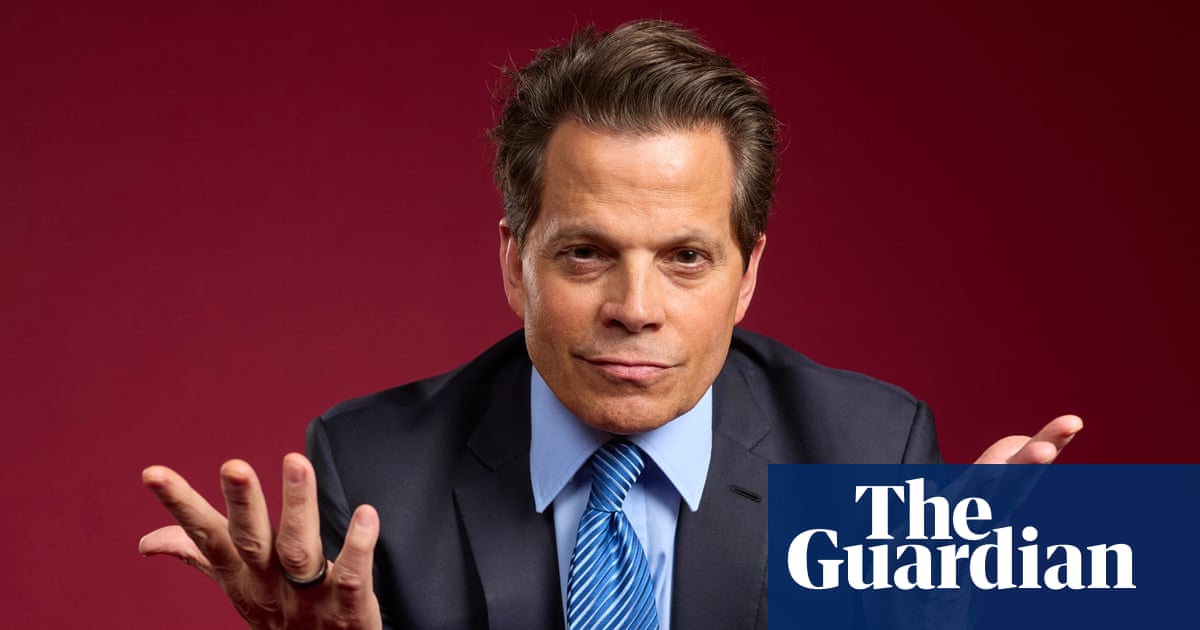
Anthony Scaramucci, a financier and broadcaster who briefly served in the Trump administration, has offered a trenchant assessment of former President Donald Trump's personal and political relationships, asserting that genuine friendship is absent from Trump's interactions. According to Scaramucci, individuals who claim close ties with Trump are either overstating their connection or fundamentally misunderstanding its nature. He posits that in Trump's sphere, every person is essentially a "transaction," a perspective he claims stems from over three decades of a complicated, often adversarial, association with the former president. Scaramucci, currently one of Trump's most outspoken critics, suggests his unique insight comes from this prolonged engagement, allowing him to discern the true character and potential hazards posed by the former commander-in-chief. This candid evaluation comes as Scaramucci continues a demanding schedule, with discussions frequently circling back to his enduring entanglement with Trump, underscoring the mutual, almost haunting, presence they hold in each other's narratives. His current stance marks a significant evolution from his brief White House tenure, solidifying his role as a penetrating voice against his former boss.
The public's most vivid recollection of Anthony Scaramucci often centers on his remarkably short, yet memorable, eleven-day stint as the White House communications director in July 2017. During this period, his distinctive, energetic demeanor and pronounced Italian-American accent from New York captivated audiences, making him a subject of both intense scrutiny and widespread jest. Reports from the time noted his rapid rise and fall, with his brief political career becoming a cultural touchstone. Indeed, the popular sketch comedy show "Saturday Night Live" famously characterized him as "human cocaine," highlighting his perceived intensity. Scaramucci has fully embraced this chapter, even humorously adopting his tenure as a unit of time, as evidenced by his tweet noting that former British Prime Minister Liz Truss's time in office equated to "4.1 Scaramuccis." His relationship with Trump, however, predates this brief political foray by over three decades, initially characterized as a state of "non-friendship" that has since escalated into outright animosity. This long-standing, often contentious, dynamic is described by Scaramucci as a "New Yorker" style of fighting, where neither party shies away from confrontation, and a perceived slight is met with immediate retaliation.
Scaramucci's candid observations extend beyond mere historical recounting, delving into what he perceives as a profound understanding of Donald Trump's operational psychology. While acknowledging the existence of "Trump derangement syndrome," a term often used to dismiss critics, Scaramucci asserts he suffers from "Trump reality syndrome." This self-diagnosis, according to him, signifies an acute awareness of Trump's fundamental character, his typical actions, his capabilities, and the inherent dangers he presents. This claimed insight, Scaramucci suggests, is a direct result of their protracted and often confrontational association. He elaborates on their unique dynamic, stating that their interactions resemble a "New Yorker" style of engagement, implying a direct, no-holds-barred approach. He further claims that Trump generally refrains from directly attacking him because the former president understands that Scaramucci will inevitably respond in kind, creating a perpetual cycle of challenge and counter-challenge. This ongoing public sparring positions Scaramucci not merely as a former aide, but as a persistent and well-informed adversary, capable of offering a unique perspective on the former president's strategic and personal inclinations.
Anthony Scaramucci's insights offer a critical lens through which to examine the nature of power and personal relationships within high-stakes political environments, particularly concerning figures like Donald Trump. His assertion that Trump views individuals as mere "transactions" rather than friends carries significant implications for understanding the loyalty dynamics and decision-making processes within Trump's orbit. This transactional approach, if accurate, suggests a leadership style where utility and immediate benefit supersede personal bonds, potentially explaining the frequent turnover and dramatic departures observed during and after Trump's presidency. Scaramucci's transformation from a brief insider to a vocal opponent also highlights the complex journey many former associates undertake, often leveraging their intimate knowledge to provide critical commentary. His "Trump reality syndrome" claim positions him as someone who believes he has moved beyond emotional reactions to a pragmatic understanding of the former president, offering a perspective that purports to be grounded in long-term observation rather than fleeting sentiment. This analysis suggests that Scaramucci's ongoing critique is not just personal vendetta but a calculated effort to articulate what he perceives as fundamental truths about Trump's character and its potential societal impact.
In conclusion, Anthony Scaramucci remains a compelling and often provocative voice in the ongoing discourse surrounding Donald Trump. His unique position as a former, albeit brief, White House insider, coupled with a decades-long, tumultuous relationship with the former president, lends a distinct weight to his critiques. Scaramucci's central argument — that Trump's relationships are fundamentally transactional rather than based on genuine friendship — provides a consistent framework for his analysis of Trump's actions and motivations. As he continues his public life as a financier and broadcaster, Scaramucci shows no signs of retreating from his role as a prominent detractor, often engaging in what he describes as a "New Yorker" style of verbal combat. His continued presence and pointed observations ensure that the complex, often fraught, dynamic between these two figures will likely remain a subject of public fascination, offering ongoing insights into the personality and political strategies of Donald Trump.