Recent military actions undertaken by former President Donald Trump concerning Iran are poised to ignite a significant constitutional debate regarding the scope of executive authority in initiating armed conflicts, according to reports. This contentious issue, which could ultimately be decided by the U.S. Supreme Court, presents a potential opportunity for the court's conservative majority to significantly redefine the balance of power between the executive and legislative branches concerning military engagements. The implications of such a judicial review are far-reaching, potentially diminishing Congress's historical ability to limit a president's unilateral warmaking capabilities. This looming confrontation brings renewed attention to a critical exchange from nearly two decades ago, involving a current Supreme Court justice and a then-senator who would later become president, underscoring the enduring relevance of this constitutional question in contemporary foreign policy.
The historical tension between the executive and legislative branches over the power to declare war is a foundational aspect of American governance, rooted in the Constitution's division of powers. While Congress is explicitly granted the authority to declare war, presidents have frequently asserted their role as Commander-in-Chief to undertake military actions without formal congressional declarations. The current situation, stemming from former President Trump's actions in Iran, could force the Supreme Court to weigh in on this long-standing dispute, potentially setting a precedent that dramatically alters this delicate balance. For conservative justices, as indicated by analyses, this scenario might represent a long-anticipated chance to solidify executive power in military matters, aligning with a broader judicial philosophy that often favors a strong presidency, particularly in national security contexts. Such a ruling could fundamentally reshape how the United States engages in international conflicts, concentrating more authority in the hands of the president.
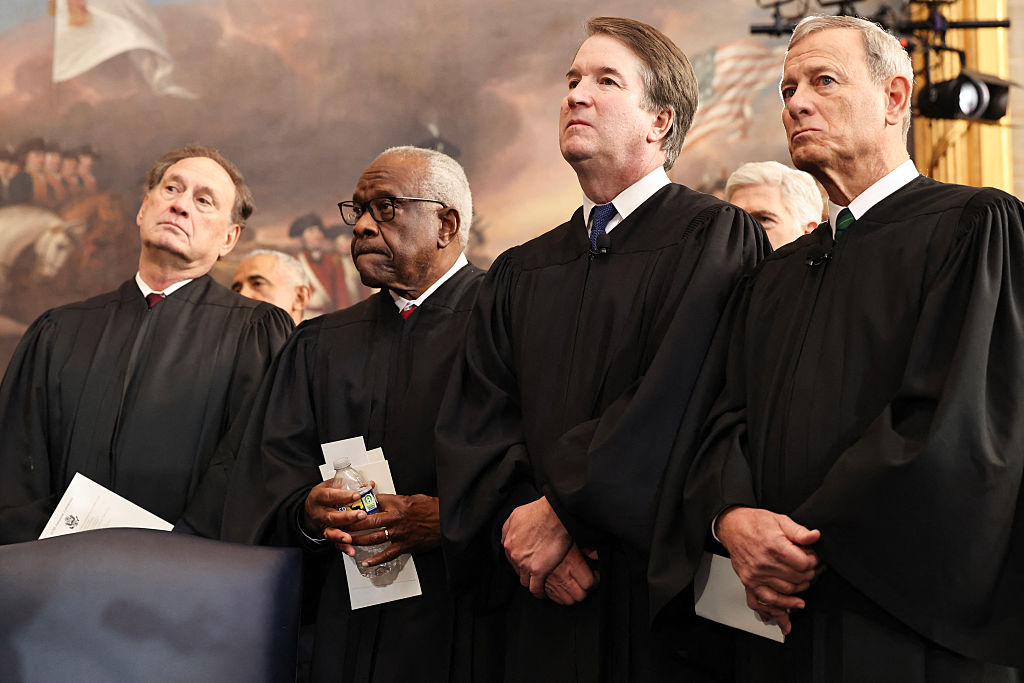
The potential judicial showdown casts a spotlight on a pivotal moment during Justice Samuel Alito's 2006 Supreme Court confirmation hearing. As recounted in an upcoming season of The Lever's Master Plan podcast, then-Senator Joe Biden pressed Alito on a crucial constitutional question. Biden specifically asked Alito whether a president possesses the inherent authority to launch an invasion of a country like Iran without explicit approval from the American populace or the United States Congress, unless an immediate and demonstrable threat to national security necessitated such swift action. Alito's response, which has gained significant contemporary relevance following former President Trump's military involvement in Iran, indicated that the matter was not definitively settled. He acknowledged the president's powers as commander-in-chief and recognized a general consensus, supported by previous legal precedents, for the executive to undertake military action independently during emergencies where congressional response time is insufficient. This nuanced stance highlights the complex legal landscape surrounding presidential war powers, particularly in situations perceived as urgent.
Should this constitutional question ultimately reach the Supreme Court, the implications for the separation of powers and future U.S. foreign policy would be profound. A ruling that significantly expands presidential authority to initiate military action without explicit congressional approval could effectively diminish the legislative branch's constitutional role in overseeing and authorizing military engagements. This shift would empower future presidents to deploy military force more unilaterally, potentially leading to increased executive discretion in international conflicts and a reduced check on presidential warmaking. Experts suggest that such a development could fundamentally alter the democratic process of engaging in war, moving it further away from congressional deliberation and public consent towards executive prerogative. The outcome of such a case would not only interpret existing law but effectively redefine the practical application of war powers for generations to come, potentially setting a precedent for how the U.S. engages with global security challenges.
In conclusion, the actions taken by former President Donald Trump regarding Iran have inadvertently set the stage for a potentially landmark legal battle over presidential war powers. The prospect of the Supreme Court weighing in on this long-standing constitutional debate, particularly given Justice Alito's past remarks on executive authority in emergencies, underscores the high stakes involved. A decision favoring expansive presidential powers could fundamentally alter the balance between the executive and legislative branches, granting future presidents greater autonomy in deploying military force. Observers will closely monitor any legal challenges arising from Trump's Iran actions, as they could serve as the catalyst for a judicial redefinition of war powers, with lasting consequences for American democracy and its role on the global stage.