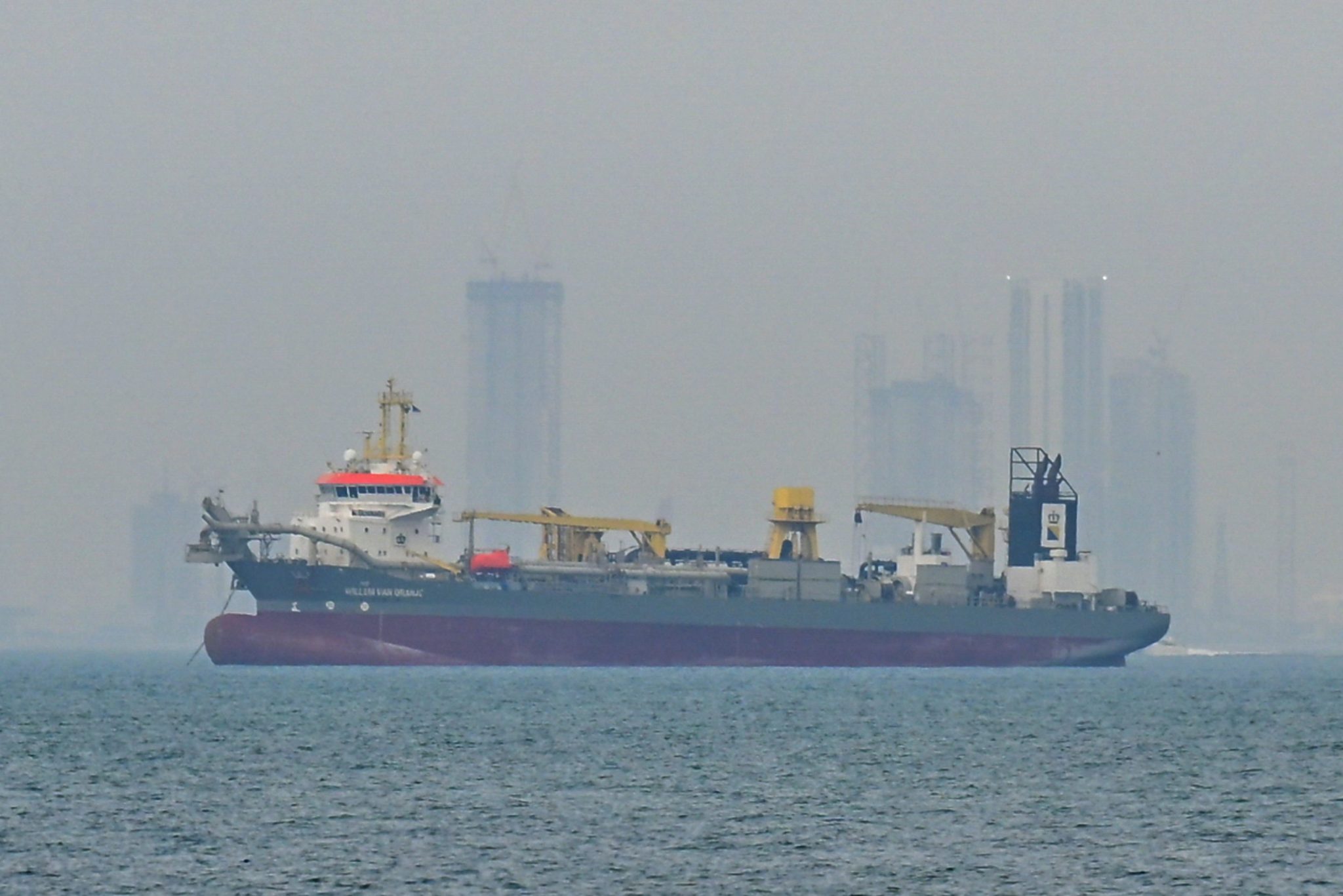
Recent maritime incidents in the waters surrounding the Arabian Peninsula, including an oil tanker catching fire off the coast of Oman and reports of other vessels being targeted, have ignited serious concerns about global economic stability. These events, occurring on Sunday, just a day after joint U.S. and Israeli military actions commenced against targets in Iran, are viewed by experts as a dangerous new front in the escalating regional conflict. The critical area where these attacks took place is intrinsically linked to the Strait of Hormuz, a narrow yet immensely vital maritime passage. Analysts are now warning that any sustained disruption to this crucial chokepoint could precipitate a severe worldwide economic downturn. Bob McNally, founder of Rapidan Energy Group and a former energy advisor to the George W. Bush administration, conveyed to CNBC on Saturday that an extended closure of the Strait of Hormuz would inevitably lead to a "guaranteed global recession," underscoring the gravity of the current situation.
The Strait of Hormuz holds unparalleled strategic importance for the world's energy markets, serving as the sole sea passage from the Persian Gulf to the open ocean. This narrow waterway, which at its most constricted point measures less than 30 miles across, is the conduit through which a substantial portion of the planet's energy supply flows. On an average day, approximately 20 million barrels of crude oil, representing about one-fifth of the world's total liquid petroleum consumption, traverses this strait. Beyond crude oil, the passage is also crucial for the transportation of liquefied natural gas (LNG); reports from the Energy Information Administration indicate that in 2024, roughly one-fifth of all globally traded LNG moved through the Strait of Hormuz. Given its pivotal role, any instability in the region, particularly renewed conflict involving Iran and potential retaliatory actions, swiftly transforms this seafaring route into a strategic chokepoint with far-reaching global economic consequences.
The recent targeting of maritime assets, as reported by various tracking organizations, signals an immediate escalation of risks for commercial shipping navigating these sensitive waters. With each passing day that such attacks persist, the willingness of vessels to undertake the journey through the Strait of Hormuz diminishes, leading to fewer ships taking the inherent dangers. This reduction in traffic, even if partial, directly threatens the consistent flow of global energy supplies. While the prospect of crude oil prices soaring into triple digits might seem alarming, experts are increasingly cautioning that this could be among the lesser concerns if the Strait faces prolonged disruption. The sheer volume of energy commodities, specifically the 20 million barrels of oil and significant LNG shipments, that rely on this passage means that an extended closure would not merely impact energy costs but could deliver an assured and devastating blow to the global economy, far beyond simple price fluctuations.
The renewed intensity of conflict in Iran, coupled with the potential for the regime's reprisal attacks across the broader Middle East, has thrust the Strait of Hormuz back to the forefront of global recession anxieties. Expert analysis suggests that even a partial or prolonged interruption of petroleum and natural gas supplies through this critical maritime artery could send shockwaves through the world economy, potentially forcing it into a significant contraction. The vulnerability of such a concentrated flow of vital resources at a single, narrow geographical point creates an immense systemic risk. As Bob McNally, a seasoned energy advisor, articulated, the economic fallout from a sustained closure would be so profound as to guarantee a global recession, highlighting the interconnectedness of energy security and worldwide financial stability. This scenario underscores how regional geopolitical tensions can rapidly translate into universal economic crises, impacting industries, markets, and consumers far beyond the immediate conflict zone.
In summary, the recent maritime incidents near the Strait of Hormuz, occurring amidst heightened U.S. and Israeli military actions against Iran, represent a critical escalation with profound global economic implications. The Strait, a non-negotiable chokepoint for approximately 20% of the world's liquid petroleum and a significant portion of its LNG, is now at the epicenter of recession fears. Experts warn that any sustained disruption to this vital passage could trigger a "guaranteed global recession," making the prospect of soaring oil prices seem like a minor concern. As the situation unfolds, international stakeholders will be closely monitoring the security of this waterway and diplomatic efforts to de-escalate tensions, understanding that the stability of global energy markets and the world economy hinges precariously on the unimpeded flow of traffic through the Strait of Hormuz.