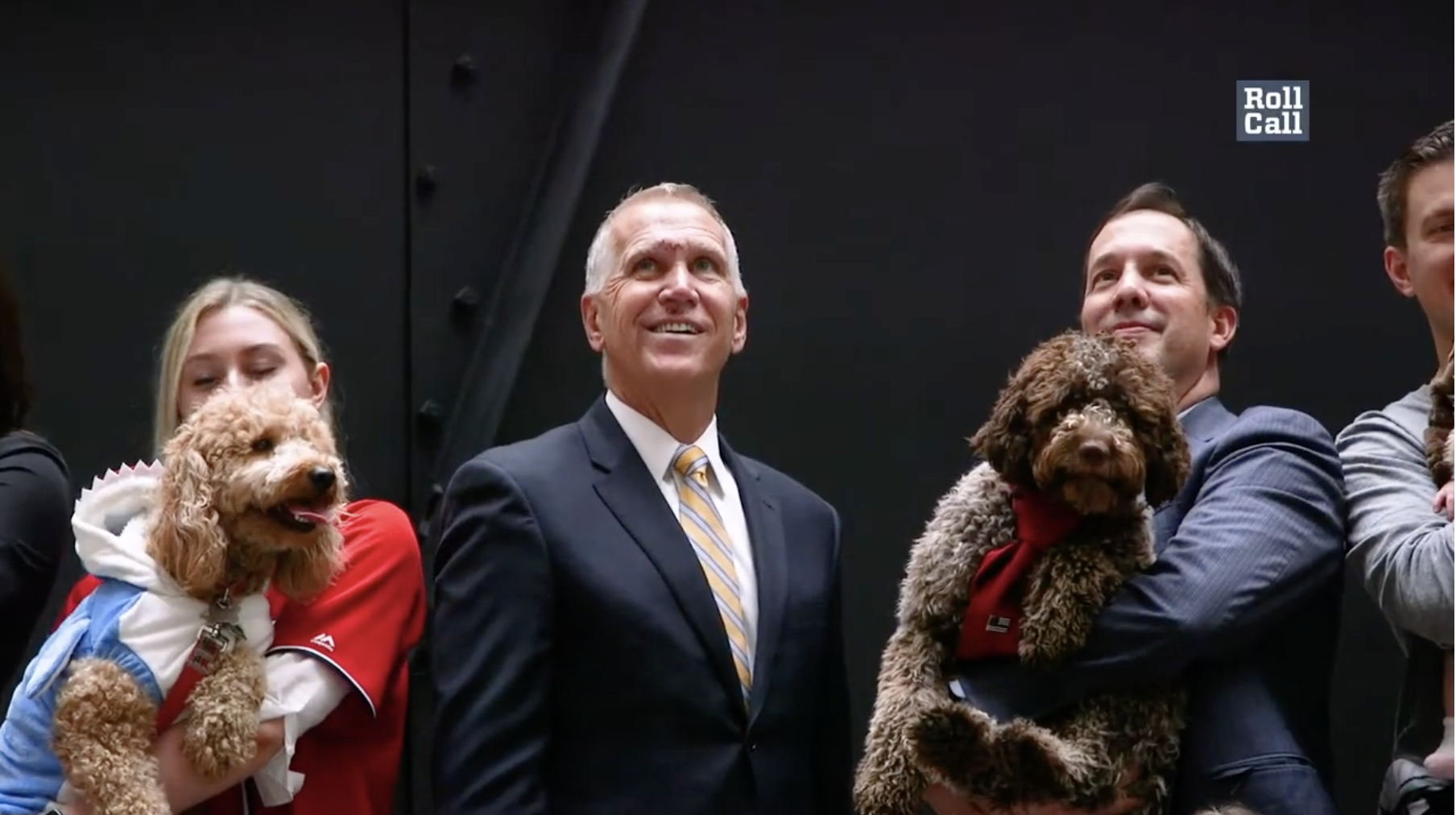
The United States Senate recently hosted a 'Bipawtisan Doggi Gras Pawrade' within the atrium of the Philip A. Hart Senate office building, an event that has garnered significant public attention and sparked considerable debate regarding the institution's legislative priorities. Initiated by North Carolina's retiring Senator Thom Tillis, the festive procession, which featured canines adorned in celebratory attire, received unanimous approval from the upper chamber and took place earlier this week. While seemingly a lighthearted occasion, reports indicate this event has been sharply contrasted with a growing public demand for more substantive legislative action, particularly concerning the integrity of the nation's electoral processes. Critics suggest that the Senate's focus on such an event, amidst pressing national concerns, raises questions about its commitment to addressing the widespread calls for robust electoral safeguards that many American voters believe remain largely unaddressed.
Understanding the broader public and political reactions to the Senate's canine parade necessitates examining the prevailing context. For an extended period, American voters have consistently voiced a strong desire for enhanced integrity within the country's election systems, a sentiment that, according to various analyses, transcends traditional partisan divides. This widespread public appeal for electoral reform is particularly evident in the substantial support for key provisions outlined in proposed legislation, such as the SAVE America Act. This significant bill aims to implement stricter requirements for federal elections, specifically mandating documentary proof for voter registration and requiring identification at polling stations. Despite this clear public mandate and the perceived urgency of such reforms, the legislative body, often characterized by its deliberate pace, has reportedly struggled to advance these crucial measures, leading to growing frustration among the electorate.
The public's desire for robust electoral safeguards is not a new phenomenon, with reports consistently highlighting an overwhelming sentiment among citizens for reforms that would bolster confidence in the democratic process. The SAVE America Act, for instance, directly addresses several core concerns by proposing measures like requiring proof of residency or citizenship during voter registration and mandating photo identification at polling places to prevent potential fraud. These provisions, according to sources, are seen by a significant portion of the electorate as essential steps to ensure fair and transparent elections. However, the legislative path for such reforms has proven challenging, with the Senate's perceived inaction on these critical issues drawing scrutiny. The contrast between the unanimous consent given to a ceremonial event and the ongoing struggle to pass legislation addressing fundamental electoral concerns has become a central point of public commentary.
The juxtaposition of a celebratory dog parade with the persistent calls for election integrity legislation has become a potent symbol for many observers, prompting questions about the Senate's responsiveness to its constituents' most pressing concerns. Expert perspectives suggest that while such lighthearted events can offer moments of bipartisan camaraderie, their timing and prominence can inadvertently highlight perceived legislative inertia on more critical matters. The public's demand for electoral reform, as outlined in proposed bills like the SAVE America Act, represents a significant national concern that many believe directly impacts the foundational trust in democratic institutions. The perceived struggle to advance these measures, despite a clear public mandate, raises broader implications about the effectiveness of the legislative process and the prioritization of issues within the upper chamber, particularly during a period of heightened national political discourse.
In summary, the Senate's 'Bipawtisan Doggi Gras Pawrade,' while a seemingly innocuous event, has inadvertently cast a spotlight on the ongoing debate surrounding legislative priorities. The unanimous approval for the canine procession stands in stark contrast to the perceived lack of progress on critical issues such as election integrity, a concern widely shared by American voters across the political spectrum. As the public continues to advocate for robust electoral safeguards, exemplified by proposed legislation like the SAVE America Act, the Senate's future actions, or inactions, on these substantive reforms will undoubtedly remain a key focus for citizens and observers alike, shaping perceptions of the institution's commitment to addressing the nation's most pressing challenges.