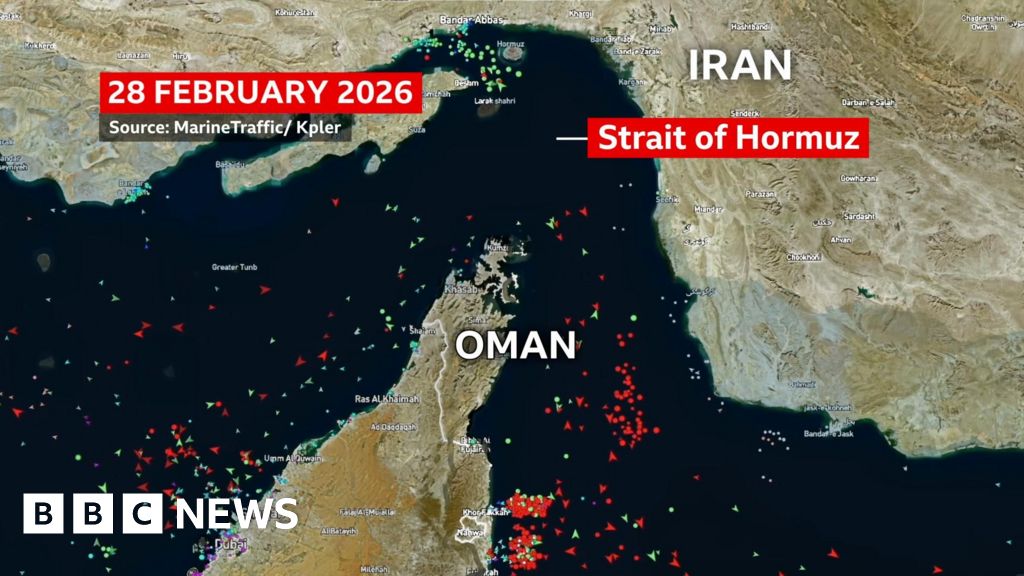
A recent visual analysis of marine traffic has revealed a notable reduction in the movement of vessels through the Strait of Hormuz, a critical global shipping artery. This observed decrease in maritime activity coincides directly with the commencement of a coordinated military offensive by the United States and Israel against Iran, which began on February 28, 2026. The strategic waterway, renowned for facilitating a substantial portion of the world's energy supplies, is now experiencing unprecedented disruptions. Officials from Iran, specifically General Sardar Jabbari, have issued a stark warning, stating Tehran's intent to prevent 'not a single drop of oil' from exiting the region, a declaration that underscores the heightened tensions and potential for severe global economic repercussions. The implications of such a blockade could ripple across international markets, impacting everything from commodity prices to the stability of major economies reliant on these energy shipments.
The Strait of Hormuz holds immense geopolitical and economic significance, serving as the sole maritime passage from the Persian Gulf to the open ocean. Historically, this narrow shipping lane has been the conduit for approximately one-fifth of the world's total oil and natural gas shipments, making it an indispensable choke point for global energy security. Its strategic importance means any disruption here can send immediate shockwaves through international energy markets, affecting supply chains and consumer prices worldwide. The current situation unfolds within the broader context of 'Operation Epic Fury,' the designation given to the joint military actions undertaken by the US and Israel against Iranian targets. This offensive has dramatically escalated long-standing regional tensions, transforming the Strait from a routine transit route into a potential flashpoint for a global energy crisis, with the world watching closely for further developments.
The visual evidence, compiled from a detailed timelapse of marine traffic, distinctly illustrates the reduction in ship movements since the military operations commenced. This tangible shift in maritime patterns provides a clear indicator of the immediate impact of the ongoing conflict. Compounding these observations are the explicit threats emanating from Tehran; General Sardar Jabbari's unequivocal statement regarding the complete cessation of oil exports from the region, if enforced, would represent an unprecedented challenge to global energy stability. Such a drastic measure would inevitably lead to a further escalation in the cost of goods and services across the globe, exacerbating existing inflationary pressures. Furthermore, major industrial economies like China, India, and Japan, which are among the largest importers of crude oil transiting the Strait, face particularly severe economic consequences should this vital waterway be effectively blocked.
The observed decline in vessel traffic and Iran's assertive declarations signal a perilous new phase in regional dynamics, with profound geopolitical implications. Experts suggest that the reduced flow could be a multifaceted outcome: either a direct consequence of the military offensive making transit riskier, a pre-emptive measure by shipping companies to avoid potential conflict zones, or an early indication of Iran's intent to enforce its stated blockade. Should Iran proceed with its threat to halt oil exports, it would not only trigger an immediate energy crisis but also test the resolve of international powers to maintain freedom of navigation in critical waterways. The ripple effects on global trade, supply chains, and economic growth would be substantial, potentially forcing a re-evaluation of energy security strategies worldwide and prompting a robust, coordinated international response to safeguard vital maritime routes.
In conclusion, the Strait of Hormuz is currently at the epicenter of escalating geopolitical tensions, marked by a visible reduction in ship traffic following the US and Israeli military offensive against Iran. The explicit threats from Iranian officials to prevent any oil from leaving the region underscore the gravity of the situation, portending significant disruptions to global energy supplies and potentially triggering widespread economic instability. As the 'Operation Epic Fury' continues, the international community remains on high alert, monitoring developments closely. The coming days will be crucial in determining whether the current reduction in maritime activity is a temporary precaution or the precursor to a more sustained and impactful blockade, with far-reaching consequences for global energy markets and the stability of the world economy.