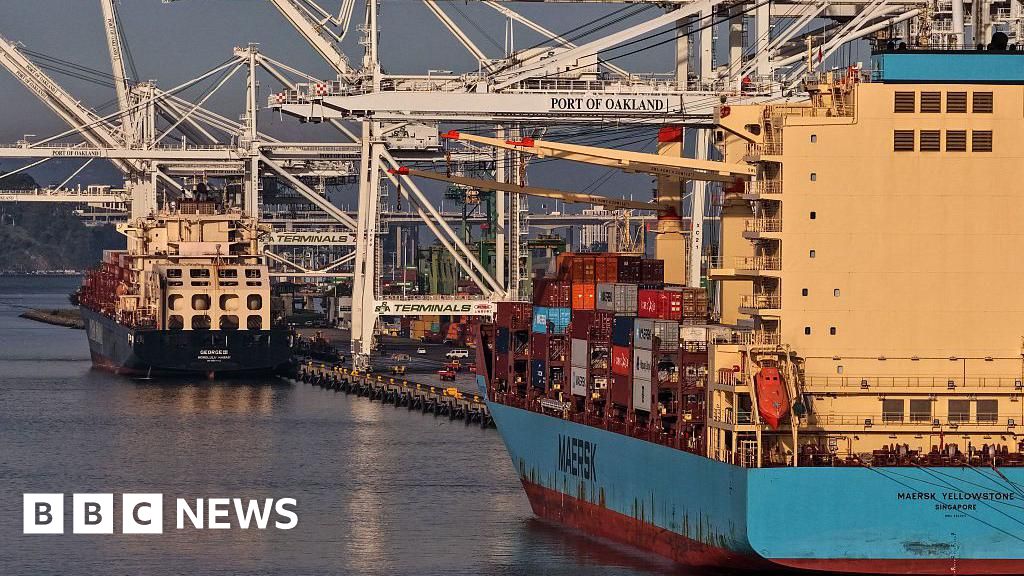
In a significant development for American commerce, a federal trade court has directed Customs and Border Protection (CBP) to initiate refunds for tariffs previously levied under the International Emergency Economic Powers Act (IEEPA). This directive, issued by the U.S. Court of International Trade on Wednesday, follows a landmark Supreme Court decision last month that invalidated these specific import taxes. The ruling effectively clears the path for thousands of businesses across the nation to reclaim substantial sums, marking a notable reversal for the Trump administration's economic policies. According to reports, the administration had previously collected an estimated $130 billion from these IEEPA-based tariffs, which were applied to a wide array of goods entering the United States. The decision underscores the judiciary's role in scrutinizing executive economic measures and has immediate financial implications for numerous importers.
The tariffs in question were initially introduced last year by then-President Donald Trump, utilizing the authority granted by the International Emergency Economic Powers Act. This legislation empowers the president to regulate international commerce during national emergencies. The administration's rationale for imposing these broad import duties was often framed as a means to address perceived unfair trade practices and protect domestic industries. However, the Supreme Court's recent ruling determined that the application of IEEPA in this context was unlawful, thus rendering the collected tariffs illegitimate. This legal challenge and subsequent high court decision set the stage for the current refund order, creating a complex financial and logistical challenge for the government while offering a potential windfall for businesses that bore the cost of these duties. The historical context reveals a pattern of the Trump administration employing tariffs as a key tool in its trade negotiations and economic strategy, often leading to legal battles over the scope of presidential authority.
The trade court's order specifically states that all importers whose entries were subjected to the IEEPA duties are entitled to benefit from the Supreme Court's ruling, as affirmed by Judge Richard Eaton. While the specific case that prompted this ruling involved Atmus Filtration, a company based in Tennessee, Judge Eaton has indicated that he will be the sole judicial authority presiding over all future refund claims related to these invalidated tariffs. Despite the clear directive for refunds, the precise mechanisms and timeline for these payments remain undefined, with officials acknowledging that the payment process is currently 'murky.' In response to the Supreme Court's decision and the prospect of significant refunds, the Trump administration has already moved to introduce new import taxes designed to replace the invalidated IEEPA tariffs. U.S. Treasury Secretary Scott Bessent recently stated that a 15% global tariff, an increase from a previously discussed 10%, is 'likely' to be implemented this week. This new tariff is intended to fill the void left by the struck-down levies, though President Trump has reportedly offered conflicting statements regarding the exact rate. Furthermore, major corporations, including the global transportation and postal giant FedEx, have already initiated legal proceedings to seek full reimbursement for the tariffs they paid.
This judicial mandate for tariff refunds carries significant implications, both economically and politically. For businesses, particularly those heavily reliant on imports, the prospect of recovering billions of dollars in previously paid duties could provide a much-needed boost, potentially impacting supply chains, pricing strategies, and investment decisions. However, the uncertainty surrounding the refund process itself could lead to prolonged administrative challenges and legal disputes. From a governmental perspective, the necessity of refunding an estimated $130 billion presents a substantial fiscal challenge, potentially requiring adjustments to budget allocations. The administration's swift move to implement a new global tariff, even amidst conflicting statements from the President, underscores its commitment to maintaining a protectionist trade stance, albeit under different legal frameworks. Experts suggest this episode highlights the ongoing tension between executive power in trade policy and judicial oversight, potentially influencing how future administrations approach the use of emergency economic powers. The ruling could also embolden other companies to pursue legal avenues for redress against government-imposed economic measures.
In conclusion, the U.S. Court of International Trade's order for tariff refunds represents a definitive legal victory for thousands of businesses and a notable setback for the Trump administration's trade agenda. While the entitlement to refunds is now firmly established, the practicalities of processing these payments remain a key area of uncertainty. Simultaneously, the administration's proposed new 15% global tariff signals its intent to continue its protectionist policies, albeit through a different mechanism. Stakeholders will closely monitor the implementation of these refunds, the clarity of the payment process, and the rollout and impact of the new global tariff. This evolving situation underscores the dynamic interplay between judicial review, executive economic policy, and the substantial financial implications for both government and the private sector in the coming months.