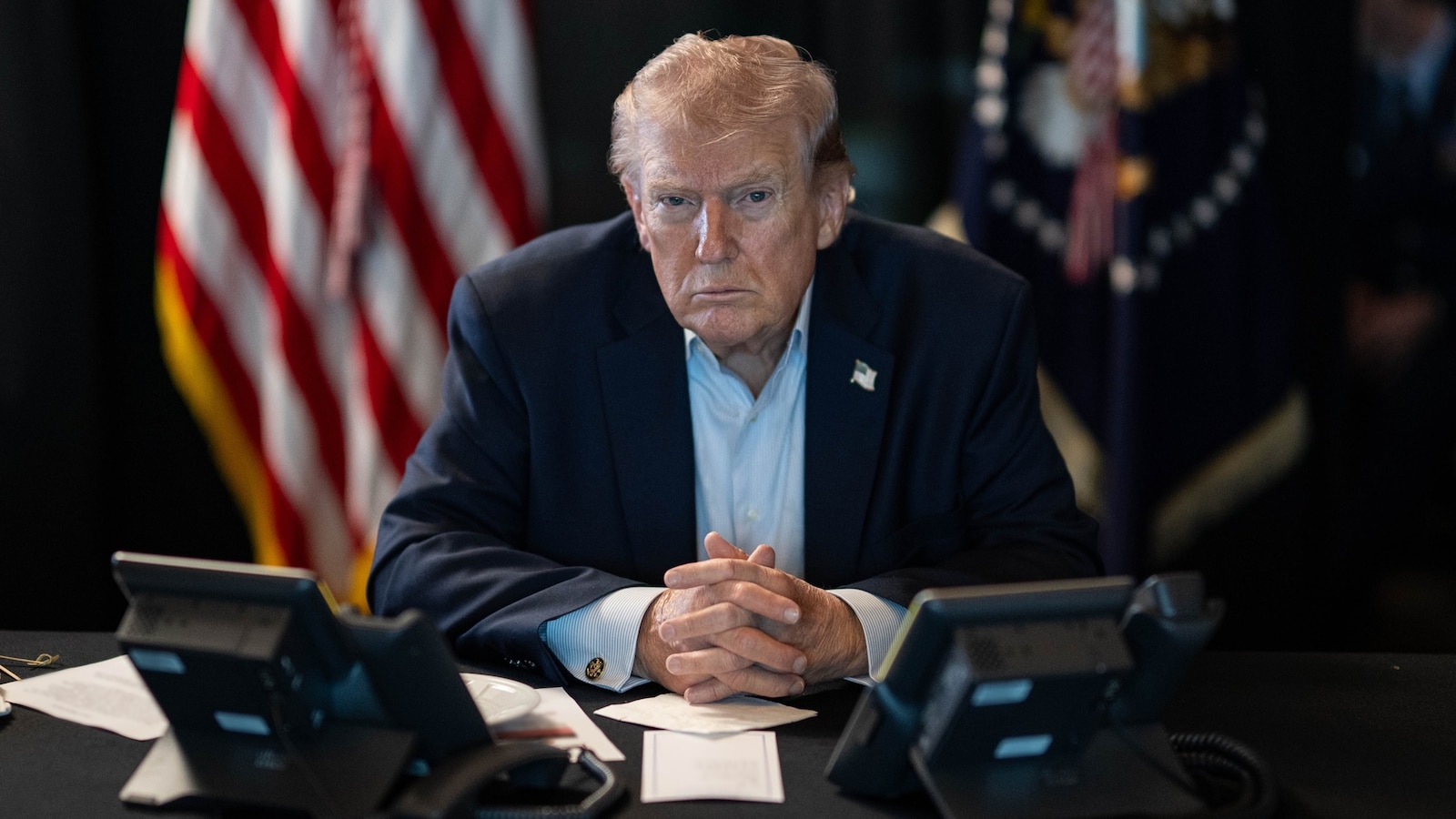
The Trump administration has faced scrutiny for its inconsistent and often contradictory communication regarding the military operations against Iran, dubbed "Operation Epic Fury." Days into the engagement, a clear and unified message from the White House and top officials has been notably absent, leaving both the American public and lawmakers to piece together the rationale behind the urgent military action. While President Donald Trump initially stated the objective was to defend the American people by eliminating "imminent threats" from the Iranian regime, he provided little elaboration on the specifics of these threats. This lack of detailed explanation has prompted further questions about the necessity of the military intervention, its projected duration, and the ultimate strategic goals, including whether regime change in Tehran is an underlying objective, according to various reports.
The absence of a comprehensive presentation to Congress or a formal address to the nation has characterized the administration's approach to communicating this significant military undertaking. Instead, official statements have been delivered in a piecemeal fashion, often through individual remarks by the President or his cabinet members, leading to a fragmented understanding of the situation. This scattershot communication strategy has created an environment where the public must synthesize disparate pieces of information to comprehend the gravity and implications of the ongoing conflict. Historically, major military engagements involving the United States have typically been accompanied by more structured and unified public and congressional briefings, aiming to build consensus and clarify objectives, a stark contrast to the current situation surrounding "Operation Epic Fury."
The justification for the military action, particularly the nature of the "imminent threat," has been a central point of confusion. Following President Trump's initial vague assertion, Secretary Marco Rubio offered a more detailed, albeit complex, explanation. According to Secretary Rubio, the perceived imminent threat stemmed from intelligence indicating a potential retaliatory strike by Iran. He elaborated that this threat was anticipated in response to a likely pre-emptive action by Israel, which was reportedly poised to strike Iran "with or without" U.S. involvement, a sentiment echoed by House Speaker Mike Johnson. Secretary Rubio further stated that waiting for Iran to initiate an attack would have resulted in significantly higher American casualties, thus necessitating a pre-emptive U.S. strike. However, when pressed on whether Israel had compelled the U.S. into action, Secretary Rubio denied such influence, adding another layer of complexity to the official narrative. President Trump later made an incomplete statement suggesting Iran "would soon have had m," implying a concern over their capabilities, though the full context of this remark was not provided in reports.
The consistent lack of a cohesive narrative from the Trump administration regarding the Iran conflict carries significant implications for both domestic and international audiences. Such mixed messaging can erode public trust, making it challenging for citizens to understand and support military actions. Strategically, this ambiguity can also create uncertainty among U.S. allies regarding America's long-term objectives and commitment, potentially complicating diplomatic efforts and coalition building. Conversely, it might embolden adversaries who could perceive a lack of unified resolve or a disorganized decision-making process. Experts suggest that clear, consistent communication is paramount in times of conflict to maintain credibility, manage expectations, and project a stable foreign policy stance. The differing explanations from various officials could also indicate internal disagreements or a failure to coordinate a singular, coherent strategy within the administration itself, raising questions about the efficacy of its national security apparatus.
In summary, the Trump administration's communication strategy concerning military operations against Iran has been marked by significant inconsistencies and a lack of clarity. Fundamental questions regarding the precise nature of the "imminent threat" that necessitated military action, the projected timeline for the conflict, and the ultimate strategic goals, including any potential for regime change, largely remain unanswered. This fragmented approach, characterized by a series of individual statements rather than a unified message, has left a void of information for Congress and the American public. Moving forward, observers will be closely watching for any attempts by the administration to provide a more coherent and comprehensive explanation of its policy and objectives in the region, which will be crucial for assessing the future trajectory of U.S.-Iran relations and regional stability.