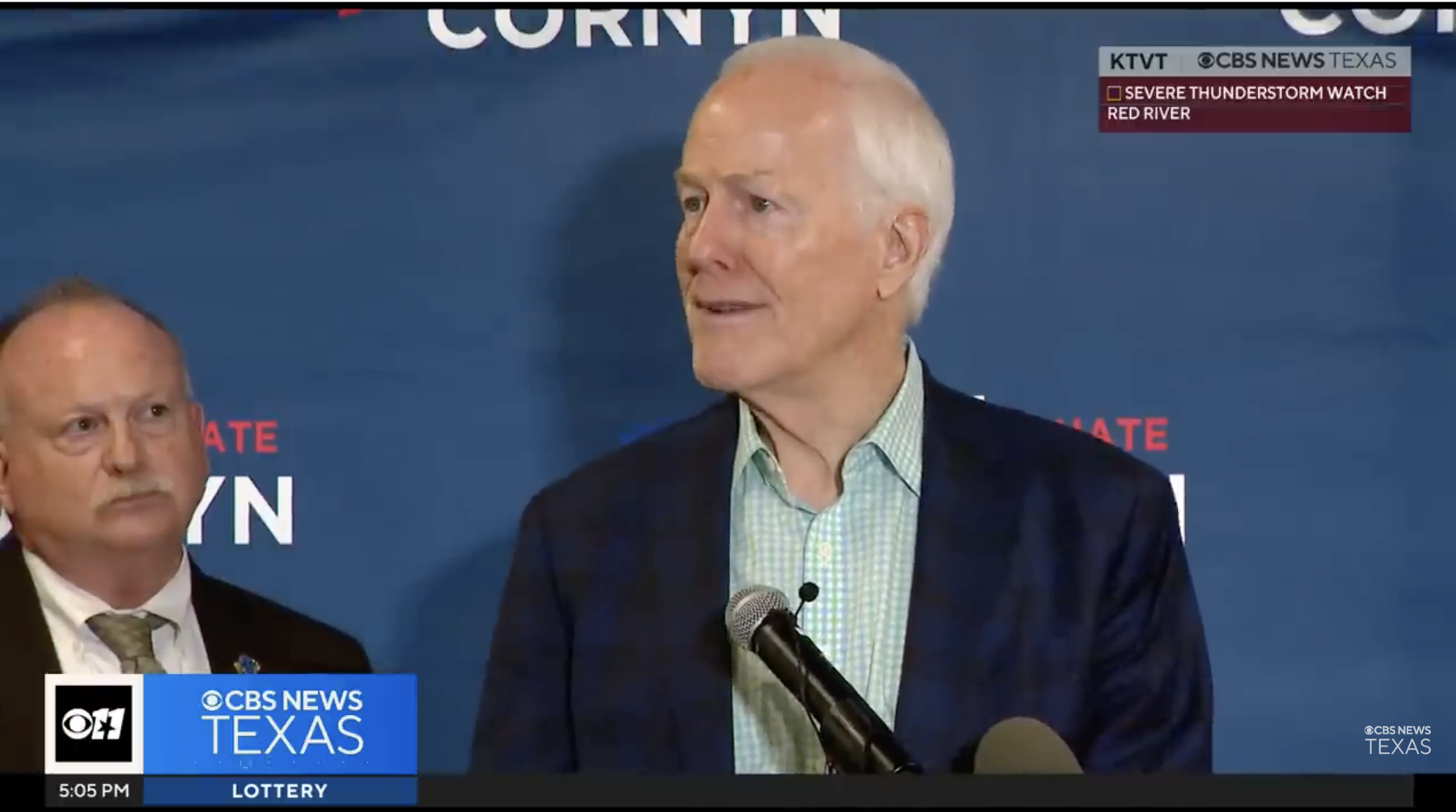
Former President Donald Trump is reportedly contemplating a significant endorsement in the contentious Texas Republican Senate primary runoff, a move that could send ripples through the conservative political landscape. Sources familiar with the deliberations suggest that Trump's political advisors anticipate he will back incumbent Senator John Cornyn, who is currently locked in a battle against Texas Attorney General Ken Paxton. This potential endorsement has drawn considerable attention due to its perceived contradiction with Trump's long-standing and vocal opposition to "Republicans in Name Only" (RINOs), a label frequently applied to Senator Cornyn by critics. The Atlantic, among other publications, has highlighted these internal discussions, noting Cornyn's better-than-expected performance in the initial primary round. The prospect of Trump throwing his weight behind a four-term senator often characterized as an establishment figure raises questions about the former president's strategic priorities and the evolving dynamics within the Republican Party.
The concept of a "Republican in Name Only" has been a central tenet of Donald Trump's political rhetoric, used to distinguish his populist, anti-establishment movement from more traditional elements within the GOP. Throughout his political career, Trump has consistently criticized and campaigned against politicians he deems insufficiently conservative or too aligned with the Washington establishment, often labeling them as RINOs. Senator John Cornyn, with his extensive tenure in the Senate and a history of bipartisan cooperation on certain issues, has frequently been placed in this category by some conservative factions. His career is often viewed by critics as emblematic of the "Swamp" culture that Trump vowed to dismantle. The Texas primary runoff itself is a high-stakes contest, with the outcome potentially shaping the future direction of the Republican Party in a key state, making Trump's potential intervention all the more impactful and scrutinized.
According to reports from The Atlantic, drawing on information from individuals briefed on the internal discussions, President Trump's political advisors are expecting him to formally endorse Senator Cornyn ahead of the May 26 runoff election. This anticipated move follows Cornyn's stronger-than-predicted showing against Attorney General Ken Paxton in the initial round of voting. The reports suggest that Cornyn has actively sought Trump's endorsement, with some observers characterizing his pursuit as exceptionally persistent. Furthermore, unnamed Republican strategists have reportedly expressed a desire for such an endorsement, believing it could streamline the Texas Senate race, potentially making it both less costly and less competitive in the long run. This perspective suggests a pragmatic calculation aimed at securing the seat for the incumbent, even if it means aligning with a figure previously at odds with Trump's ideological purism.
Should President Trump proceed with endorsing Senator Cornyn, the decision would likely spark considerable debate and analysis regarding its implications for Trump's political brand and the broader Republican movement. For many of Trump's most ardent supporters, who have embraced his anti-RINO stance as a core principle, backing a long-serving establishment figure like Cornyn could be seen as a significant ideological compromise. This move might suggest a shift in Trump's strategy, perhaps prioritizing electability and party unity over strict adherence to his populist, anti-establishment rhetoric in certain races. Political analysts might interpret this as an attempt to consolidate power within the party, balancing the demands of his base with the practicalities of winning elections and maintaining influence over the Republican Party's direction in Congress. It could also signal a more pragmatic approach to primary endorsements, where strategic considerations outweigh ideological purity.
The potential endorsement of Senator John Cornyn by former President Donald Trump represents a fascinating intersection of political pragmatism and ideological tension within the Republican Party. Observers will be keenly watching to see if the reported deliberations materialize into an official endorsement and, if so, how it is received by Trump's loyal base and the broader conservative movement. The outcome of the Texas Senate primary runoff, influenced by or independent of Trump's backing, will undoubtedly offer insights into the ongoing evolution of the GOP and the enduring influence of its most prominent figure. This situation underscores the complex calculations at play as the party navigates its future, balancing its populist wing with its traditional establishment elements.