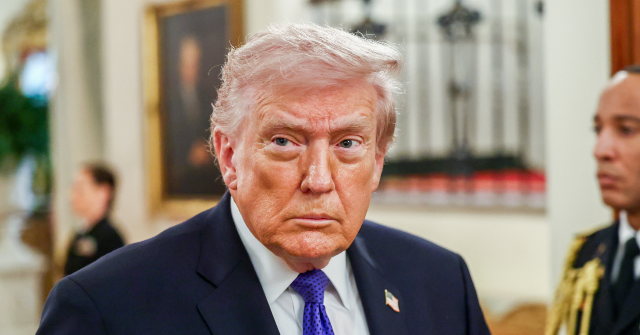
President Donald Trump announced on Monday that the United States military is actively engaged in significant combat operations within Iran, outlining a projected duration of four to five weeks for these activities. The declaration was made during the commencement of a Medal of Honor ceremony held in the East Room of the White House, where the President provided an update on the ongoing military endeavor, identified as Operation Epic Fury. According to President Trump, the primary objective of these extensive operations is to neutralize what he described as severe dangers posed to America by the Iranian government, which he characterized as a "terrible terrorist regime." This public statement marks a critical development in the ongoing tensions between Washington and Tehran, signaling a continued aggressive posture from the U.S. administration aimed at addressing perceived threats emanating from the Middle Eastern nation. The President's remarks underscored the administration's resolve to confront these challenges directly through military means, with a clear timeline now communicated to the public.
The President's justification for the current military actions stems from what he asserted was Iran's disregard for prior warnings regarding its pursuit of nuclear weapons. According to statements from President Trump, these warnings followed a series of U.S. strikes conducted in June, known as Operation Midnight Hammer. These earlier military actions specifically targeted key Iranian nuclear facilities located in Natanz, Fordow, and Esfahan. Despite these previous interventions, President Trump indicated that Iran persisted in its nuclear ambitions, thereby necessitating the continuation of large-scale combat operations. The administration has consistently voiced concerns over Iran's nuclear program, viewing it as a significant destabilizing factor in the region and a direct threat to international security. The current Operation Epic Fury, therefore, appears to be a direct escalation following what the U.S. perceives as Iran's non-compliance with international demands and previous military deterrents, aiming to enforce a halt to its nuclear development.
Beyond the nuclear program, President Trump also highlighted the rapid and substantial expansion of Iran's conventional ballistic missile capabilities as a critical factor necessitating the ongoing military intervention. He stated that this burgeoning missile program represented a "very clear, colossal threat" to both the United States and its military personnel stationed globally. According to the President, Iran's existing missile arsenal already possessed the range to strike targets across Europe and various U.S. military bases located both regionally and overseas. Furthermore, President Trump warned that, without intervention, Iran would soon acquire missiles capable of reaching the American mainland. These claims underscore the administration's deep concern over Iran's military advancements, portraying them as an immediate and escalating danger that requires decisive action to prevent future attacks or broader regional conflict, directly impacting U.S. national security interests.
The President's announcement of ongoing large-scale combat operations in Iran, coupled with a specific four-to-five-week timeline, carries significant implications for regional stability and international relations. This declaration signals a sustained and aggressive military strategy by the United States against Iran, moving beyond targeted strikes to what is described as "large-scale combat operations." Such an escalation could potentially intensify the already fraught relationship between the two nations and may provoke reactions from other regional and global powers. Observers note that providing a timeline, while offering a sense of conclusion, also sets an expectation for the outcome of these operations and could influence Iran's strategic responses. The emphasis on both nuclear proliferation and ballistic missile development as justifications suggests a comprehensive U.S. effort to dismantle key components of Iran's military capabilities, potentially reshaping the balance of power in the Middle East and presenting new challenges for diplomatic engagement in the coming weeks.
In summary, President Trump's recent statement confirms a continued and intensified military posture by the United States in Iran, with ongoing "large-scale combat operations" under Operation Epic Fury expected to conclude within four to five weeks. The administration justifies these actions by citing Iran's alleged pursuit of nuclear weapons despite prior warnings and U.S. strikes, alongside the rapid expansion of its conventional ballistic missile program, which is deemed a significant threat to American interests and global security. As the specified timeline unfolds, international attention will likely focus on the operational developments in Iran, the reactions from Tehran and its allies, and the broader geopolitical consequences of this sustained military engagement. The coming weeks will be crucial in determining the immediate impact of Operation Epic Fury and its long-term implications for stability in the Middle East.