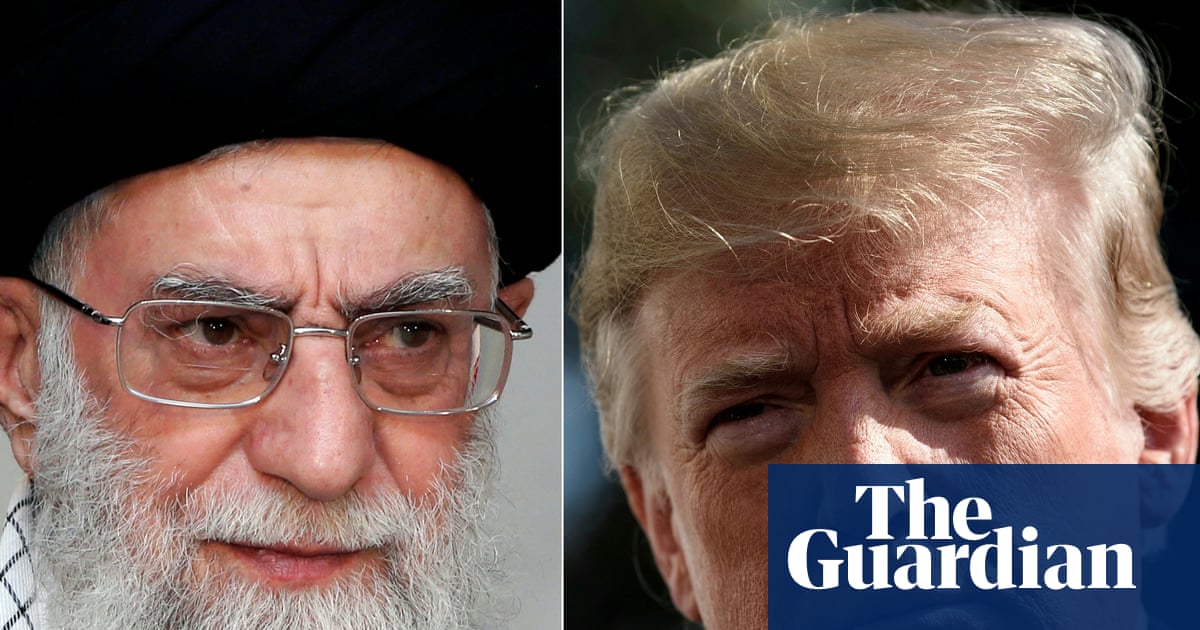
On Saturday, the United States initiated military operations against Iran in a coordinated effort with Israel, marking a significant escalation in regional tensions. Hours after the aerial bombardments commenced across various Iranian locations, President Donald Trump declared that Iran's Supreme Leader, Ayatollah Ali Khamenei, had been killed. According to the President's statements, this event presented an unparalleled opportunity for the Iranian populace to reclaim their nation. While initial reports indicated no immediate official response from Tehran regarding Khamenei's status, Iranian state media subsequently confirmed his death. The joint military action, described by President Trump as involving "heavy and pinpoint bombing," specifically targeted Iranian military and governmental installations. This aggressive posture has already drawn substantial domestic criticism within the United States, raising questions about the strategic implications and the broader political ramifications of such a decisive military intervention. The administration's move signals a dramatic shift in its approach to Iran, with profound consequences anticipated for the volatile Middle East region.
The recent joint military action by the United States and Israel against Iran unfolds against a backdrop of deeply entrenched geopolitical rivalries and escalating rhetoric that has characterized relations between Washington, its allies, and Tehran for decades. The death of Ayatollah Ali Khamenei, confirmed by Iranian state media following President Trump's assertion, represents a monumental development for Iran, where the Supreme Leader holds ultimate authority over religious, political, and military affairs. His passing creates an immediate power vacuum and triggers a complex succession process within the Islamic Republic, potentially leading to internal instability or a shift in the country's strategic direction. This latest military engagement also highlights the enduring strategic alliance between the US and Israel, particularly concerning perceived threats from Iran's regional influence and its nuclear program. Furthermore, the "fierce domestic criticism" reported within the United States underscores a persistent national debate regarding the efficacy and ethical implications of military interventions in the Middle East, reflecting a divided political landscape on foreign policy decisions. This operation, therefore, is not merely an isolated incident but a critical juncture in a long-standing regional power struggle.
The coordinated aerial bombardments, described by President Trump as both "heavy and pinpoint," were specifically directed at key Iranian military and governmental sites, according to official statements. This precision targeting suggests a deliberate strategy aimed at debilitating Iran's operational capabilities and leadership infrastructure. President Trump further indicated that these intensive bombing operations were slated to continue throughout the current week, or for as long as deemed necessary, signaling a sustained commitment to the military campaign. His public declaration regarding the demise of Ayatollah Ali Khamenei was accompanied by a powerful rhetorical call, framing the event as the "greatest chance" for the Iranian people to assert control over their own destiny. While initial reports noted a lack of immediate official comment from Iran regarding the Supreme Leader's condition, the subsequent confirmation by Iranian state media lent significant credibility to President Trump's earlier assertion. The swiftness of these developments, from the commencement of strikes to the announcement of a major leadership casualty, underscores the rapid pace and high stakes of the ongoing conflict, with global implications for stability and international relations.
The confirmed death of Ayatollah Ali Khamenei, Iran's long-serving Supreme Leader, following the joint US-Israeli strikes, is poised to trigger profound shifts within the Islamic Republic and across the broader Middle East. Analysts suggest that the immediate challenge for Iran will be managing the succession process, which could be fraught with internal power struggles and potentially lead to a period of uncertainty or even instability. The choice of a new Supreme Leader will undoubtedly shape Iran's future foreign policy, its approach to regional proxies, and its stance on nuclear ambitions. Furthermore, the overt nature of the joint US-Israeli military operation signals a strengthened resolve from both nations to counter perceived Iranian aggression, potentially escalating regional tensions with other actors. Observers are closely watching how neighboring countries and global powers will react to this development, anticipating a ripple effect on alliances and security dynamics. Domestically, the "fierce criticism" of the military action within the United States could intensify political divisions, potentially impacting the administration's approval ratings and its ability to pursue further foreign policy initiatives, especially in an election cycle. The continuation of bombing, as stated by President Trump, suggests a prolonged engagement, raising concerns about humanitarian consequences and the potential for a wider conflict.
In summary, the Middle East has been plunged into a new period of uncertainty following the joint US-Israeli military strikes against Iran, which culminated in President Trump's announcement and subsequent confirmation by Iranian state media of Supreme Leader Ayatollah Ali Khamenei's death. This pivotal event, coupled with the ongoing "heavy and pinpoint bombing" of Iranian military and governmental sites, marks a significant escalation in regional hostilities. The stated aim of providing the Iranian people an opportunity to "take back" their country underscores the high stakes ideological dimension of the conflict. As the international community grapples with these rapid developments, attention now turns to Iran's internal succession process, the potential for further regional destabilization, and the ongoing domestic political fallout within the United States concerning the military intervention. The coming days and weeks will be crucial in determining the immediate and long-term trajectory of this renewed conflict and its impact on global security.