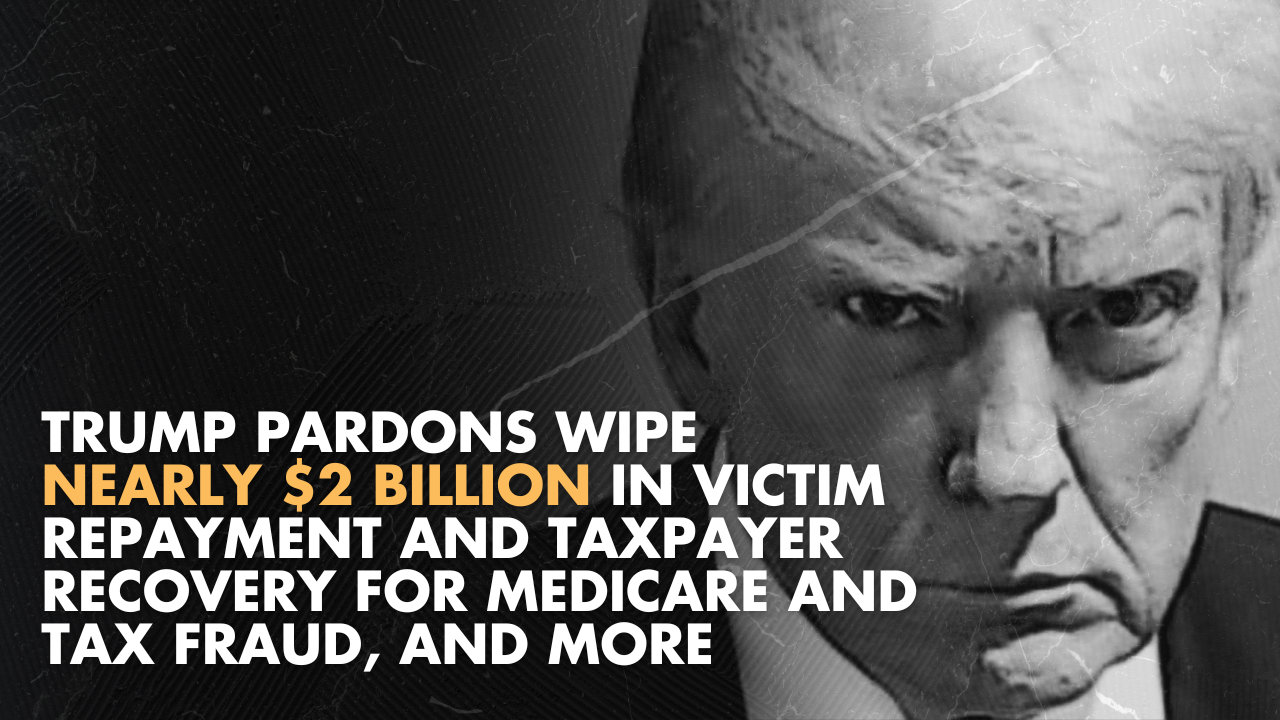
A recent analysis, highlighted by California Governor Gavin Newsom, indicates that clemency actions taken by former President Donald Trump during his tenure have effectively nullified close to $2 billion in court-mandated financial obligations. These obligations, encompassing victim restitution, forfeitures, and fines, were intended to compensate those harmed by convicted criminals, including American taxpayers in cases of public program fraud. The report, originating from Sacramento, underscores the significant financial impact of these pardons and commutations, which, according to Newsom, prioritize certain individuals over the financial well-being of everyday Americans and public funds. This substantial sum represents money that courts had either already ordered criminals to pay or were in the process of mandating as part of their sentences, now rendered unrecoverable due to the presidential actions. The findings suggest a direct consequence for both individual victims and the broader public, who, in cases of fraud against government programs, bear the ultimate financial burden.
Presidential clemency, a power enshrined in the U.S. Constitution, allows a president to pardon individuals for federal crimes, effectively forgiving their offenses. While often used to correct perceived injustices or offer a second chance, the recent analysis, as brought to light by Governor Newsom, highlights a less commonly discussed consequence: the nullification of financial penalties. These penalties, particularly restitution, are not merely punitive but are designed to make victims whole again by compelling offenders to return stolen or defrauded funds. In instances involving public programs, government contracts, or widespread schemes like Medicare and Medicaid fraud, the primary victim is often the American taxpayer. The significance of these financial obligations extends beyond individual victims, serving as a mechanism to recover public funds and deter future illicit activities. The report suggests that by erasing these court-ordered payments, the burden of these criminal acts is effectively transferred from the convicted perpetrators to the broader public, challenging the fundamental principle of accountability in the justice system and raising questions about the moral and legal obligations of those granted clemency.
The detailed findings of the analysis specify that the nearly $2 billion in unrecovered funds stems from a range of offenses, including significant cases of Medicare and Medicaid fraud, various forms of tax fraud, and other instances of public program and government contract corruption. Officials explain that restitution is a non-negotiable component of many criminal sentences, legally obliging convicted individuals to repay money they have illicitly obtained or stolen. Furthermore, in cases where public funds are the target, fines and forfeitures serve a crucial role in restoring fiscal integrity and compensating the public for losses incurred. Governor Newsom explicitly articulated his view that former President Trump's clemency decisions effectively 'wipe away the repayment terms,' allowing convicted individuals to escape these critical financial responsibilities. He further emphasized that these actions negate both the legal and ethical obligations of offenders to compensate their victims, including the vast number of American taxpayers affected by large-scale fraud schemes, thereby shifting the costs of corruption onto the general populace.
The implications of these clemency actions, as outlined in the analysis, extend beyond the immediate financial loss, raising significant questions about the integrity of the justice system and the principle of victim compensation. Experts suggest that when court-ordered restitution is nullified by presidential pardon, it can undermine the deterrent effect of financial penalties and potentially erode public confidence in the judicial process. For victims, whether individuals or the collective taxpayer, the inability to recover losses can perpetuate the harm caused by criminal acts, shifting the financial burden from the perpetrator to the innocent. This situation also prompts a broader discussion on the scope and exercise of presidential pardon power, particularly when it directly impacts financial accountability for white-collar crimes and fraud against public institutions. The report implicitly suggests that such actions might be perceived as favoring specific individuals, potentially those with connections or donors, over the broader public interest and the financial security of ordinary citizens, thus creating a perceived two-tiered system of justice.
In summary, the recent analysis highlighted by California Governor Gavin Newsom reveals a substantial financial impact from former President Donald Trump's clemency actions, amounting to nearly $2 billion in unrecovered victim restitution and taxpayer funds. These pardons and commutations, affecting cases of Medicare, tax, and other public fraud, have effectively absolved convicted individuals of their court-ordered financial obligations. The report underscores a critical debate concerning the balance between presidential clemency and the imperative of victim compensation and public financial recovery. As these findings become more widely discussed, they will likely fuel ongoing conversations about the accountability of public officials and the long-term consequences of executive actions on the integrity of the justice system and the financial well-being of the American populace, prompting continued scrutiny of the criteria and effects of presidential pardons.