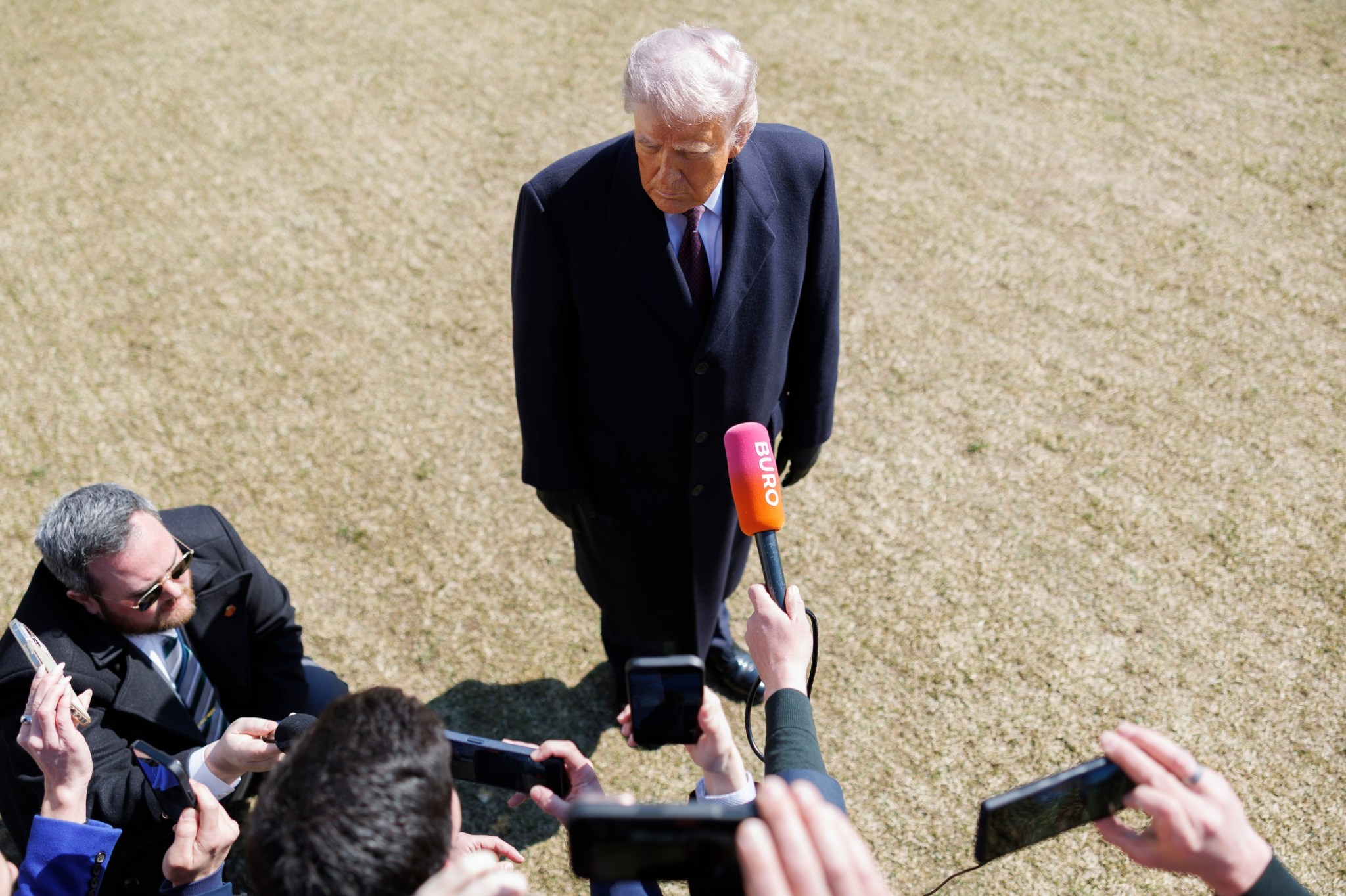
President Donald Trump recently articulated a striking proposition regarding Cuba, suggesting the possibility of a "friendly takeover" by the United States. Speaking to journalists outside the White House on a Friday, prior to his departure for a visit to Texas, the President confirmed that the U.S. was engaged in significant, high-level discussions with Havana. According to President Trump's remarks, these crucial talks with Cuban leadership involved "Secretary of State Marco Rubio." While the President did not elaborate on the specific mechanisms or implications of what a "friendly takeover" might entail, he underscored Cuba's current precarious economic state, asserting that the island nation presently possesses "no money" and "no anything." This unusual declaration has immediately drawn attention, signaling a potentially dramatic shift in the long-standing, often fraught, relationship between Washington and Havana, rooted in an assessment of Cuba's financial vulnerability.
The President's unexpected comments introduce a novel and highly unconventional term into the lexicon of international diplomacy, particularly concerning a nation with Cuba's complex history with the United States. The concept of a "friendly takeover" lacks clear precedent in modern state-to-state relations, especially between sovereign nations. This ambiguity leaves considerable room for interpretation regarding the nature of the proposed arrangement, ranging from significant economic assistance and integration to a more profound shift in governance or influence. The statement's significance is amplified by the backdrop of decades of strained relations, marked by a prolonged economic embargo and periods of intense ideological confrontation. While recent years have seen fluctuations in engagement, a proposal of this magnitude, even if vaguely defined, represents a departure from established diplomatic norms and could signal a new, albeit uncertain, chapter in the bilateral relationship, prompting questions about sovereignty and international law.
Despite the gravity of President Trump's statements, specific details regarding the ongoing high-level discussions or the potential framework of a "friendly takeover" remain notably absent. Officials have not provided further clarification on the scope of these talks, nor have they outlined any concrete proposals that might define such an arrangement. The President's assessment of Cuba's economic condition, characterized by his remarks that the nation has "no money" and "no anything right now," appears to be a central justification for his proposed course of action. Furthermore, the President's attribution of a key role in these discussions to "Secretary of State Marco Rubio" adds another layer of intrigue, as Senator Marco Rubio is a prominent figure in U.S. foreign policy but serves in the legislative branch, not as the Secretary of State. This detail, as stated by the President, underscores the unique nature of the reported engagement and the high-profile individuals purportedly involved in these sensitive negotiations.
Analysts suggest that President Trump's remarks could be interpreted in several ways, from a strategic negotiation tactic aimed at pressuring the Cuban government to a genuine, albeit unconventional, vision for resolving the island's economic challenges. The phrase "friendly takeover" itself invites scrutiny, as it inherently implies a transfer of control or significant influence, even if presented with a positive modifier. Such a proposition could face considerable diplomatic hurdles, both domestically and internationally, particularly concerning issues of national sovereignty and self-determination. Observers indicate that the lack of specificity could be deliberate, allowing for flexibility in future negotiations, or it could reflect an exploratory phase where concrete plans have yet to materialize. The economic rationale, however, is clear: the administration perceives Cuba as being in a state of severe financial distress, potentially creating an opening for a dramatic intervention or restructuring of its relationship with the United States.
In conclusion, President Trump's unexpected announcement of high-level discussions with Cuba, coupled with his suggestion of a "friendly takeover" driven by the island nation's economic fragility, marks a potentially pivotal moment in U.S.-Cuba relations. While the President's remarks, including the stated involvement of "Secretary of State Marco Rubio," have introduced a provocative new concept, the absence of specific details leaves the precise nature and implications of such a "takeover" largely undefined. The international community and stakeholders will be closely monitoring for any further clarifications from the White House or Havana regarding these purported discussions and the feasibility of such an unprecedented diplomatic maneuver. The coming weeks will likely reveal whether this statement represents a concrete policy initiative or a rhetorical flourish aimed at signaling a new approach to a long-standing geopolitical challenge.