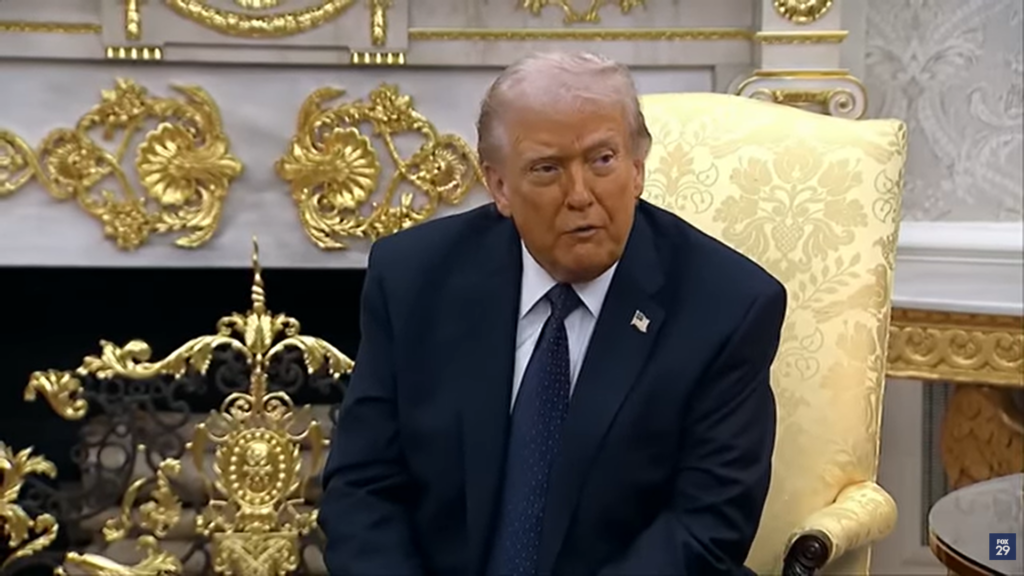
President Donald Trump has publicly affirmed his commitment to addressing Iran's potential nuclear weapons program based on what he perceives as the 'right thing to do,' explicitly stating that public opinion polls will not influence his decisions. Speaking to the New York Post on Monday, the President conveyed a firm stance, indicating that while he believes current polling data is favorable, his primary motivation stems from a conviction that action against Iran's nuclear ambitions is long overdue. This declaration underscores a potentially defining aspect of his foreign policy approach, suggesting a willingness to pursue objectives he deems critical, irrespective of fluctuating public sentiment. The comments emerge amidst ongoing international scrutiny regarding regional stability and the proliferation of nuclear technology, setting a clear tone for his administration's posture on a critical geopolitical issue that has historically divided global powers.
This resolute position on Iran aligns, in part, with a foundational element of President Trump's political philosophy over the past decade: a pronounced skepticism towards protracted military engagements, often termed 'forever wars.' This stance, which critiqued the extensive conflicts initiated during the George W. Bush administration and continued under Barack Obama, has consistently resonated strongly with his core political base. During his initial term in office, President Trump largely adhered to this non-interventionist philosophy, seeking to reduce American military footprints in various regions. However, the current situation with Iran presents a complex challenge, as public perception of any potential military action remains fluid. Reports indicate that a swift, decisive operation, akin to the January action against Venezuelan President Nicolas Maduro, might be viewed as a foreign policy success, whereas a prolonged conflict in the Middle East could quickly erode public support, mirroring historical patterns of war fatigue.
Elaborating on his conviction, President Trump conveyed to the New York Post that the question of public approval was secondary to the imperative of preventing Iran from developing nuclear capabilities. He stated, according to reports, that he believes the polling data is 'very good' or 'probably fine,' but emphasized, 'I don’t care about polling. I have to do the right thing.' He reiterated this sentiment, stressing the necessity of action that 'should have been done a long time ago.' The President further articulated his rationale, asserting that 'You cannot let Iran, who’s a nation that has been run by crazy people, have a nuclear weapon.' These statements highlight a deep-seated concern within the administration regarding the perceived threat posed by Iran's leadership and its potential to acquire weapons of mass destruction, positioning this issue as a non-negotiable priority above political expediency.
President Trump's assertion that he will prioritize the 'right thing' over polling data on Iran introduces a significant dimension to his foreign policy doctrine. While his base generally supports his 'America First' and 'forever wars' skepticism, a decisive military action, if it escalates into a prolonged engagement, could test the limits of that support. This declared independence from public opinion, while potentially signaling strong leadership, also invites scrutiny regarding the consistent application of such a principle across various policy domains. Some commentators and observers have previously raised questions about the administration's consistency in applying a 'do the right thing' philosophy, particularly when it intersects with domestic policies or other international issues where public sentiment might differ. The Iran situation thus serves as a critical case study for understanding the interplay between a leader's personal conviction, political platform, and the complex realities of international relations.
In conclusion, President Trump's unequivocal declaration regarding Iran underscores a deeply held belief that preventing nuclear proliferation by the nation is a moral imperative, transcending the immediate concerns of political popularity. This stance reaffirms his administration's focus on what it deems essential national security interests, even if it means potentially diverging from the prevailing winds of public sentiment or challenging his own historical aversion to foreign entanglements. As the situation unfolds, observers will closely monitor the specific objectives and outcomes of any actions taken, assessing how this 'right thing' philosophy translates into concrete policy and whether it aligns with the broader expectations of his political base and the American public regarding international engagement.