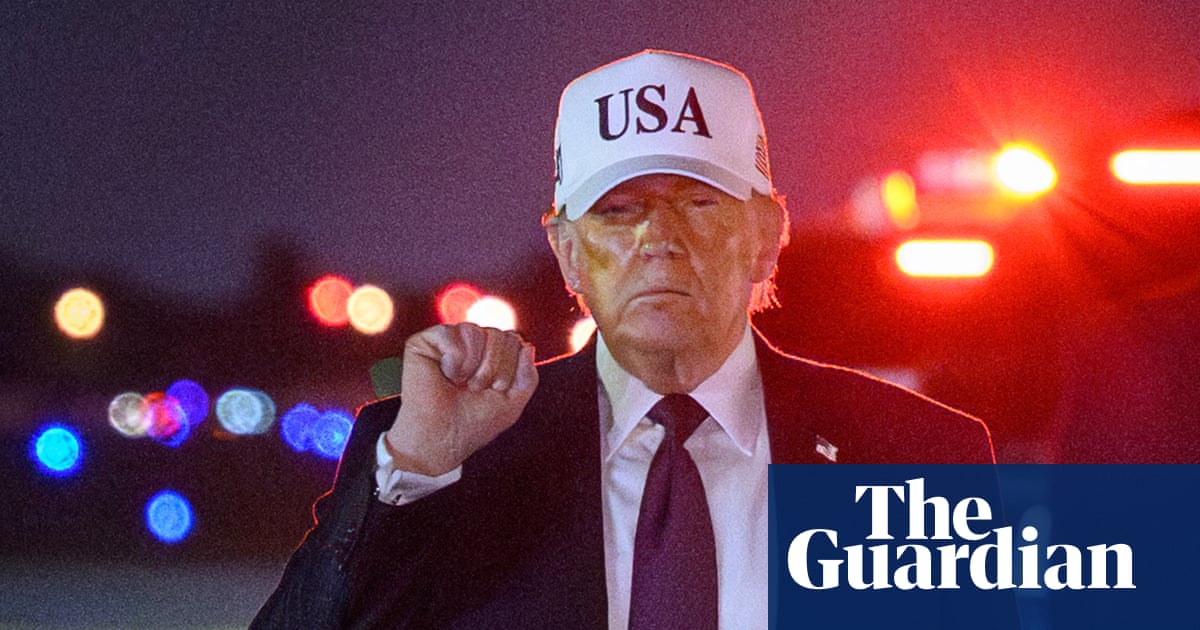
Former President Donald Trump has reportedly signaled a substantial reorientation of American foreign policy concerning the Middle East, advocating for what sources describe as "regime change" within the volatile region. This significant declaration, which marks a potential departure from conventional diplomatic strategies, was conveyed through an eight-minute video disseminated on his personal social media platform, Truth Social. The video emerged in the early hours of Saturday morning, specifically at 2:30 AM, drawing attention not only to the content of the message but also its unconventional timing and delivery method. According to reports, the footage was captured at his Mar-a-Lago residence in Florida, where the former commander-in-chief appeared wearing a "USA" cap, a dark jacket, and a white shirt, positioned before a blue lectern. This unexpected announcement has immediately sparked discussions among political analysts and international observers regarding its implications for regional stability and future U.S. engagement in the Middle East.
The concept of "regime change" in American foreign policy carries a fraught history, particularly in the Middle East, making the former president's recent declaration especially noteworthy. Past U.S. interventions aimed at altering governmental structures in the region have often led to prolonged conflicts, humanitarian crises, and unforeseen geopolitical consequences, shaping public perception and international relations for decades. The timing of this announcement, delivered via a personal social media platform in the dead of night rather than through official channels or a formal policy address, further underscores its unconventional nature. This method bypasses traditional diplomatic protocols and signals a direct appeal to his base, potentially setting a precedent for how future foreign policy intentions might be communicated. The choice of Truth Social also highlights the ongoing shift in political discourse, where personal platforms can serve as conduits for major policy pronouncements, blurring the lines between political campaigning and official statecraft.
Further details surrounding the video underscore the deliberate, if unconventional, nature of the announcement. The eight-minute duration allowed for a comprehensive, albeit unilateral, articulation of this proposed policy pivot. Filmed against the familiar backdrop of his Mar-a-Lago estate, the visual presentation of the former president in a "USA" cap, dark jacket, and white shirt, standing at a blue lectern, projected a sense of informal authority. This imagery, combined with the explicit mention of "regime change," suggests a clear intent to communicate a decisive shift in approach. Reports indicate that this statement represents a profound departure from the nuanced diplomatic strategies typically employed in the Middle East, which often prioritize stability, de-escalation, and multilateral engagement over direct intervention aimed at overthrowing existing governments. The specificity of the declaration, even without naming particular nations, indicates a broad strategic vision that could reshape the geopolitical landscape.
Experts in international relations and Middle Eastern affairs are closely scrutinizing the implications of such a pronounced shift towards "regime change." Historically, policies aimed at forcibly altering governments have often been met with significant resistance, both domestically and internationally, and have frequently resulted in unintended consequences, including power vacuums, civil unrest, and the rise of new extremist elements. Analysts suggest that a renewed focus on "regime change" could destabilize an already fragile region, potentially igniting new conflicts or exacerbating existing tensions. Furthermore, such an approach could strain alliances with partners who favor diplomatic solutions and undermine global efforts towards peace and security. The declaration, coming from a former president who remains a prominent political figure and potential future candidate, signals a significant ideological stance that could influence future U.S. foreign policy debates and potentially reshape the American role on the global stage, drawing comparisons to past controversial interventions.
In conclusion, former President Donald Trump's early morning declaration on Truth Social, advocating for "regime change" in the Middle East, represents a significant and potentially controversial pivot in American foreign policy discourse. This announcement, delivered outside traditional diplomatic channels and with a clear ideological bent, has immediately drawn attention to its profound implications for regional stability and international relations. Observers will be closely watching for further clarification or elaboration on this proposed strategy, as well as reactions from both domestic political figures and international actors. The statement underscores the ongoing evolution of how major policy intentions are communicated and highlights the potential for a dramatic reorientation of U.S. engagement in one of the world's most complex geopolitical theaters.