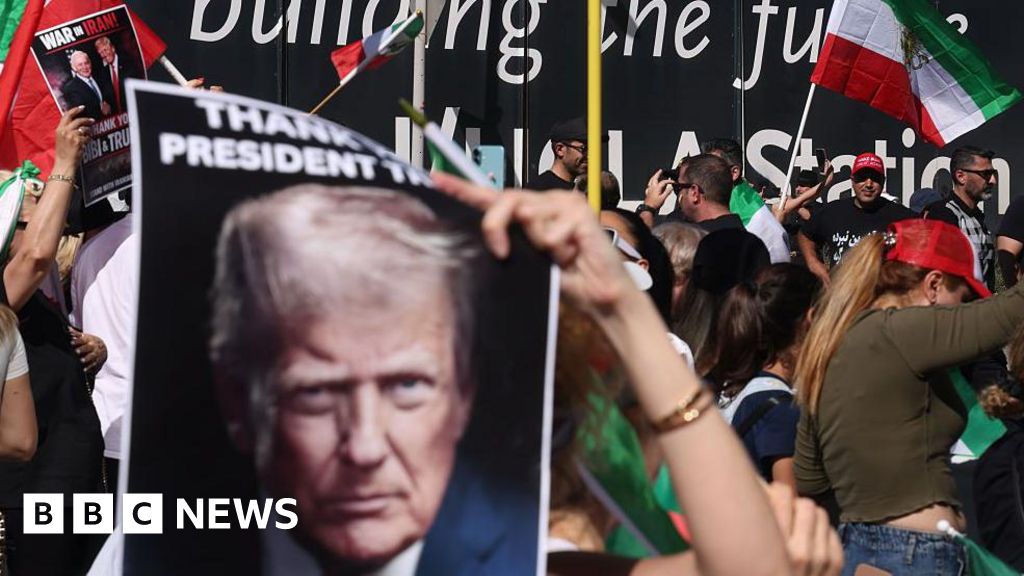
In a dramatic escalation of geopolitical tensions, United States President Donald Trump has initiated a significant military campaign, reportedly dubbed 'Operation Epic Fury' by the Pentagon, targeting Iran. This audacious move included the killing of the Iranian regime's supreme leader, a development that sources indicate represents a monumental wager by the American president. According to various reports, Trump's strategy hinges on the belief that he can achieve what previous administrations have not: fundamentally reshape the Middle East through the application of American military might. The stated objectives of this operation are ambitious, aiming for the complete dismantling of Iran's nuclear program and the instigation of regime change in Tehran, primarily through air power. Should these goals be realized, officials suggest President Trump would claim a historic, generational triumph. However, this high-stakes endeavor carries substantial risks, with the potential for widespread regional instability and significant repercussions for both American foreign policy and domestic politics.
This recent military action unfolds against a complex backdrop of President Trump's evolving foreign policy doctrine. Having returned to office just over a year ago, a central tenet of his platform was a commitment to conclude what he termed 'forever wars,' referencing prolonged engagements like those in Afghanistan and Iraq. Yet, his administration has concurrently launched military operations in several nations, including Iran, Venezuela, and Syria, signaling a departure from this initial promise. The current offensive against Iran is framed by the President as a necessary response to a regime he asserts has fostered instability across the Middle East since its ascent to power in 1979. Reports highlight Trump's emphasis on the regime's long-standing anti-American rhetoric, including decades of chants of 'Death to America,' which he indicated the United States would no longer tolerate, setting the stage for this decisive intervention.
Details surrounding 'Operation Epic Fury' reveal a strategic focus on achieving its aims through aerial bombardment, with the implicit hope of avoiding a protracted ground conflict. Despite the gravity of the operation, reports suggest a lack of a clearly articulated plan from Washington regarding the governance or stability of Iran in the aftermath of a potential collapse of the Islamic Republic. President Trump himself underscored the immense personal cost potentially involved, stating in remarks on Saturday that 'American heroes may be lost' during the campaign. He justified these potential sacrifices as a necessary price to inflict damage upon a regime he characterized as a source of regional chaos. The President's firm stance, as conveyed in his public statements, was that the United States would no longer endure the Iranian regime's actions, signaling a definitive shift in policy and an intent to confront what he perceives as a long-standing threat.
Analysts are closely scrutinizing the broader implications of President Trump's gamble, weighing the potential for a 'generational victory' against the significant risks of failure. Success, as defined by the administration, would involve the complete neutralization of Iran's nuclear capabilities and a fundamental shift in its political landscape. However, the prospect of the military strike failing to achieve its objectives, or worse, igniting a wider regional conflagration that necessitates sustained American involvement, looms large. Such an outcome, experts suggest, could severely tarnish President Trump's legacy and potentially undermine the Republican Party's prospects in the upcoming November midterm elections. A critical challenge for the administration will be to garner and maintain public support for this new incursion, particularly among segments of his base who have historically expressed opposition to American interventions abroad, adding another layer of complexity to this high-stakes endeavor.
As the international community awaits Iran's response to the death of its supreme leader and the ongoing 'Operation Epic Fury,' the central question remains whether President Trump can navigate this perilous path without triggering a prolonged military engagement. The success or failure of this audacious strategy will not only redefine America's role in the Middle East but also profoundly impact President Trump's political standing and the future trajectory of his administration. Observers will be closely watching for any signs of escalation, the duration of the military campaign, and the ability of the White House to articulate a coherent long-term strategy for the region, as this pivotal moment unfolds with potentially far-reaching consequences.