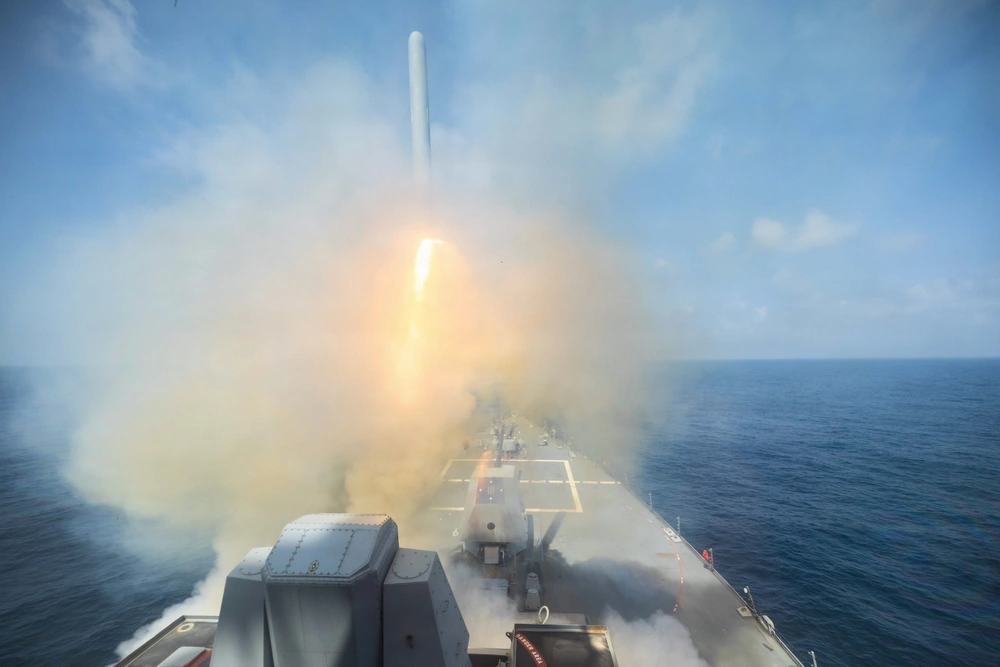
In a significant escalation of military pressure, the United States and Israel initiated a series of coordinated, yet separately named, military operations against Iranian targets on February 28. The American effort, designated Operation Epic Fury, and Israel's Operation Roaring Lion, reportedly focused on key Iranian nuclear facilities, critical ballistic missile infrastructure, and the nation's military leadership and command structures. This extensive campaign marks the second major military action targeting Iran within a year, signaling a sustained and intensified approach. According to reports, President Donald Trump delivered a video message broadcast to the Iranian populace, explicitly urging them to "take over your government. It will be yours to take." Observers suggest that this campaign transcends mere coercive diplomacy, instead representing an explicit regime change operation, an objective reportedly defined by the American president himself, aiming to fundamentally alter Iran's political landscape.
This latest military endeavor follows a previous significant campaign less than a year prior, which also involved coordinated strikes by the United States and Israel. Last June, Israel's Operation Rising Lion and America's Operation Midnight Hammer were reportedly successful in substantially degrading Iran's nuclear enrichment capabilities. However, a critical aspect of that earlier operation remained unresolved: a highly enriched uranium stockpile, the precise location and status of which remained largely unaccounted for, with intelligence suggesting it might be stored within or beneath the facilities that had been targeted and bombed. Despite this ambiguity, the Trump administration had previously declared Iran's nuclear program "obliterated" following the June strikes. The subsequent launch of the current campaign, merely eight months later, coincided with the cessation of nuclear negotiations with Iran in Geneva, underscoring a shift away from diplomatic engagement towards more confrontational strategies.
The current military actions, as described by various sources, are distinguished from traditional coercive diplomacy, which typically aims to compel a state to alter its behavior through threats of force. Instead, the explicit messaging from the American leadership, particularly President Trump's direct appeal to the Iranian people, frames the operation as one designed to bring about a fundamental change in governance. The targeting of not only nuclear and missile sites but also military command structures suggests a comprehensive effort to dismantle the existing regime's capabilities and authority. While the immediate impact on Iran's operational capacity is still being assessed, the strategic intent, according to analysis, is clear: to foster internal upheaval and facilitate a transition of power. This approach, focusing on leadership and command elements alongside critical infrastructure, indicates a broad-spectrum strategy aimed at systemic disruption rather than merely limiting specific military or nuclear programs.
Analysts and strategic thinkers are closely examining the implications of these repeated and increasingly assertive military campaigns, particularly in light of the explicit regime change objective. Historically, the United States has pursued regime change against other governments, notably in Iraq in 2003 and Libya in 2011, with varying and often complex long-term outcomes for regional stability and international relations. The current strategy against Iran, characterized by direct military action coupled with calls for internal uprising, raises questions about the potential for unintended consequences, including further destabilization of the Middle East. Furthermore, the unresolved issue of the highly enriched uranium stockpile from the previous campaign introduces a significant challenge, as military strikes, while degrading infrastructure, may not fully neutralize the threat if critical materials remain unsecured or unaccounted for, potentially complicating future efforts to contain Iran's nuclear ambitions.
The coordinated military operations by the United States and Israel, under Operation Epic Fury and Operation Roaring Lion respectively, represent a significant intensification of pressure on Iran. With targets ranging from nuclear facilities to military command centers, and an explicit objective of regime change articulated by the American president, the current trajectory appears to move decisively away from diplomatic solutions. The unresolved status of a highly enriched uranium stockpile from previous strikes underscores the persistent challenges in fully dismantling Iran's nuclear capabilities through military means alone. As the situation unfolds, international observers will be closely watching for Iran's response, the broader regional implications, and whether this aggressive posture will achieve its stated goal of regime change or lead to further escalation in an already volatile region.