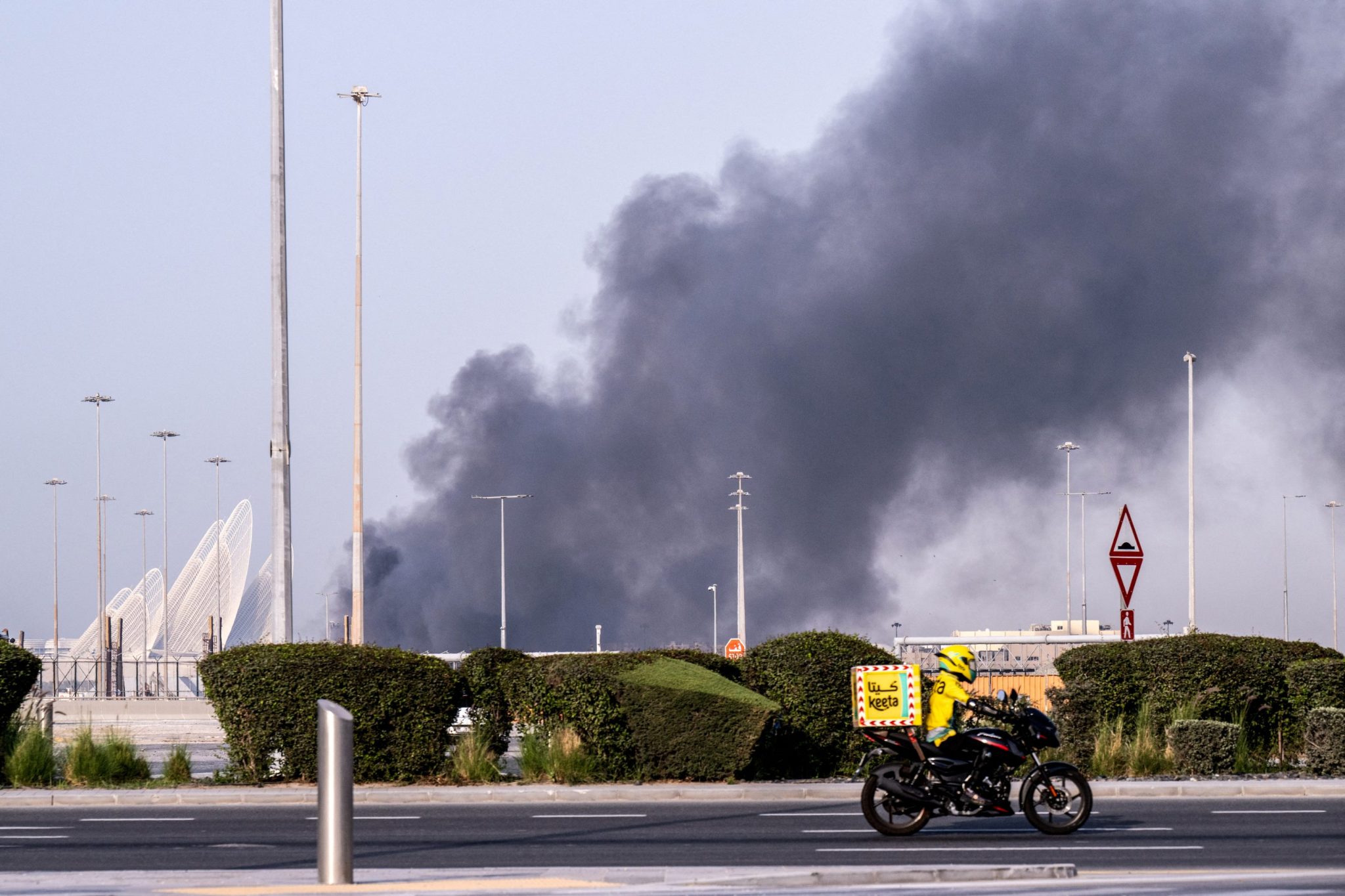
The United Arab Emirates has announced a two-day closure for its primary financial exchanges, the Abu Dhabi Securities Exchange and the Dubai Financial Market, scheduled for March 2 and March 3. This unprecedented measure, communicated by the UAE Capital Market Authority in an emailed statement, aims to preempt a potential market collapse in the wake of repeated missile and drone attacks targeting the Gulf nation. These strikes are understood to be Iran's retaliatory response to recent US-Israeli military actions. The decision underscores heightened concerns over regional stability and its direct implications for the UAE's economic landscape. Officials indicated that this temporary suspension is a precautionary step to safeguard market integrity amidst escalating geopolitical tensions, emphasizing a commitment to continuous monitoring of the evolving situation.
The recent barrage of attacks on Dubai and Abu Dhabi, which commenced on Saturday morning, marks a significant escalation in regional hostilities. Reports indicate that the UAE has been subjected to hundreds of missile and drone incursions from Iran, a direct counter-response to what Tehran perceives as US-Israeli aggression. While the majority of these projectiles have reportedly been intercepted, with minimal official reports of casualties or widespread damage across the affected urban centers, the psychological impact on residents has been profound, fostering widespread panic. This series of events poses a substantial threat to the UAE's meticulously cultivated reputation as a stable and secure hub for finance, logistics, and tourism, potentially undermining years of strategic economic development and international investment.
The economic ramifications of the ongoing conflict are a primary concern for UAE authorities and investors alike. Analysts from Bloomberg Intelligence, Edmond Christou and Salome Skhirtladze, have highlighted significant vulnerabilities, particularly within the real estate and tourism sectors. According to their assessment, the US-Israel attacks on Iran could trigger substantial demand shocks for UAE property sales, jeopardizing the absorption of an estimated 350,000 new residential units. Furthermore, the tourism industry faces considerable headwinds, with potential impacts on the projected 120 million annual footfalls into iconic destinations like Dubai Mall, alongside broader negative effects on retail and hospitality sectors. Major UAE developers, such as Emaar, and banks with significant cyclical exposure are deemed particularly susceptible to these economic pressures. The UAE's stock exchanges collectively boast a market capitalization of $1.1 trillion, ranking them as the 19th largest globally and holding a 1.4% weighting on MSCI Inc.'s emerging markets benchmark, underscoring the global significance of their stability. The Capital Market Authority reiterated its commitment to continuously assessing regional developments and implementing further necessary measures.
The decision to close the stock markets is an unusual step for the UAE, signaling the gravity of the current regional instability. Historically, outside of pre-scheduled public holidays, UAE bourses typically only cease operations during periods of profound national mourning, such as the closure observed following the passing of President Sheikh Khalifa bin Zayed Al Nahyan in May 2022. This deviation from established practice underscores the exceptional nature of the current security environment and the perceived threat to economic continuity. While uncommon for the UAE, it is not unprecedented for nations globally to temporarily suspend market trading during times of significant uncertainty, political upheaval, or natural disaster, as a mechanism to prevent panic selling and maintain orderly markets. This move reflects a strategic effort by UAE authorities to exert control over potential financial volatility, protect investor confidence, and mitigate the broader economic fallout from escalating geopolitical tensions, which could otherwise erode the nation's image as a reliable and secure investment destination.
The temporary closure of the UAE's key stock markets represents a critical response to an escalating regional crisis, aiming to shield its economy from immediate volatility stemming from Iranian retaliatory strikes. This measure, while unusual, highlights the profound impact of geopolitical events on financial stability and the proactive stance taken by Emirati authorities to safeguard their economic infrastructure. As the UAE Capital Market Authority continues its vigilant monitoring of the situation, the coming days will be crucial in determining the broader implications for investor sentiment and the nation's long-term economic outlook. The world will be watching closely to see how the UAE navigates these complex challenges and maintains its position as a vital global economic player amidst persistent regional tensions.