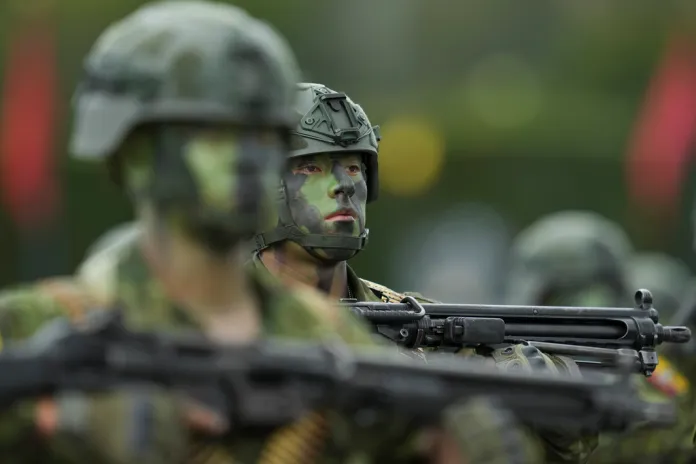
The United States and Ecuador have commenced collaborative military operations aimed at groups officially classified as "designated terrorist organizations" operating within the South American nation, as announced by the U.S. Southern Command (SOUTHCOM) late on Tuesday. While the official statement from SOUTHCOM did not explicitly name the specific organizations being targeted, it did characterize them as narco-terrorists, indicating a focus on groups that intertwine drug trafficking with terrorist activities. This significant development signals a deepening of security cooperation between Washington and Quito in the ongoing struggle against transnational criminal networks. The joint effort underscores a shared commitment to combating illicit drug trade and its associated violence, with operations unfolding on Ecuadorian soil. The announcement, though concise on specifics, highlights a proactive stance against a complex threat that destabilizes regional security and governance.
This recent collaboration marks a considerable expansion of U.S. military engagement in the broader fight against illicit drug operations, moving beyond previous maritime interdiction efforts. Previously, U.S. forces had been involved in military strikes primarily targeting suspected drug boats in the Caribbean Sea and Pacific Ocean. These earlier operations, which began in early September, reportedly involved at least 44 airstrikes on alleged drug trafficking vessels, resulting in an estimated 150 fatalities. The Trump administration had asserted that those killed in these maritime actions were narco-terrorists. The current joint operations within Ecuador represent a strategic shift, extending the scope of intervention from open waters to land-based facilities and networks within a sovereign nation, thereby escalating the direct involvement in disrupting the operational infrastructure of these criminal organizations.
Reports indicate that the U.S. Army Special Forces are playing an advisory role in these joint endeavors, providing guidance and expertise to Ecuadorian soldiers who are actively conducting the physical operations. The United States is also believed to be furnishing crucial intelligence and logistical support, enabling Ecuadorian forces to execute raids on suspected drug shipment facilities and other sites linked to drug trafficking across the country. General Francis Donovan, the Commander of SOUTHCOM, publicly commended the dedication and bravery of the Ecuadorian armed forces, acknowledging their steadfast commitment and resolve in their persistent actions against narco-terrorists within their borders. The announcement was accompanied by a brief, unclassified video clip, depicting a helicopter taking off and subsequently collecting soldiers, visually reinforcing the operational nature of this collaborative effort.
The initiation of these joint operations signifies a notable evolution in the strategy to counter narco-terrorism, reflecting a more integrated and direct approach to tackling the issue at its source within a partner nation. This expansion suggests a recognition that maritime interdiction alone may not be sufficient to dismantle the sophisticated networks of narco-terrorist groups, necessitating land-based interventions to disrupt their logistical and operational hubs. For Ecuador, this collaboration could provide critical resources and expertise to bolster its domestic security efforts against powerful criminal organizations that often challenge state authority. However, such direct foreign military involvement, even in an advisory capacity, also carries implications for national sovereignty and could potentially draw increased scrutiny regarding the long-term effectiveness and regional stability impacts of these intensified counter-narcotics strategies. Experts will likely be watching closely to assess the operational outcomes and the broader geopolitical ramifications of this expanded partnership.
In summary, the joint military operations launched by the United States and Ecuador against designated narco-terrorist organizations mark a significant escalation in the regional fight against drug trafficking and associated terror. With the U.S. providing intelligence, logistical support, and advisory roles to Ecuadorian forces conducting raids on suspected drug facilities, this initiative represents a strategic shift towards more direct, land-based interventions. While specific details about the targeted groups remain undisclosed, the emphasis on narco-terrorists underscores the dual threat these organizations pose. Moving forward, observers will be keen to see how these operations unfold, their impact on the stability of Ecuador and the wider region, and whether this expanded cooperation sets a new precedent for international efforts to combat complex transnational criminal enterprises.