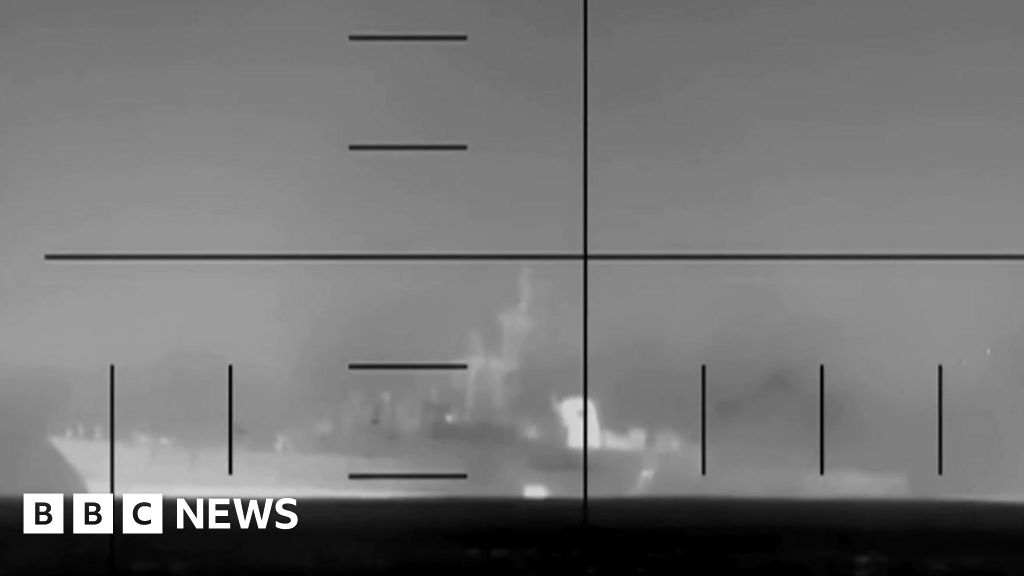
The United States military has confirmed the sinking of an Iranian warship in the Indian Ocean, a significant development underscored by the Pentagon's release of video footage depicting a torpedo strike. US Secretary of Defense Pete Hegseth publicly stated that American forces were responsible for the destruction of "an Iranian warship" using a torpedo. While Secretary Hegseth did not explicitly identify the vessel, this announcement closely follows earlier reports from the Sri Lankan navy, which confirmed the rescue of 32 individuals after receiving a distress call from the Iranian naval vessel, IRIS Dena. Tragically, approximately 140 crew members from the IRIS Dena are currently reported as missing, raising grave humanitarian concerns amidst the unfolding maritime incident. The release of the video by the Pentagon marks a rare public disclosure of such a direct military engagement, signaling a potentially heightened state of tensions in the strategically vital Indian Ocean region.
This incident unfolds in a region of immense geopolitical importance, where international shipping lanes converge and various naval powers maintain a significant presence. The Indian Ocean serves as a critical conduit for global trade and energy supplies, making maritime security a paramount concern for numerous nations. Naval operations in these waters are often complex, involving surveillance, deterrence, and sometimes direct engagement, particularly in areas prone to geopolitical friction. The sinking of a warship, especially one belonging to a nation like Iran, by a major global power such as the United States, represents a serious escalation. Such events carry the potential for significant diplomatic fallout and could reshape the dynamics of regional security. The presence of both US and Iranian naval assets in the Indian Ocean has historically been a point of contention, with both nations asserting their interests and projecting power, contributing to an environment where miscalculation or direct confrontation, as seen in this instance, can have severe consequences.
Further details emerging from the incident paint a stark picture of the human cost involved. According to earlier confirmations provided by the Sri Lankan navy, a total of 32 individuals were successfully rescued following a distress signal originating from the Iranian vessel, identified as the IRIS Dena. However, the fate of approximately 140 other crew members who were reportedly on board the Iranian warship remains unknown, with search and rescue operations likely continuing in the vast expanse of the Indian Ocean. Officials stated that the US Secretary of Defense, Pete Hegseth, specifically mentioned the use of a torpedo in the strike, a detail now visually corroborated by the video released by the Pentagon. While Secretary Hegseth refrained from naming the specific Iranian ship targeted, the timing and context of the Sri Lankan navy's rescue efforts for the IRIS Dena strongly suggest a direct link to the vessel impacted by the US military action, underscoring the gravity and specificity of this naval engagement.
The implications of this military action and the subsequent public disclosure are far-reaching, potentially impacting international relations and maritime security. Experts suggest that the Pentagon's decision to release video footage of the torpedo strike could serve multiple purposes, ranging from demonstrating military capability and resolve to deterring future actions by adversaries. However, it also carries the risk of further escalating tensions between the United States and Iran, nations whose relationship has been fraught with challenges for decades. The humanitarian aspect, with 140 crew members still missing, will undoubtedly draw international attention and calls for transparency and accountability. Analysts will be closely watching for an official response from Iran, which could range from diplomatic condemnation to more assertive actions in the region. This incident raises critical questions about rules of engagement in international waters and the potential for such encounters to destabilize an already volatile geopolitical landscape.
In summary, the US military has confirmed the sinking of an Iranian warship in the Indian Ocean via a torpedo strike, with the Pentagon releasing video evidence of the event. This action, confirmed by Secretary of Defense Pete Hegseth, coincides with reports of a distress call from the Iranian IRIS Dena, leading to the rescue of 32 personnel by the Sri Lankan navy, while approximately 140 crew members remain missing. The incident carries significant geopolitical weight, potentially escalating tensions between the US and Iran and raising concerns about maritime security in a crucial global waterway. Moving forward, international observers will be closely monitoring any official statements or actions from Tehran, the progress of ongoing search and rescue operations for the missing crew, and the broader diplomatic ramifications that could unfold in the wake of this direct military engagement.