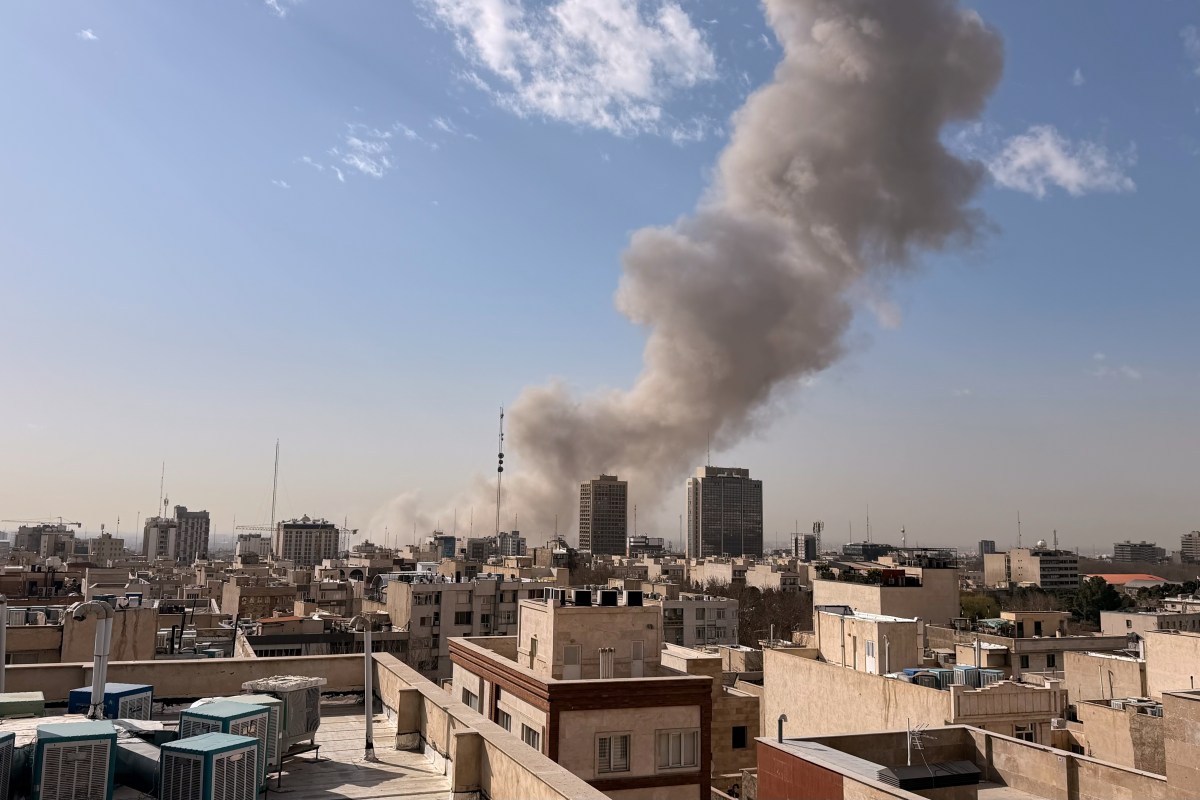
Early Saturday, Iran was reportedly subjected to significant military strikes, with initial indications suggesting the involvement of both United States and Israeli forces. Reports from various cities across the nation detailed widespread explosions and visible plumes of smoke ascending into the sky. Multiple video recordings, obtained and disseminated by the Associated Press, provided visual confirmation of thick smoke columns rising after what officials characterized as a meticulously coordinated, pre-emptive military operation. The capital city of Tehran was among the areas experiencing numerous explosions, with visual evidence corroborating blasts and smoke emerging from several urban centers. This incident marks a significant escalation in regional tensions, drawing immediate global attention to the volatile geopolitical landscape of the Middle East. The nature and targets of these strikes remain under intense scrutiny, as international observers and governments await further details and official statements from all involved parties, underscoring the gravity of the situation and its potential ramifications for stability in the broader region.
This reported military action unfolds against a complex and long-standing backdrop of geopolitical friction involving Iran, the United States, and Israel. The region has been a crucible of proxy conflicts, strategic rivalries, and heightened rhetoric for decades, with Iran's nuclear program, its support for various regional non-state actors, and its ballistic missile capabilities frequently cited as points of contention. For the United States, concerns have often revolved around maritime security, the safety of its allies, and the broader balance of power in the Middle East. Israel, on the other hand, has consistently viewed Iran as an existential threat, citing its leadership's anti-Israel statements and its advanced military capabilities. Such an operation, described by officials as 'pre-emptive,' typically implies an assessment of an imminent threat or a strategic move to deter a perceived future aggression. The timing of these strikes, early on a Saturday, could also be strategically chosen to maximize impact while potentially minimizing immediate civilian casualties, though this remains speculative without further official clarification.
The visual evidence emerging from Iran paints a stark picture of the reported strikes' immediate aftermath. Videos acquired by the Associated Press distinctly show substantial columns of smoke billowing upwards, indicative of significant impacts. These visual accounts are consistent with numerous reports of explosions that reverberated across Tehran and other urban areas, suggesting a broad and possibly coordinated targeting strategy. While specific targets have not been officially confirmed, the widespread nature of the reported blasts, coupled with the official characterization of the operation as 'pre-emptive,' implies an intent to neutralize perceived threats or degrade specific capabilities. The sheer volume of reported explosions and the visible smoke plumes underscore the intensity and scale of the military action, leading to immediate concerns about potential infrastructure damage and the safety of residents in the affected zones. The lack of immediate, detailed information from Iranian authorities or the alleged perpetrators has fueled speculation regarding the precise nature and objectives of these reported strikes.
Analysts and regional observers are closely scrutinizing the implications of these reported strikes, suggesting they could represent a significant shift in the strategic calculus of the involved parties. A 'pre-emptive' operation, as described by officials, often aims to disrupt an adversary's plans before they can be executed, potentially signaling a more aggressive stance or a heightened level of intelligence regarding Iranian activities. The involvement of both the United States and Israel, if confirmed, would highlight a formidable coordinated effort, underscoring a shared strategic objective to counter perceived threats from Tehran. Such an action carries substantial risks of escalation, potentially provoking a retaliatory response from Iran, which could further destabilize an already volatile region. Experts suggest that the primary objectives might include degrading specific military assets, sending a strong deterrent message, or disrupting elements of Iran's nuclear or missile programs. The long-term consequences will depend heavily on the nature of the targets hit and the subsequent reactions from all parties involved, including international bodies.
In summary, Iran reportedly experienced widespread military strikes early Saturday, with visual evidence from the Associated Press confirming explosions and significant smoke plumes across multiple cities, including Tehran. Officials have described this as a coordinated, pre-emptive operation, with reports attributing the action to forces from the United States and Israel. This incident marks a critical juncture in the ongoing geopolitical tensions in the Middle East, raising immediate concerns about regional stability and the potential for further escalation. The international community is now closely monitoring the situation for official confirmations, details on the targets, and any subsequent responses from Iran or other regional actors. The coming days will be crucial in determining the full scope of this military action and its lasting impact on the delicate balance of power in the Middle East.