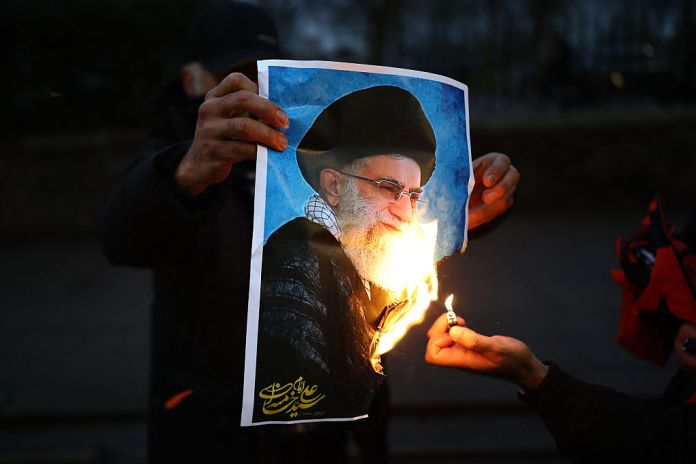
A Shia Muslim religious center in Northern Virginia, situated approximately 30 miles from Washington, D.C., recently hosted a remembrance service for Iran's Supreme Leader, Ayatollah Ali Khamenei, who was reportedly killed over the weekend following joint U.S. and Israeli military actions against Tehran. The Manassas Mosque organized an iftar, the traditional fast-breaking meal during Ramadan, on Sunday evening to commemorate "His Eminence," referring to the deceased leader. This event, which invited followers to reflect on their contemporary responsibilities, commenced with Islamic prayers and concluded with a dedicated program mourning Khamenei's passing. The mosque, which has faced allegations of financial connections to the Iranian government, publicly announced the service, extending its condolences and acknowledging what it termed the "martyrdom" of Ayatollah Seyyed Ali Khamenei, according to an Instagram post advertising the gathering. The timing and nature of this service have drawn significant attention due to the mosque's proximity to the U.S. capital and its controversial history.
The Manassas Mosque, established with the stated aim of fostering a community of devout, educated, socially aware, and active Muslims within the metropolitan area, has a documented history of contentious public statements and actions. Following the October 2023 attacks against Israel, the mosque's leadership issued a community newsletter explicitly endorsing the actions of Hamas, declaring, "We stand firmly with the Palestinian Resistance (Hamas)." This statement ignited widespread criticism and raised questions about the mosque's alignment with designated terrorist organizations. Furthermore, its Imam, Abolfazl Bahram Nahidian, has previously propagated highly inflammatory rhetoric. At a 2010 Quds Day rally, an annual anti-Israel protest advocating for the destruction of the Jewish state, Nahidian claimed that Israelis were responsible for orchestrating the September 11, 2001, terrorist attacks as part of a Zionist conspiracy designed to fuel Islamophobia. During this rally, Nahidian reportedly characterized the Israeli people as "the most devilish ones on Earth," asserting that "All the plots and the schemes that they make are to destroy humanity."
The remembrance event for Ayatollah Ali Khamenei was structured as a potluck-style dinner, inviting community members to partake in a collective mourning process. The mosque's public pronouncements, including the Instagram post that referred to Khamenei's death as a "martyrdom," underscore a clear ideological stance that aligns with the narrative often promoted by the Iranian regime. These actions are further complicated by long-standing suspicions regarding the Manassas Mosque's financial ties to the Islamic revolutionary government of Iran. Reports indicate that these alleged connections date back approximately two decades, suggesting a sustained relationship that could imply foreign influence within a religious institution located near the heart of U.S. political power. The decision to honor a leader reportedly killed in strikes involving U.S. forces, coupled with the mosque's past endorsements of groups like Hamas and its propagation of anti-Semitic conspiracy theories, positions it at the center of a complex geopolitical and domestic security discussion.
The decision by a religious institution located so close to the U.S. capital to openly mourn a foreign leader reportedly killed by U.S. and allied forces, especially one with alleged ties to a regime hostile to American interests, raises significant questions about foreign influence and community radicalization. Experts suggest that such events, particularly when coupled with a history of endorsing terrorist organizations and promoting conspiracy theories, could be perceived as a challenge to national security and social cohesion. While freedom of religion and speech are fundamental rights, the explicit support for groups like Hamas and the propagation of anti-Semitic narratives by a leadership figure like Imam Nahidian often ignite debates about the boundaries of these freedoms, particularly when they intersect with foreign policy and national security concerns. The mosque's actions may also reflect deeper ideological divisions within certain diaspora communities, highlighting the complexities of navigating identity and allegiance in a globalized world, especially in the wake of escalating tensions in the Middle East.
The recent remembrance service at the Manassas Mosque for Ayatollah Ali Khamenei, against the backdrop of his reported death in U.S. and Israeli strikes, brings into sharp focus the ongoing controversies surrounding the institution. Its alleged financial links to the Iranian regime and its documented history of supporting Hamas and promoting inflammatory anti-Israel rhetoric, including 9/11 conspiracy theories, continue to draw scrutiny. As geopolitical tensions persist, the actions of such organizations near critical U.S. government centers will likely remain a subject of intense public and official interest. Observers will be watching to see how these events impact community relations, national security discussions, and the broader discourse on foreign influence within domestic religious institutions. The incident underscores the intricate challenges faced by authorities in balancing constitutional freedoms with concerns about potential foreign interference and the promotion of extremist ideologies.