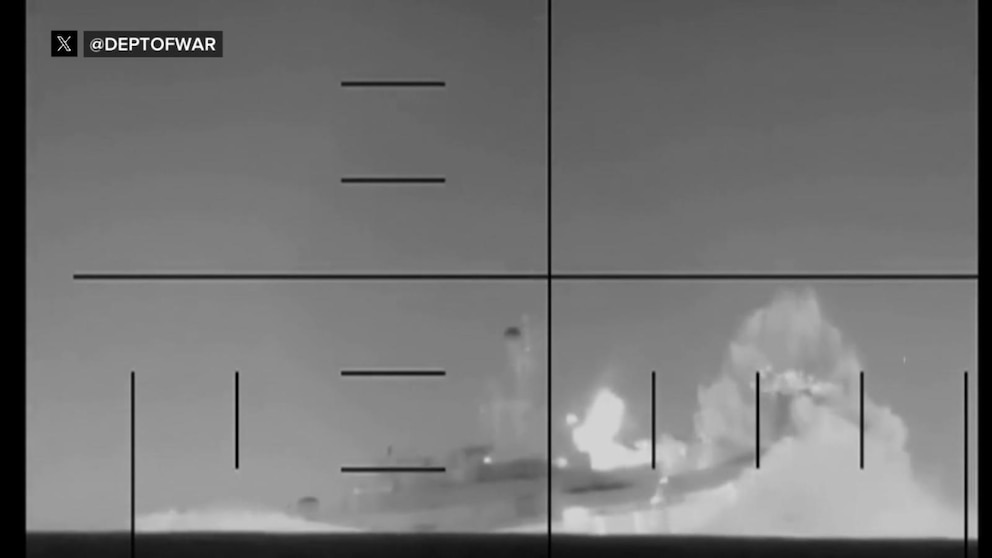
A United States submarine reportedly engaged and sank an Iranian vessel in the Indian Ocean on Tuesday, March 4, 2026, utilizing a torpedo in the confrontation. This significant event marks the first instance of a U.S. submarine employing a torpedo in an offensive capacity against another nation's ship since the conclusion of World War II, according to official statements from the Pentagon. The incident, which occurred in a strategically vital global waterway, immediately raises profound questions about international maritime security, the rules of engagement, and the escalating geopolitical tensions between the United States and Iran. While specific details regarding the Iranian ship's type, its mission, or the precise circumstances leading to the engagement remain scarce, the Pentagon's confirmation underscores the gravity of this unprecedented naval action, signaling a potentially dramatic shift in regional dynamics and global military posturing.
The reported sinking of an Iranian vessel by a U.S. submarine carries immense historical and strategic weight, primarily due to its designation as the first such engagement since World War II. During WWII, submarine warfare was a critical component of naval strategies, with numerous vessels sunk by torpedoes from submerged craft. However, the post-war era has largely seen a reduction in direct, overt submarine-on-ship combat, particularly involving major powers. This incident therefore breaks a nearly eight-decade-long precedent, forcing a re-evaluation of modern naval doctrine and the potential for conventional warfare in contested maritime zones. The Indian Ocean itself is a crucial artery for global trade and energy shipments, making any military confrontation within its waters a matter of international concern. Tensions between the U.S. and Iran have simmered for decades, often manifesting in proxy conflicts, cyber warfare, and occasional naval skirmishes in the Persian Gulf, but a direct submarine attack represents a significant escalation beyond previous encounters.
While the Pentagon confirmed the core event – a U.S. submarine sinking an Iranian ship by torpedo – reports did not immediately specify the class or size of the Iranian vessel involved, nor did they detail any potential casualties. Similarly, the exact location within the vast Indian Ocean where the engagement took place has not been publicly disclosed, which could have implications for international maritime law and territorial claims. Officials have yet to provide a justification for the attack, such as whether the Iranian ship posed an immediate threat or was engaged in hostile activities. The use of a torpedo implies a deliberate, targeted action from a submerged platform, highlighting the advanced capabilities of modern submarines and the precision of contemporary naval weaponry. Further information regarding any pre-engagement warnings, the duration of the encounter, or the immediate aftermath, including any recovery efforts or Iranian response, was not made available in initial statements, leaving many critical questions unanswered for international observers and analysts.
Analysts are likely to scrutinize this incident for its broader implications on international relations and naval strategy. The unprecedented nature of a U.S. submarine torpedoing another nation's vessel since WWII could signal a significant shift in the rules of engagement or a heightened readiness to confront perceived threats directly. Experts in international law will undoubtedly examine whether the action falls within established norms of self-defense or constitutes an act of aggression, depending on the undisclosed specifics of the encounter. Furthermore, this event could potentially reshape the geopolitical landscape in the Middle East and the Indo-Pacific, potentially leading to increased militarization of maritime routes and a re-evaluation of naval deterrence strategies by various global powers. The incident also raises concerns about potential escalation, as Iran's reaction to such a direct and lethal strike on one of its assets will be a critical factor in determining the future trajectory of regional stability and U.S.-Iran relations.
The reported sinking of an Iranian vessel by a U.S. submarine in the Indian Ocean on March 4, 2026, stands as a momentous and potentially destabilizing development, marking a historical precedent not seen since World War II. While the Pentagon has confirmed the core facts of the torpedo attack, a lack of detailed information regarding the circumstances, the specific vessels involved, and the rationale behind the engagement leaves a vacuum that is rapidly being filled with speculation and concern. The international community will be closely watching for further official statements from both the United States and Iran, as well as any independent verification or evidence that might shed light on this critical incident. The ramifications for global maritime security, the balance of power in the Indian Ocean, and the future of U.S.-Iran relations are profound, making this an event with far-reaching consequences that demand urgent and transparent clarification.