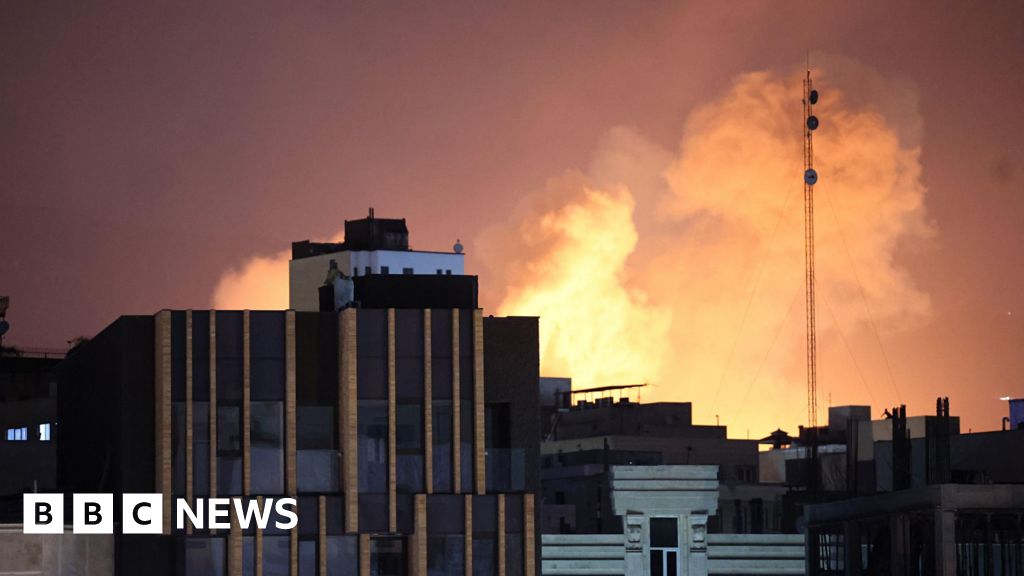
Reports indicate a sophisticated, multi-pronged strategy has been employed by the United States and Israel to target high-ranking Iranian officials, a campaign reportedly designed to sow widespread confusion within Tehran's command structures. This aggressive approach leverages asserted air and intelligence superiority over specific Iranian territories, enabling precision strikes against key targets, according to various sources. The initial phase of this operation, as detailed by US military officials, did not involve conventional kinetic attacks on prominent sites like the supreme leader's compound. Instead, it commenced with a series of advanced cyberattacks orchestrated by specialized units from US Cybercommand Space Command in collaboration with their Israeli counterparts. These digital incursions were reportedly designed to incapacitate Iran's ability to comprehend unfolding events, effectively severing its communication channels and hindering its capacity for a coordinated response. Following this preparatory phase, senior Iranian leaders were subsequently targeted in multiple locations, resulting in significant casualties among the nation's top brass.
The strategic targeting of Iran's leadership unfolds against a backdrop of long-standing geopolitical tensions and a complex regional power dynamic involving the United States, Israel, and the Islamic Republic. For decades, Iran has been a central player in Middle Eastern affairs, often in opposition to US and Israeli interests, particularly concerning its nuclear program, support for regional proxies, and ballistic missile development. The assertion by the US and Israel of possessing both air and intelligence dominance over parts of Iran signifies a critical escalation, suggesting an enhanced capability to project power and gather critical information within Iranian borders. This demonstrated superiority, as indicated by officials, forms the bedrock of a strategy not merely to eliminate individuals, but to fundamentally disrupt the operational continuity and decision-making processes of a rival state. The deliberate focus on creating confusion through initial cyber operations highlights a modern warfare doctrine that prioritizes incapacitating an adversary's cognitive and communicative functions before engaging in direct physical confrontation, aiming to minimize effective retaliation and maximize strategic impact.
The intricate details of the operation reveal a highly coordinated effort between intelligence and cyber warfare agencies. US military officials have indicated that the initial cyber offensive, spearheaded by US Cybercommand Space Command alongside Israeli units, effectively "blinded" Iran's capacity for situational awareness and response. This digital disruption reportedly paved the way for subsequent physical strikes. The identification and tracking of senior Iranian officials, which spanned several months, was a collaborative endeavor involving the Central Intelligence Agency (CIA) and Israel's Mossad, among other intelligence entities. Sources suggest that this intelligence gathering was likely facilitated through sophisticated technical penetration of Iran's communication systems, complemented by human intelligence assets operating on the ground, many reportedly managed by Mossad. The outcomes of these targeted operations were significant, with reports confirming the deaths of several high-profile figures, including Iran's army chief of staff, the defence minister, and the head of the Revolutionary Guards. While the United States also reportedly conducted strikes against Iran's command and control infrastructure, ballistic missile sites, and intelligence facilities in the initial stages, Israel is widely believed to have taken the primary lead in the specific strikes targeting individual leaders.
The deployment of such a sophisticated, multi-layered strategy carries profound implications for future conflicts and regional stability. The demonstrated ability of the US and Israel to combine advanced cyber warfare with precision intelligence-led strikes suggests a new frontier in military engagement, where the battlefield extends beyond physical domains into the digital realm of an adversary's command and control. Experts analyzing these reports suggest that the emphasis on "causing confusion" as a primary strategic objective could redefine how nations approach pre-emptive or retaliatory actions, prioritizing the disruption of an enemy's cognitive functions over immediate kinetic destruction. This approach not only aims to neutralize immediate threats but also to sow long-term uncertainty and distrust within an adversary's ranks. The successful targeting of such high-level Iranian officials, as indicated by various reports, sends a clear message regarding the reach and effectiveness of these combined intelligence and military capabilities, potentially influencing Iran's strategic calculations and its proxies' operations in the broader Middle East. The long-term impact on Iran's leadership succession and its internal stability remains a critical area for observation.
In conclusion, the reported strategy to target Iran's leadership represents a notable evolution in modern warfare, characterized by a seamless integration of cyber warfare, advanced intelligence gathering, and precision strikes. The initial digital assault, designed to create systemic confusion and communication breakdown, served as a critical precursor to the physical elimination of key figures within Iran's military and political hierarchy. This multi-faceted approach, attributed to US and Israeli capabilities, underscores a significant assertion of air and intelligence superiority. Moving forward, observers will closely monitor Iran's response to these profound losses and its potential adjustments to its security protocols and command structures. The broader implications for regional stability and the future conduct of state-on-state hostilities, particularly in the realm of hybrid warfare, will undoubtedly be a subject of intense scrutiny and analysis.