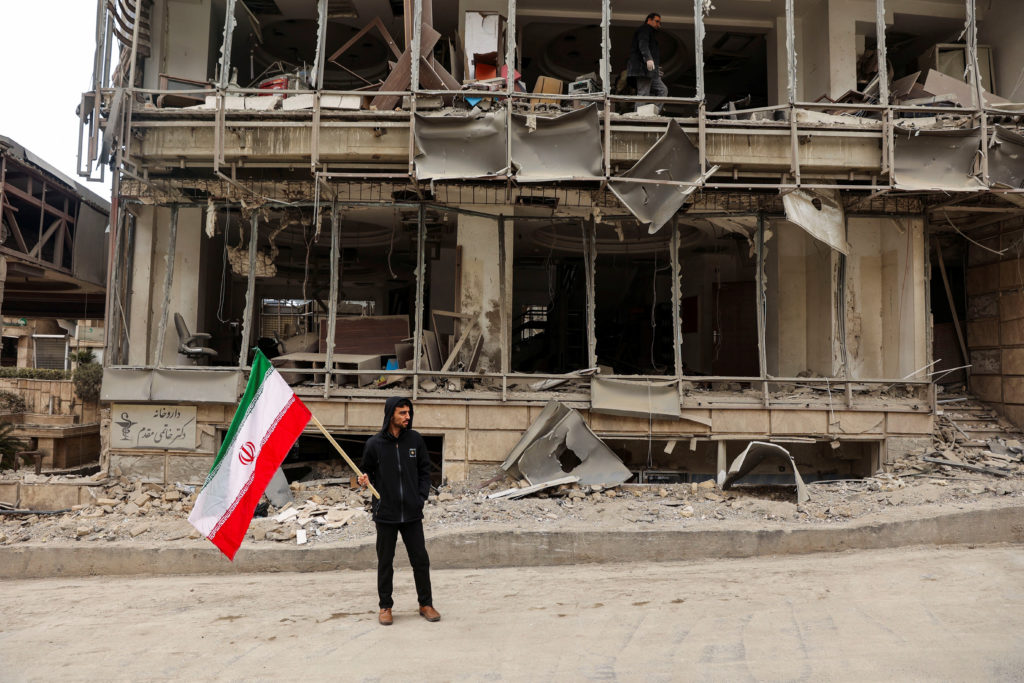
Amidst heightened regional tensions and ongoing speculation regarding potential joint U.S.-Israeli military actions targeting Iran, President Donald Trump released a video statement on Sunday, confirming an active 'operation in Iran.' While the President's remarks did not specify the nature of any joint involvement or provide granular details about the ongoing offensive, he characterized the engagement as "one of the most complex, most overwhelming military offensives the world has ever seen." This declaration signals a significant escalation in rhetoric concerning Tehran, with President Trump asserting that the operation would persist until "all of our objectives" are comprehensively achieved. The statement, delivered without immediate accompanying specifics, has prompted widespread analysis regarding its immediate implications and the broader strategic landscape in the Middle East, particularly concerning the long-standing geopolitical friction between Washington, its allies, and Tehran. The lack of explicit information on the operation's scope, targets, or duration leaves many questions unanswered for international observers and policymakers.
The President's announcement comes against a backdrop of decades of strained relations between the United States and Iran, marked by periods of intense confrontation and proxy conflicts across the Middle East. Historically, U.S. administrations have employed a range of strategies, from sanctions and diplomatic pressure to covert operations and limited military strikes, in an effort to curb Iran's nuclear ambitions, support for regional militant groups, and ballistic missile program. A presidential declaration of an 'operation' or 'military offensive' in Iran carries immense weight, signaling a potentially significant shift in policy or an intensification of existing efforts. Observers note that such public statements from a head of state are typically reserved for actions of considerable strategic importance, often with far-reaching consequences for regional stability and global oil markets. The precise context and triggers for this particular operation, beyond the President's general remarks, remain a subject of intense speculation among international relations experts.
President Trump's choice of language in describing the operation as "one of the most complex, most overwhelming military offensives the world has ever seen" is particularly noteworthy. This strong characterization suggests an engagement of considerable scale and sophistication, potentially involving multiple assets and advanced capabilities. However, without further details from official sources, the exact nature of this complexity and overwhelming force remains open to interpretation. The President's pledge that the operation will continue until "all of our objectives" are achieved further underscores a commitment to a decisive outcome, though these objectives themselves were not enumerated. This ambiguity leaves room for a wide range of interpretations, from targeted strikes aimed at specific capabilities to broader efforts designed to alter Iran's strategic calculus. The absence of specific data points or confirmed actions beyond the presidential statement means that the global community is left to interpret the implications based solely on the President's powerful, yet unelaborated, pronouncement.
Analysts are closely examining the potential ramifications of President Trump's statement, particularly concerning its impact on regional stability and international diplomacy. The declaration of an 'overwhelming military offensive' could be interpreted as a significant escalation, potentially prompting retaliatory actions from Iran or its proxies, thereby increasing the risk of a wider conflict in an already volatile region. Furthermore, the lack of specific details about the operation could create uncertainty among U.S. allies and adversaries alike, potentially complicating diplomatic efforts or alliance coordination. Experts suggest that such a public declaration, even without specifics, serves as a clear signal of intent from Washington, aiming to project strength and resolve. The long-term implications for the Iran nuclear deal, regional power dynamics, and the broader U.S. foreign policy agenda in the Middle East are likely to be profound, depending on the true scope and outcome of the declared operation.
In summary, President Donald Trump's video statement on Sunday confirmed an ongoing 'operation in Iran,' which he described as an exceptionally "complex" and "overwhelming military offensive." He affirmed that this operation would persist until all U.S. objectives are met, though specific details regarding the nature, scale, or participants of the offensive were not disclosed. This presidential declaration marks a significant moment in the ongoing tensions between the United States and Iran, signaling a potentially intensified phase of engagement. The international community now watches closely for further clarification from Washington and any observable developments on the ground, as the implications of such a robust military declaration could reshape the geopolitical landscape of the Middle East. The coming days are expected to bring increased scrutiny and calls for transparency regarding this unfolding situation.