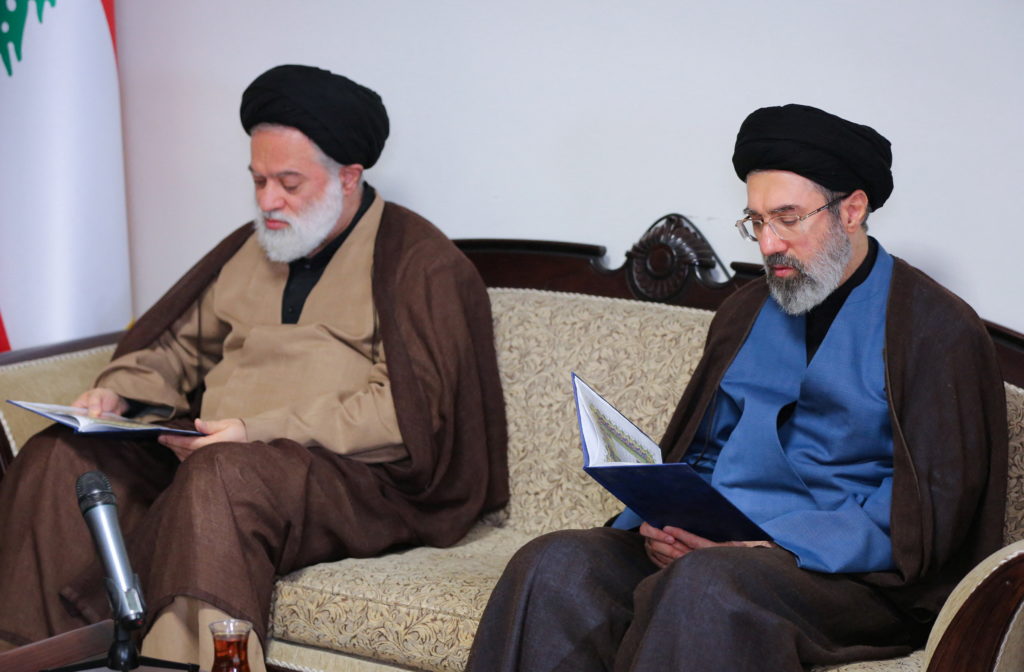
Speculation is intensifying within Iranian political circles regarding the potential succession to the nation's highest office, with Mojtaba Khamenei, a son of the current Supreme Leader, Ayatollah Ali Khamenei, frequently mentioned as a prominent contender. Reports indicate that his name continues to circulate as a possible candidate to assume the mantle of leadership, a development that has drawn significant scrutiny and criticism. Observers familiar with Iranian affairs note that this prospect has been previously decried as potentially establishing a 'theocratic version of Iran's former hereditary monarchy.' Such a comparison carries substantial weight within the Islamic Republic, directly challenging the revolutionary principles that rejected dynastic rule in favor of a system based on religious jurisprudence and a non-hereditary leadership. The ongoing discussion surrounding Mojtaba Khamenei's potential ascent underscores a critical juncture for Iran, raising fundamental questions about the future direction and ideological integrity of its unique political structure.
The Islamic Republic of Iran, established in the wake of the 1979 revolution, was fundamentally designed to dismantle and replace the hereditary monarchical system that had governed the nation for centuries, most recently under the Pahlavi dynasty. The revolution, spearheaded by Ayatollah Ruhollah Khomeini, sought to institute a governance model rooted in Islamic principles, where the ultimate authority, the Supreme Leader, is selected by an Assembly of Experts—a body of high-ranking clerics—rather than inheriting the position through familial lineage. This selection process is constitutionally mandated to be merit-based, prioritizing religious scholarship, political acumen, and leadership capabilities over bloodline. Consequently, the very notion of a son succeeding his father in such a pivotal, non-hereditary role directly confronts the core ideological tenets that underpin Iran's post-revolutionary political framework. Critics argue that such a succession could erode the foundational principles that explicitly rejected dynastic power transfers, potentially undermining the legitimacy derived from the revolution's anti-monarchical stance and its promise of a new, more equitable system of governance.
The continued circulation of Mojtaba Khamenei's name as a potential successor, according to various reports, suggests a perceived level of influence or suitability within certain segments of the Iranian establishment. While specific details about his official roles or political maneuvers are often opaque, the mere discussion of his candidacy highlights the intricate and often veiled dynamics of power within the Islamic Republic. The criticism that this could lead to a 'theocratic version of Iran's former hereditary monarchy' is not merely rhetorical; it taps into deep-seated historical grievances and revolutionary ideals. Iran's pre-1979 Pahlavi monarchy was overthrown amidst widespread public discontent over its autocratic nature, perceived corruption, and lack of accountability, with the revolution explicitly championing a break from such dynastic rule. Therefore, any perceived move towards a familial transfer of power, even within a religious framework, is seen by critics as a significant ideological regression, challenging the very essence of the Islamic Republic's founding narrative and its commitment to a non-hereditary, meritocratic leadership structure. This comparison serves as a powerful critique, suggesting a potential deviation from the revolutionary path.
Analysts and observers of Iranian politics suggest that the prospect of Mojtaba Khamenei's succession carries profound implications for the Islamic Republic's internal stability and its foundational legitimacy. Should a son succeed his father, it could be interpreted by various factions—including reformists, segments of the public, and even some hardliners—as a departure from the revolutionary principles that established the system. Expert perspectives indicate that such a move might challenge the narrative of a religiously guided, merit-based leadership, potentially fueling dissent among those who believe in the original anti-monarchical ethos of the revolution. Furthermore, the introduction of a perceived dynastic element could complicate Iran's political landscape, potentially leading to internal power struggles or a re-evaluation of the Supreme Leader's role and selection process. The broader ramifications extend to Iran's international standing, as any perceived shift towards a more hereditary system could be viewed through the lens of a system struggling to maintain its revolutionary purity, potentially impacting its diplomatic relations and regional influence. The debate underscores the delicate balance between ideological consistency and political pragmatism in the succession process.
In conclusion, the ongoing speculation surrounding Mojtaba Khamenei as a potential successor to his father, Iran's Supreme Leader, represents a pivotal and ideologically charged discussion within the Islamic Republic. The core criticism—that such a succession could inadvertently establish a 'theocratic version of Iran's former hereditary monarchy'—strikes at the heart of the nation's post-revolutionary identity and its explicit rejection of dynastic rule. As the country anticipates a future leadership transition, the manner in which the next Supreme Leader is chosen will undoubtedly shape Iran's political trajectory, its internal dynamics, and its relationship with the world. The debate highlights the enduring tension between revolutionary ideals and the practicalities of power transfer, making the upcoming succession a critical event to watch for all stakeholders interested in the future of the Islamic Republic.