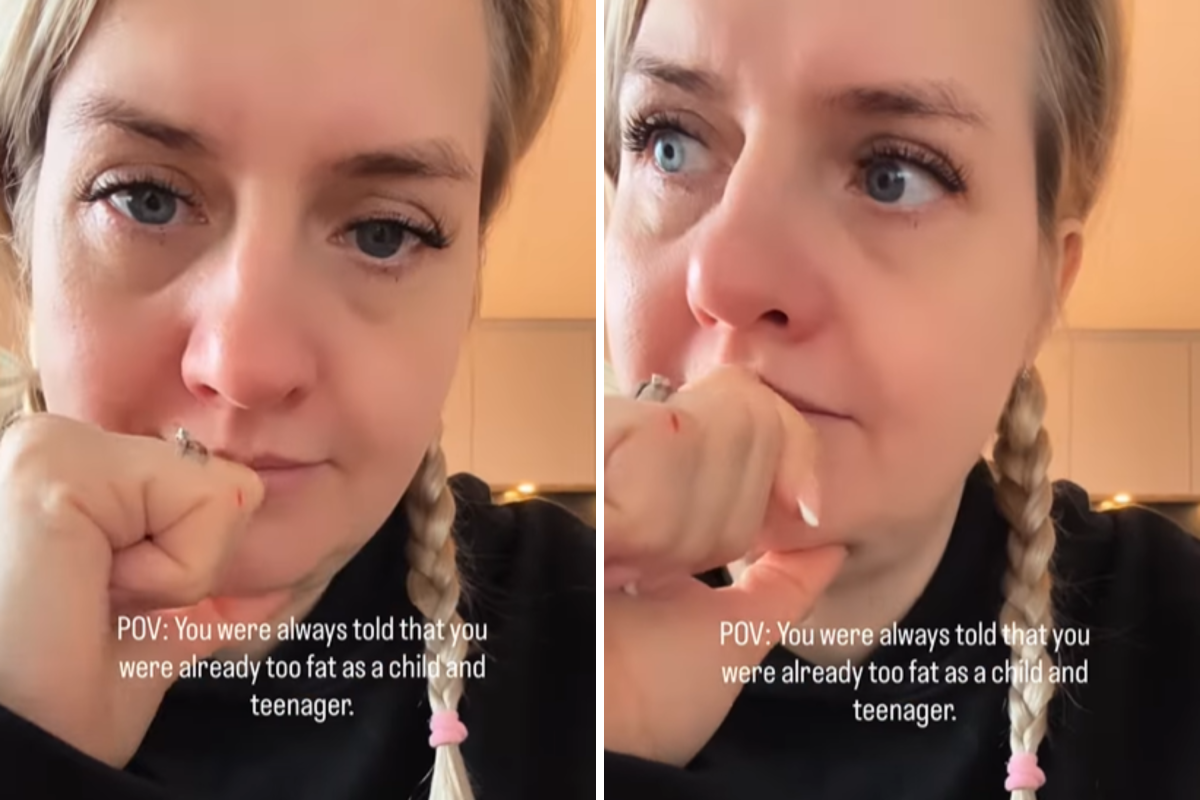
A Swiss mother of three has initiated a significant online discourse after sharing a deeply personal Instagram reel that directly confronts a long-held belief about her own body. Katrin W, widely recognized by her online handle @kiki_cooks_fit, recently published a collection of her childhood and adolescent photographs, which, according to reports, have rapidly gained widespread attention across social media platforms. The compelling visual narrative highlights a profound discrepancy between her internal conviction, maintained for decades, that she was considered 'too fat' during her formative years, and the objective reality captured in the images. These photographs consistently portray a seemingly typical, cheerful young girl, a visual representation that stands in stark opposition to the self-perception she reportedly harbored, and which, sources indicate, she was implicitly or explicitly encouraged to adopt. This poignant revelation has resonated with countless individuals globally, sparking a vital conversation about the lasting impact of early body image perceptions and the often-distorted lens through which individuals view themselves.
The widespread engagement with Katrin W's post underscores a pervasive societal challenge concerning body image and self-esteem, particularly during childhood and adolescence. For many, the formative years are a period marked by vulnerability to external judgments and the internalization of societal beauty standards, which can profoundly shape an individual's self-perception for decades. The narrative of feeling 'too fat' or inadequate, even when visual evidence suggests otherwise, is a common thread in discussions surrounding mental health and body dysmorphia. This phenomenon is often exacerbated by cultural pressures, media portrayals, and sometimes, well-intentioned but misguided comments from family or peers. The significance of Katrin W's story lies not just in its personal nature, but in its ability to illuminate how deeply ingrained these beliefs can become, influencing an individual's relationship with their body long after the initial experiences have faded. Her experience serves as a powerful reminder of the delicate balance between external perception and internal reality, and the potential for lasting psychological impact.
The Instagram reel shared by Katrin W, which has reportedly gone viral, meticulously presents a series of snapshots from her youth, each frame depicting a smiling, seemingly healthy child. These images, far from showing an overweight individual, instead illustrate a typical young girl enjoying various stages of her childhood. This visual evidence directly challenges the 'decades-long internal narrative' she carried, a belief that she was consistently perceived as 'too fat.' The stark contrast between the vibrant, active child in the photographs and the self-critical lens through which she viewed herself for so long offers a compelling insight into the subjective nature of body image. According to her own account, this deeply ingrained self-perception was a significant part of her identity throughout her childhood and teenage years, influencing her choices and emotional well-being. The public sharing of these intimate details and the subsequent online discussion highlight the profound psychological impact of such internalised beliefs, even when they are not supported by objective reality.
The broader implications of Katrin W's viral post extend beyond individual experience, shedding light on critical societal issues surrounding body shaming and the often-unrealistic standards imposed, particularly on young girls. Experts in psychology and body image frequently point to the lasting damage that can result from negative self-perception, even when it originates from external, often casual, comments or societal pressures. This phenomenon can lead to various mental health challenges, including anxiety, depression, and disordered eating patterns, persisting well into adulthood. Katrin W's story serves as a powerful testament to the importance of fostering positive body image and self-acceptance from an early age. It encourages a critical re-evaluation of how society discusses weight and appearance, urging for greater empathy and awareness of the long-term psychological consequences of negative commentary, whether direct or implied. The online discussion sparked by her reel suggests a collective desire to challenge these harmful narratives and promote healthier self-perceptions.
Katrin W's courageous act of sharing her personal journey has ignited a crucial global dialogue, emphasizing the profound and often invisible struggle many face with body image. Her viral Instagram reel serves as a poignant reminder that self-perception can be significantly distorted, often diverging sharply from objective reality, with lasting psychological effects. As the conversation continues to unfold online, it underscores the urgent need for greater awareness, empathy, and education regarding body positivity and mental well-being from childhood through adulthood. The resonance of her story suggests a collective yearning for a more compassionate approach to how individuals view themselves and others. Moving forward, the impact of such personal narratives will likely continue to inspire broader societal reflection on the pervasive nature of body image issues and the critical importance of fostering healthy self-esteem.