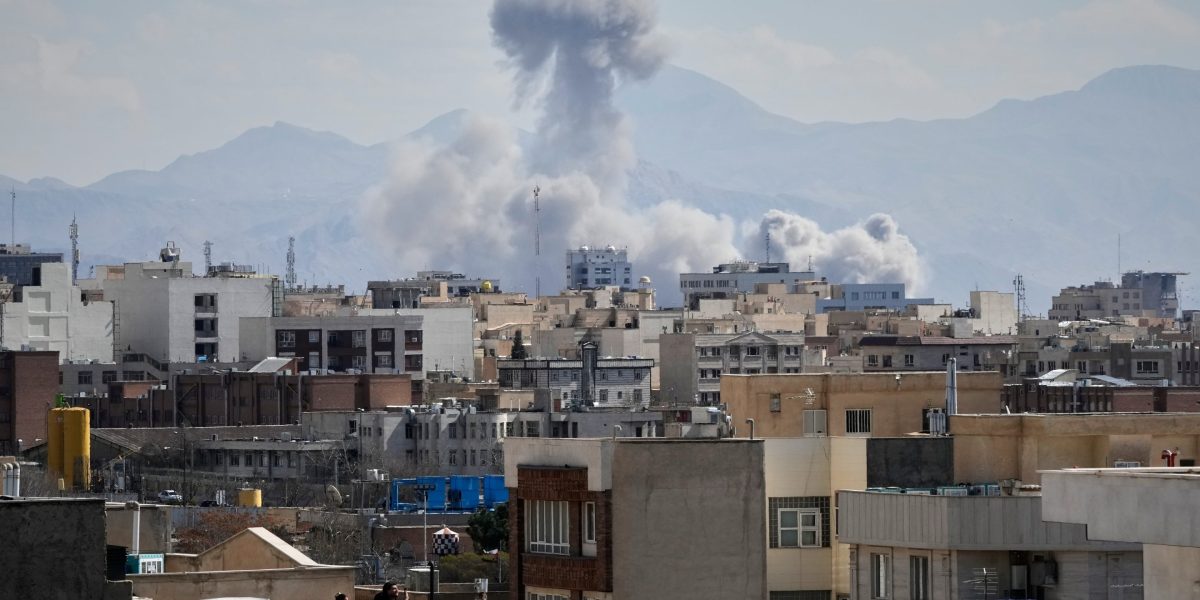
The volatile landscape of the Middle East witnessed a tragic escalation on Sunday, as three United States military personnel were killed and five others sustained serious injuries during ongoing operations involving Iran. This grim development comes amidst a second consecutive day of joint American and Israeli military strikes targeting Iranian territory, which have been met with swift and broad retaliation from Tehran. The heightened hostilities follow the recent death of Iranian Supreme Leader Ayatollah Ali Khamenei, an event that has plunged the future of the Islamic Republic into profound uncertainty and significantly amplified the risk of widespread regional instability. U.S. Central Command confirmed the casualties via a social media announcement on Sunday, though specific details regarding the incident or the location of the fatalities were not immediately provided by officials. The unfolding events underscore the perilous nature of the current geopolitical climate, with major powers engaged in direct and indirect confrontations across the region, raising concerns about a potential broader conflict.
The current surge in military activity is directly linked to the recent demise of Ayatollah Ali Khamenei, whose passing has created an unprecedented leadership vacuum within Iran. His death has not only cast a shadow over the internal political trajectory of the Islamic Republic but has also ignited fears of a power struggle and a potential shift in the nation's foreign policy stance, particularly concerning its regional adversaries. In the immediate aftermath of Khamenei's death, Iran moved to establish an interim governing body, with reports indicating the selection of a 66-year-old cleric to join a three-member leadership council tasked with overseeing the country until a new supreme leader can be formally chosen. This period of transition is inherently fraught with peril, as external pressures from U.S.-Israeli military actions and internal uncertainties combine to create a highly combustible environment, threatening to unravel the delicate balance of power in the broader Middle East.
On Sunday, the intensity of the conflict was palpable, with multiple explosions reported in Tehran, the Iranian capital. Israeli authorities publicly stated their intention to target the 'heart' of Iran's capital, signaling a significant escalation in their offensive strategy. In a robust response, Iran launched a barrage of missiles and unmanned aerial vehicles, aiming at a diverse set of targets. These retaliatory strikes reportedly impacted locations within Israel, American military installations situated across the Gulf region, the Saudi Arabian capital, and the prominent international commercial hub of Dubai. Earlier on Sunday, Iran's paramilitary Revolutionary Guard had issued a stark warning, threatening to unleash its 'most intense offensive operation' ever, specifically targeting both Israel and U.S. bases. The U.S. military's announcement of three fatalities and five serious injuries among its service members underscores the direct human cost of these escalating confrontations, though Central Command's social media statement offered no further specifics. Adding to the complex picture, reports from northern Iran described a local doctor and his colleagues celebrating the news of Supreme Leader Khamenei's death indoors, a testament to the heavy deployment of armed security forces in his city, suggesting internal dissent amidst the external conflict.
The implications of these rapidly unfolding events are profound, suggesting a significant turning point for regional stability. The death of Ayatollah Ali Khamenei not only creates a power vacuum but also introduces an element of unpredictability into Iran's future foreign policy and its approach to proxy conflicts. Analysts suggest that the interim leadership council faces the immediate challenge of maintaining internal cohesion while simultaneously responding to external military pressures. The targeting of key economic centers like Dubai and the Saudi capital by Iran's retaliatory strikes indicates a willingness to broaden the scope of conflict beyond traditional military engagements, potentially drawing in more regional actors and disrupting global commerce. Furthermore, the confirmed U.S. military casualties mark a critical development, raising questions about the rules of engagement, the protection of American forces, and the potential for a more direct and sustained U.S. involvement. Expert perspectives indicate that the current trajectory risks a dangerous feedback loop of escalation, where each strike and counter-strike pushes the region closer to a full-scale confrontation.
In summary, the Middle East is navigating an exceptionally perilous period, marked by the tragic loss of three U.S. service members and injuries to five others amidst ongoing U.S.-Israeli military operations against Iran. The death of Supreme Leader Ayatollah Ali Khamenei has ignited a complex interplay of internal uncertainty within Iran and external military pressures, leading to a dangerous cycle of strikes and retaliation. With Iran's Revolutionary Guard threatening unprecedented offensives and its retaliatory actions spanning multiple regional targets, the immediate future remains highly volatile. Observers will be closely monitoring the process of selecting Iran's next supreme leader, the nature of any further U.S.-Israeli military actions, and the potential for additional Iranian responses, all of which will determine whether the region can avert a wider, more devastating conflict.