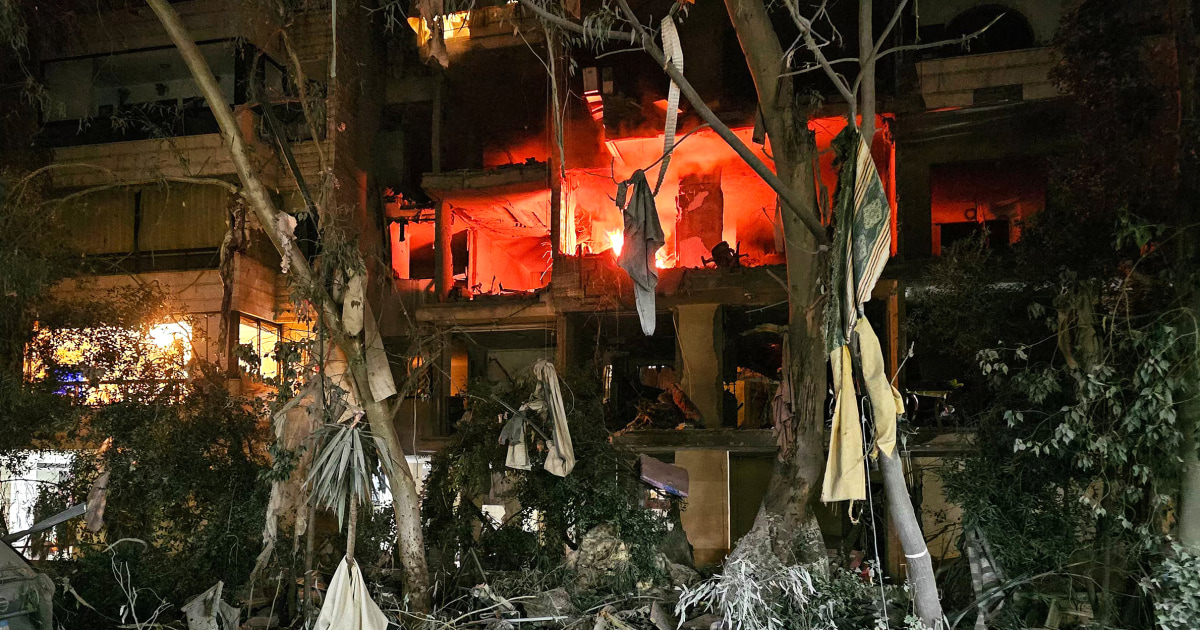
The Middle East is grappling with a rapidly escalating conflict, marked by widespread military engagements and a firm rejection of diplomatic overtures from Tehran, according to recent reports. The intensification follows the killing of Iran's Supreme Leader, Ayatollah Ali Khamenei, which has plunged the region into further instability. A joint military campaign by the United States and Israel has seen thousands of targets struck within Iranian territory. In a significant and tragic development, three U.S. fighter jets were reportedly shot down by friendly fire from Kuwaiti forces, resulting in the deaths of four American service members. Simultaneously, the Iran-backed Hezbollah militant group in Lebanon has launched missile attacks against Israel, prompting retaliatory strikes from Israeli forces. Amidst this volatile environment, Iran's top national security official, Ali Larijani, has unequivocally stated that his nation will not engage in negotiations with the United States, directly contradicting earlier assertions from President Donald Trump regarding potential talks.
This current wave of hostilities, designated as 'Operation Epic Fury,' represents a critical juncture in the long-standing geopolitical tensions gripping the Middle East. The demise of Supreme Leader Ayatollah Ali Khamenei has created a significant power vacuum within Iran, a nation whose leadership has historically played a pivotal role in regional dynamics. Khamenei's death has not only fueled internal uncertainty but has also removed a key figure whose presence, for decades, shaped Iran's foreign policy and its intricate network of proxy forces. The subsequent joint offensive by the United States and Israel against Iranian targets signals a dramatic shift in strategy, aiming to capitalize on the perceived vulnerability of a nation in leadership flux. The involvement of Hezbollah, a powerful non-state actor with deep ties to Tehran, further underscores the complex and interconnected nature of the conflict, threatening to draw more regional players into a broader confrontation.
The human cost of the escalating conflict is mounting rapidly across the region. Iran's Red Crescent organization has reported that more than 550 individuals have lost their lives in the strikes targeting Iran. Beyond the tragic friendly fire incident involving U.S. aircraft, which claimed four American service members, the conflict has also resulted in significant casualties elsewhere. Officials in Israel have confirmed eleven fatalities within their borders, while deaths have also been reported in the United Arab Emirates, Kuwait, and Bahrain. Lebanese authorities indicate that dozens have been killed as a result of the exchanges between Israeli forces and Hezbollah across their shared border. Diplomatically, the chasm between Washington and Tehran appears to be widening, with Iran's national security chief, Ali Larijani, firmly rejecting any dialogue with the U.S., despite President Trump's earlier claims that Iranian officials were open to discussions. Internally, Iran's temporary three-man Leadership Council, comprising cleric Alireza Arafi, President Masoud Pezeshkian, and judiciary chief Gholamhossein Mohseni Ejei, is tasked with governing the nation. Arafi has expressed hope for a swift selection of Khamenei's successor to stabilize the country's leadership.
The ramifications of this expanding conflict extend far beyond the immediate battlegrounds, creating significant global disruption. The price of oil has experienced a sharp increase, according to market analysts, as the hostilities severely impact supply chains and raise concerns about future energy security. This economic instability is compounded by a growing humanitarian crisis, with numerous countries scrambling to evacuate their citizens from Gulf states that are now under direct threat from Iranian attacks. Widespread flight cancellations and airport closures across the region are further hindering these evacuation efforts and disrupting international travel. The friendly fire incident involving U.S. jets in Kuwait raises serious questions about coordination and communication among allied forces, potentially straining crucial military partnerships. Furthermore, the direct engagement of Hezbollah with Israel signals a dangerous expansion of the conflict, increasing the likelihood of a broader regional conflagration and posing immense challenges to international efforts aimed at de-escalation.
In summary, the Middle East is currently gripped by a rapidly intensifying conflict following the death of Iran's Supreme Leader, Ayatollah Ali Khamenei. The region has witnessed extensive military actions, including joint U.S.-Israeli strikes on Iran, significant Iranian retaliation across the Middle East, and direct exchanges between Israel and Hezbollah. The tragic friendly fire incident involving U.S. jets and Iran's categorical refusal to negotiate with the United States underscore the profound challenges to any diplomatic resolution. With a temporary leadership council governing Iran and a call for a swift succession, the political future of the nation remains uncertain. The escalating violence has triggered a humanitarian crisis, disrupted global oil supplies, and caused widespread travel chaos. Observers will be closely monitoring the internal developments within Iran and the potential for further regional escalation as the conflict continues to unfold.