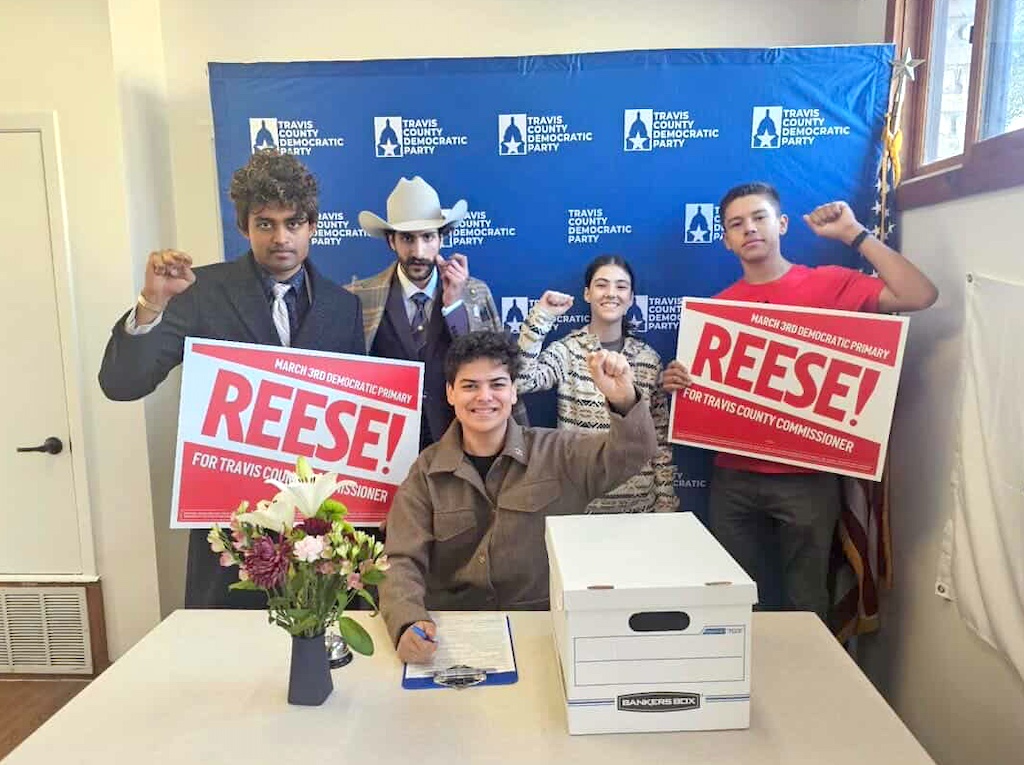
A seventeen-year-old high school student, Reese Armstrong, has launched an unconventional socialist campaign for a seat on the Travis County Commissioners Court in Texas, according to recent reports. Armstrong is seeking to represent the Second Precinct, a rapidly developing area within one of the state's fastest-growing regions. Their platform prioritizes public healthcare access, significant investment in social housing initiatives, and a focus on class-based politics, which observers suggest may be more surprising to local voters than the candidate's youth. This bid marks Armstrong as one of the youngest individuals nationwide to pursue public office, aiming to address pressing issues faced by workers, tenants, and students in the community. The campaign's core message, as indicated by sources, is a direct response to the escalating challenges of housing affordability, stagnant wages, and access to essential services that impact working-class families in the area.
Armstrong's candidacy emerges from a broader trend of young people across the United States actively engaging in political discourse and direct action to confront systemic challenges. Inspired by their involvement with the Young Democratic Socialists of America (YDSA), Armstrong's campaign seeks to amplify the voices of those often marginalized in local governance. The Travis County Commissioners Court holds substantial influence over critical aspects of community life, including public health policies, the administration of county courts, infrastructure development, and crucial housing regulations. Growing up in Austin, Armstrong gained early experience in student organizing, establishing networks across various high schools and leading efforts to address issues concerning school governance and the displacement of residents within neighborhoods. These formative experiences, reports suggest, form the bedrock of their campaign, directly informing their understanding of the realities confronting many young people and working families in the Second Precinct.
The campaign's focus on public health care and social housing investment directly addresses the economic pressures felt by residents in Travis County's Second Precinct. Reports indicate that rapid urban development, coupled with escalating rental costs and wages that have not kept pace with the cost of living, are increasingly forcing long-term working-class families out of the communities where they have established roots. Armstrong's platform, as detailed by campaign statements, aims to counteract these trends by advocating for policies that would make essential services and housing more accessible and affordable for all residents. The candidate's emphasis on 'class politics' suggests a framework that views these issues through the lens of economic inequality, seeking to challenge existing power structures and advocate for policies that benefit the broader working population rather than solely focusing on individual prosperity. This approach, according to campaign materials, is designed to resonate with voters who feel overlooked by traditional political narratives.
Armstrong's campaign represents a significant development in local politics, potentially signaling a growing desire among younger generations for more radical solutions to entrenched socioeconomic problems. Political analysts suggest that while the candidate's age and socialist platform might initially surprise some voters, the core issues they highlight—affordable housing, accessible healthcare, and economic equity—are universally relevant and increasingly urgent concerns for many residents, regardless of political affiliation. The campaign's ability to mobilize young voters and those disaffected by conventional politics could offer a blueprint for future youth-led movements. Furthermore, the focus on local governance, specifically the Commissioners Court, underscores the understanding that significant change can originate at the county level, influencing daily lives through policy decisions on infrastructure, public services, and community development. This approach could redefine what constitutes a viable candidate in local elections, challenging traditional expectations of age and political experience.
As Reese Armstrong continues their campaign for Travis County Commissioner, the race will likely serve as a barometer for the evolving political landscape, particularly regarding youth engagement and the viability of progressive platforms in local elections. The outcome will offer insights into how voters in a rapidly growing region respond to a candidate prioritizing issues like social housing and public health through a socialist lens. Observers will be watching to see if Armstrong's grassroots organizing and focus on the economic struggles of working families can translate into significant electoral support, potentially inspiring similar youth-led campaigns in other communities facing comparable challenges. The campaign underscores a broader shift where young activists are not just advocating for change but actively seeking to implement it through direct participation in the political process.