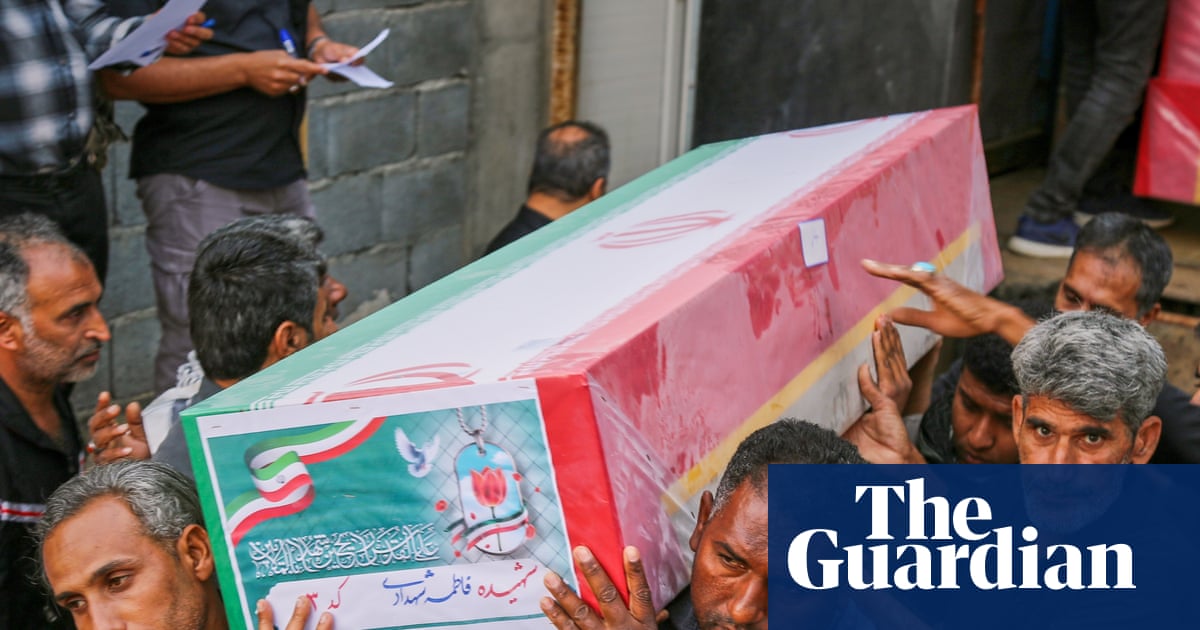
The United States military is currently investigating a reported deadly strike on a girls' school in Iran, an incident that Iranian authorities claim resulted in the deaths of at least 165 students. The alleged attack, which Iranian officials state occurred on Saturday, has drawn significant attention and calls for clarity. US Defense Secretary Pete Hegseth acknowledged the incident on Wednesday, indicating that the Pentagon is 'taking a look' at the situation. While confirming an ongoing investigation, Hegseth offered limited specific details and did not accept responsibility for the strike. He firmly asserted that US forces never intentionally target civilian locations, emphasizing the military's commitment to avoiding such actions, even as the probe into the Shajareh Tayyebeh girls’ school bombing in Minab proceeds.
This development unfolds against a backdrop of complex and often strained relations between the United States and Iran, where military actions and their consequences are frequently scrutinized. Incidents involving civilian casualties in any conflict zone are inherently sensitive and carry the potential for significant diplomatic repercussions, regardless of the parties involved or the ultimate findings of an investigation. The gravity of such an event, particularly one affecting a school and resulting in a high reported death toll among students, underscores the critical need for transparency and accountability. Historical precedents show that allegations of civilian harm can fuel regional tensions and complicate international efforts towards de-escalation, making a thorough and impartial inquiry paramount to understanding the full scope of what transpired and preventing further destabilization.
According to reports from Iranian officials, the strike on the Shajareh Tayyebeh girls’ school in the city of Minab on Saturday led to a devastating loss of life, with a reported 165 students killed. These figures, if confirmed, represent a catastrophic humanitarian toll. When pressed for details regarding the incident, US Defense Secretary Pete Hegseth remained largely evasive, reiterating that the US military was actively 'investigating' the matter. He specifically stated, 'All I can say is we’re investigating that,' in response to inquiries about the bombing. Hegseth further emphasized the US military's operational principles, asserting, 'We, of course, never target civilian targets, but we’re taking a look and investigating that.' This statement highlights the immediate discrepancy between Iranian claims of a deadly strike on a civilian educational institution and the US military's standard operating procedures and denial of intentional civilian targeting.
The Pentagon's announcement of an investigation, coupled with the denial of intentional civilian targeting, sets the stage for a period of intense scrutiny and potential diplomatic friction. Expert observers suggest that such investigations, while standard procedure for the US military when allegations of civilian harm arise, can be protracted and complex, especially in contested environments where information is difficult to verify independently. The challenge lies in reconciling conflicting narratives and establishing a clear chain of events. Should the investigation confirm US involvement, it would necessitate a comprehensive review of operational protocols and accountability measures. Conversely, if US involvement is disproven, the source of the attack would remain a critical unanswered question, potentially pointing to other actors or misidentification. The broader implications extend to international perceptions of US military conduct and the ongoing debate surrounding the protection of non-combatants in modern warfare.
In summary, the alleged deadly strike on the Shajareh Tayyebeh girls’ school in Minab, Iran, which Iranian officials claim killed 165 students, has prompted an official investigation by the US military. Defense Secretary Pete Hegseth has confirmed the probe, emphasizing that US forces do not target civilians, but has not taken responsibility for the Saturday incident. The disparity between Iranian assertions and the US military's stance underscores the critical need for a transparent and thorough inquiry. Moving forward, the international community will be closely watching for the findings of the US investigation and any further statements or evidence from Iranian authorities. The outcome of this probe will be crucial for understanding accountability, addressing humanitarian concerns, and potentially influencing the delicate geopolitical dynamics between the United States and Iran.