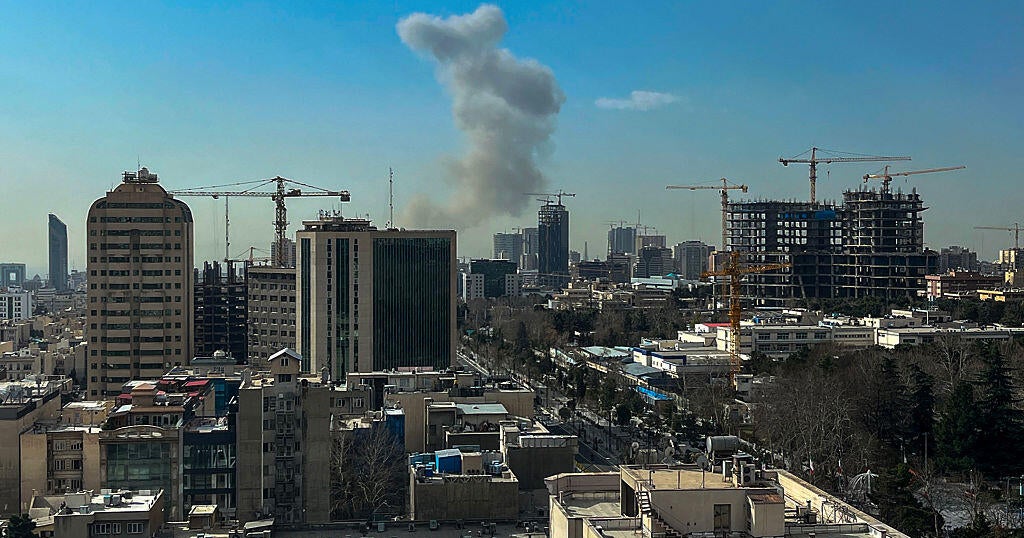
A series of coordinated military actions reportedly undertaken by the United States and Israel against targets within Iran on Saturday has prompted widespread international alarm, with numerous governments and diplomatic bodies expressing profound concern over the potential for a broader regional conflict. Reports from various global capitals indicate that both allies and traditional adversaries of the U.S. have characterized the unfolding situation as exceedingly serious and fraught with danger. The joint operations have ignited fears of a new, potentially devastating war in the Middle East, leading to urgent calls for de-escalation and diplomatic engagement from key international players. Officials across Europe and beyond are closely monitoring the developments, emphasizing the critical need for all parties to exercise maximum restraint to prevent further destabilization in an already volatile region. The immediate aftermath has seen a flurry of diplomatic activity aimed at understanding the scope of the attacks and mitigating the risk of retaliatory actions that could spiral out of control.
The recent military engagement marks a significant escalation in the long-standing tensions that have characterized relations between Iran, the United States, and Israel. For decades, the U.S. has maintained a strategic alliance with Israel, often aligning on security concerns regarding Iran's nuclear ambitions and its regional influence. Iran, in turn, has consistently viewed the presence and actions of the U.S. and Israel as hostile, leading to a complex web of proxy conflicts and geopolitical maneuvering across the Middle East. The Saturday attacks represent a direct military confrontation that moves beyond previous covert operations or proxy engagements, fundamentally altering the dynamics of the conflict. This development comes against a backdrop of ongoing international efforts to address Iran's nuclear and ballistic missile programs through negotiation, a path that many global leaders fear could now be severely undermined. The region has been on edge, with various actors warning for months about the potential for miscalculation or direct confrontation, making these latest strikes a critical juncture in the trajectory of Middle Eastern security.
In response to the escalating situation, high-level European Union officials have voiced considerable apprehension. The President of the European Commission, Ursula von der Leyen, described the events in Iran as "greatly concerning," underscoring the paramount importance of safeguarding nuclear security and preventing any actions that might intensify tensions or compromise the global non-proliferation framework. She also highlighted the existing sanctions imposed by the EU on Iran's government and its Revolutionary Guards, which are in place due to concerns over their activities. Despite these measures, Von der Leyen affirmed the EU's consistent advocacy for diplomatic solutions to address Iran's nuclear and ballistic programs through negotiated agreements. She issued a clear appeal to all involved parties to demonstrate utmost restraint, ensure the protection of civilian populations, and uphold international law. Concurrently, Kaja Kallas, the EU's high representative for foreign affairs and security policy, confirmed engaging in discussions with Israel's foreign minister and other regional representatives, indicating that the EU is actively collaborating with Arab partners to explore viable diplomatic avenues for resolution.
The international community's assessment that the situation is "grave" and "perilous" reflects a deep-seated concern about the broader implications of direct military action between these key players. Experts suggest that such strikes risk igniting a wider regional conflagration, potentially drawing in other nations and non-state actors, with unpredictable and devastating consequences for global stability. The emphasis on nuclear safety and non-proliferation by EU officials highlights the fear that an unchecked escalation could lead to a dangerous unraveling of international agreements designed to prevent the spread of nuclear weapons. Furthermore, the calls for maximum restraint and adherence to international law underscore a collective desire to prevent a humanitarian crisis and uphold the principles of sovereign conduct. The challenge now lies in whether diplomatic efforts, such as those being coordinated by the EU with Arab partners, can effectively de-escalate the situation and steer the parties back towards a path of negotiation, or if the current trajectory will lead to further military exchanges and a more entrenched conflict.
As the dust settles from the recent U.S. and Israeli military actions against Iran, the immediate focus of the international community remains firmly on de-escalation and preventing a full-scale regional war. The unified message from global leaders, particularly within the European Union, emphasizes the critical need for restraint, the protection of civilians, and strict adherence to international legal frameworks. While existing sanctions against Iran remain in place, the renewed push for diplomatic engagement and negotiated solutions underscores the belief that military confrontation is not a sustainable path forward. The coming days will be crucial in determining whether the involved parties heed these calls for caution or if further actions will push the Middle East into an even more precarious state. All eyes will be on the diplomatic channels being pursued and any potential responses from Iran, as the world anxiously watches for signs of either a reduction in tensions or a dangerous escalation.