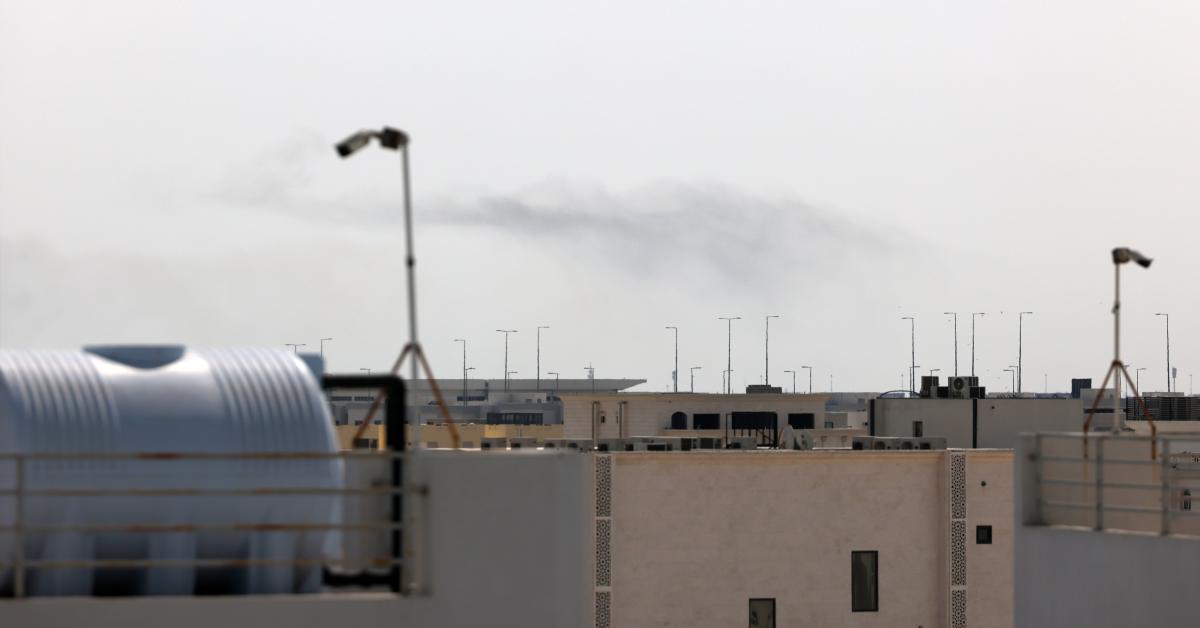
In a dramatic escalation of geopolitical tensions, Iranian military forces reportedly initiated a series of retaliatory missile and drone strikes across several Middle Eastern nations on Saturday. These coordinated actions, according to statements from Tehran, were a direct response to what Iran described as a "massive" and ongoing offensive campaign conducted by the United States and Israel. The targets of these strikes primarily included countries hosting significant U.S. military installations, signaling a direct challenge to American presence in the region. Among the confirmed incidents, Qatar's Defense Ministry reported the successful interception of multiple projectiles believed to be aimed at Al Udeid Air Base, which serves as the largest U.S. military facility in the Persian Gulf. Concurrently, Iranian military communications indicated direct hits on a U.S. naval facility located in Bahrain. Eyewitness accounts from Manama, the Bahraini capital, described visible plumes of dark smoke ascending near the headquarters of the U.S. Navy's Fifth Fleet, although the full extent of any damage sustained remains unverified at this time. Further reports also detailed explosions occurring in the United Arab Emirates and Kuwait, both nations that accommodate substantial U.S. military contingents, underscoring the widespread nature and strategic intent of Iran's offensive.
This expansive wave of attacks by Iran marks a significantly heightened state of confrontation in a Middle East already grappling with intricate geopolitical dynamics and historical rivalries. The Persian Gulf, in particular, has long been recognized as a critical flashpoint in the often-strained relationship between the United States and Iran, characterized by a delicate balance of power, proxy conflicts, and intermittent direct confrontations. The United States maintains a robust and strategically positioned military presence across various Gulf states, a deployment designed to safeguard vital international shipping lanes, protect global energy interests, and deter potential threats to regional stability. Key facilities such as Qatar's Al Udeid Air Base function as indispensable operational hubs for U.S. Central Command, facilitating a broad spectrum of military operations, while the U.S. Navy's Fifth Fleet, headquartered in Bahrain, is crucial for ensuring maritime security and freedom of navigation throughout the vast regional waterways. Iran's explicit justification for these recent strikes, citing a "massive" assault by the U.S. and Israel, strongly suggests a potential shift towards a more direct and expansive conflict, moving beyond traditional proxy engagements.
Further details emerging from the region paint a clearer picture of the scale and precision of the reported Iranian actions. According to official statements, Qatar's Defense Ministry played a critical role in confirming the interception of several projectiles, which were reportedly directed towards the vicinity of Al Udeid Air Base. This base is not only the largest U.S. military installation in the region but also a pivotal asset for American strategic operations. Simultaneously, official Iranian military communiques indicated that their forces had successfully executed direct strikes against a U.S. naval facility situated within Bahraini territory. These claims were partially corroborated by independent eyewitnesses in Manama, the capital, who reported seeing considerable plumes of dark smoke rising in close proximity to the headquarters of the U.S. Navy's Fifth Fleet. While these visual accounts lend credence to the Iranian claims, officials have yet to confirm the full extent of any damage inflicted upon the facility. Beyond these specific incidents, reports also surfaced detailing explosions in both the United Arab Emirates and Kuwait. Both nations are significant hosts of U.S. military personnel and assets, highlighting the broad geographical reach and comprehensive nature of Iran's retaliatory offensive across the Gulf region.
The widespread nature of these Iranian strikes, explicitly framed as retaliation against a perceived U.S. and Israeli offensive, signals a dramatically heightened state of confrontation that could reshape regional security dynamics. Analysts suggest that Iran's characterization of a "massive" assault by its adversaries might be intended to justify a more aggressive posture, potentially escalating the long-standing shadow war into more overt and direct engagements. This development places immense pressure on the delicate balance of power that has historically governed the Persian Gulf, a region already prone to instability. The targeting of U.S. military installations directly challenges Washington's strategic positioning and its stated goal of deterring threats, potentially forcing a reevaluation of defense strategies and alliances. Experts warn that such actions increase the risk of miscalculation, where localized incidents could rapidly spiral into a broader regional conflict, drawing in multiple state and non-state actors. The implications extend beyond immediate military responses, potentially impacting global energy markets, international shipping, and diplomatic efforts to de-escalate tensions in the broader Middle East.
In summary, Saturday's widespread retaliatory strikes by Iranian forces across the Middle East, targeting U.S. military installations in nations like Qatar, Bahrain, the UAE, and Kuwait, represent a significant and dangerous escalation of regional tensions. Tehran's justification, citing a "massive" offensive by the U.S. and Israel, underscores a potential shift towards more direct confrontation in a region already fraught with complexities. While Qatar confirmed interceptions and eyewitnesses reported smoke in Bahrain, the full extent of damage remains unconfirmed. This series of events challenges the existing balance of power and the efficacy of deterrence, raising serious concerns about the potential for further escalation. The international community will now closely monitor subsequent responses from all involved parties, as the immediate future of Middle Eastern stability hangs in a precarious balance, with the risk of broader conflict looming large.