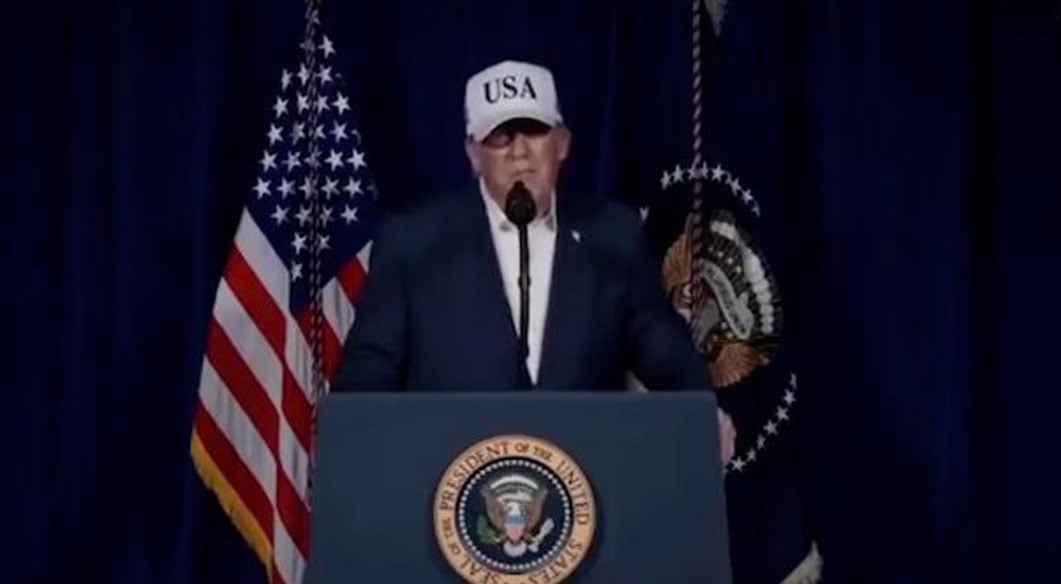
In a dramatic escalation of regional tensions, the United States and Israel reportedly initiated a series of targeted strikes across the Islamic Republic of Iran in the early hours of Saturday morning. Concurrently, President Donald Trump issued a direct and unprecedented appeal to the Iranian populace, urging them to seize control of their government once the military operations conclude. According to statements attributed to the President, he declared to the "great proud people of Iran" that "the hour of your freedom is at hand." He advised citizens to remain indoors and seek shelter, emphasizing the extreme danger outside due to widespread bombings. President Trump explicitly instructed the Iranian people to "take over your government" after the strikes, framing this moment as a potentially singular opportunity for generations to come, asserting it would be "yours to take." This coordinated action and direct call for regime change signal a significant shift in U.S. policy towards Tehran, aiming to empower a population long reported to be suppressed by its ruling authorities and usher in a new era for the nation.
The President's extraordinary address and the accompanying military actions come against a backdrop of nearly five decades of reported repression under the Islamic regime in Tehran. For 47 years, the Iranian people have allegedly endured severe restrictions and a lack of fundamental liberties, prompting calls for international assistance that, according to President Trump, went unanswered by previous American administrations. In his address, President Trump asserted that for "many years, you have asked for America’s help, but you never got it," claiming that "no president was willing to do what I am willing to do tonight." This sentiment underscores a perceived historical inaction that the current administration is now attempting to rectify through direct military intervention and a public endorsement of popular uprising. The significance of this moment is profound, representing a direct challenge to the established order in Iran and a bold gamble on the willingness and capability of the Iranian people to effect radical political transformation. It marks a pivotal point in the geopolitical landscape of the Middle East, potentially reshaping regional power dynamics.
Further elaborating on his message, President Trump underscored the gravity of the situation and the potential for a definitive change. He reiterated his warning for citizens to "stay sheltered" and not "leave your home" due to the perilous conditions, with "bombs will be dropping everywhere." He then presented the stark choice to the Iranian people, stating, "When we are finished, take over your government. It will be yours to take. This will probably be your only chance for generations." This direct challenge was met with immediate, visible reactions within Iran, according to reports. As the U.S. and Israeli strikes commenced, scenes of celebration reportedly erupted in the streets, with women publicly removing their hijabs – a powerful symbol of defiance against the regime's strict social codes. One young man was quoted expressing strong approval, exclaiming, "I love Trump!" The President further reinforced America's commitment, declaring, "Now you have a president who is giving you what you want, so let’s see how you respond. America is backing you with overwhelming strength and devastating force."
While the public display of jubilation suggests a widespread desire for change, the path to toppling the entrenched Islamic regime is fraught with significant challenges, according to commentary surrounding the events. Observers note that the regime's forces possess substantial military capabilities and weaponry, creating a stark imbalance with the general populace, who reportedly lack significant armaments. This disparity, some analysts suggest, highlights the consequences of stringent gun control measures on a population's ability to resist an oppressive government. Despite these formidable obstacles, there is a prevailing sentiment that "the writing is on the wall for the regime," indicating a belief that its long-term viability is now severely compromised. The success of President Trump's call to action hinges not only on the resolve of the Iranian people but also on the sustained pressure from the international community and the effectiveness of the ongoing military campaign. The broader implications for regional stability, potential humanitarian crises, and the future of democratic movements in the Middle East remain a subject of intense speculation and concern.
In summary, the coordinated U.S. and Israeli military strikes, coupled with President Trump's direct appeal for a popular uprising, have thrust Iran into a moment of profound uncertainty and potential transformation. The President has presented the Iranian people with what he describes as a generational opportunity to reclaim their sovereignty from a regime that has reportedly suppressed them for nearly five decades. While initial reports indicate public celebrations, the formidable power of the current government's forces presents a significant hurdle to any popular movement. The coming days and weeks will be critical in determining the immediate response of the Iranian populace, the reaction of the ruling regime, and the ultimate trajectory of this bold geopolitical maneuver. The world watches to see if this intervention will indeed usher in an era of freedom for Iran or lead to further instability in an already volatile region.