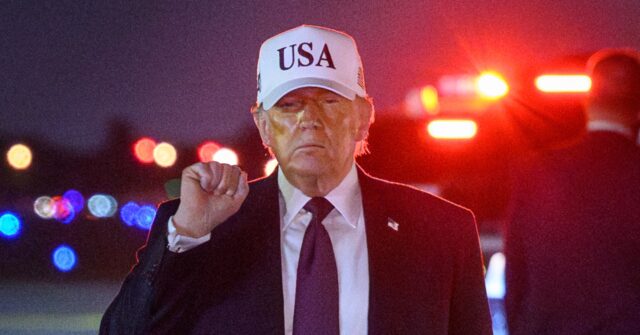
United States President Donald Trump announced on Sunday morning that a joint military initiative with Israel, dubbed 'Operation Epic Fury,' has successfully neutralized at least 48 high-ranking Iranian officials. Among those reportedly eliminated is Ali Khamenei, identified as the former Supreme Leader of Iran. Speaking with Fox News Senior White House Correspondent Jacqui Heinrich, President Trump indicated that the initial phase of the operation, which commenced on Saturday, had significantly reduced a specific list of priority targets. He characterized the progress as rapid and remarkably successful, stating that the swift removal of dozens of leaders in a single coordinated action was beyond expectation. This development marks a significant escalation in regional tensions, with both the U.S. and Israeli forces apparently targeting the core of Iran's leadership structure in a move that could reshape the geopolitical landscape of the Middle East. The President's remarks underscore a perceived long-standing antagonism, suggesting the current actions are a culmination of issues spanning nearly five decades.
The reported strikes come amidst a backdrop of protracted animosity and strategic competition between Iran and its regional adversaries, particularly Israel, and the United States. For decades, the Islamic Republic of Iran has been viewed by Washington and Tel Aviv as a primary destabilizing force in the Middle East, accused of supporting proxy groups, developing ballistic missile capabilities, and pursuing a nuclear program. This long-standing tension, which President Trump alluded to as having persisted for 47 years, has frequently manifested in covert operations, cyber warfare, and proxy conflicts across the region. The decision to launch 'Operation Epic Fury' appears to signal a dramatic shift towards more overt and direct military engagement against Iran's leadership. Such a comprehensive targeting of senior officials, if confirmed in its entirety, represents an unprecedented blow to Iran's command and control capabilities, potentially disrupting its strategic planning and operational effectiveness for years to come. The scale of the reported casualties suggests a highly coordinated and intelligence-driven operation aimed at decapitating key elements of Iran's political and military establishment.
Further details regarding the operation were provided by the Israel Defence Forces (IDF), which independently confirmed the elimination of at least 40 'key' Iranian military commanders. According to reports from the Times of Israel, the IDF specifically identified Abdolrahim Mousavi, the chief of staff of the Iranian Armed Forces, as one of the high-value targets neutralized. Officials stated that Mousavi was reportedly eliminated within moments of the strike on Ayatollah Khamenei’s compound, indicating a precise and synchronized assault. The Israeli military further asserted that the majority of Iran's highest-ranking senior military officials within its security leadership had been successfully targeted and removed. Other prominent figures confirmed dead include Major General Mohammad Pakpour, who previously led the Islamic Revolutionary Guard Corps (IRGC), former Defence Minister Aziz Nasirzadeh, and Ali Shamkhani, the former secretary of Iran's Supreme National Security Council. These specific identifications from both U.S. and Israeli sources highlight the extensive reach and apparent success of the coordinated military action against critical components of Iran's defense and security apparatus.
The reported elimination of such a significant number of senior Iranian leaders, including figures like former Supreme Leader Ali Khamenei and the chief of staff of the armed forces, carries profound implications for Iran's internal stability and its regional posture. Analysts suggest that the loss of experienced commanders and political strategists could create a substantial leadership vacuum, potentially leading to internal power struggles or a period of strategic disarray within the Islamic Republic. This could severely impact Iran's ability to project power through its proxies or respond effectively to future challenges. For the United States and Israel, this operation, if fully successful as claimed, could be seen as a decisive move to dismantle Iran's military and political infrastructure, potentially reducing perceived threats in the short to medium term. However, observers also caution that such a dramatic escalation could provoke an unpredictable and severe retaliatory response from Iran, possibly drawing the region into a broader and more devastating conflict. The long-term consequences for global energy markets and international diplomacy remain uncertain, as the balance of power in the Middle East undergoes a potentially radical shift.
In summary, President Trump's announcement of 48 senior Iranian officials, including former Supreme Leader Ali Khamenei, being eliminated in 'Operation Epic Fury' signifies a major escalation in the ongoing tensions between Iran, the U.S., and Israel. Both American and Israeli military sources have corroborated the extensive targeting of Iran's security and military leadership, detailing the deaths of key figures such as Abdolrahim Mousavi and Mohammad Pakpour. The scale of these reported losses suggests a deliberate strategy to cripple Iran's command structure. While the immediate impact is a significant blow to Iran's leadership, the long-term ramifications for regional stability and the potential for retaliatory actions remain a critical concern. The world will now be watching closely for Iran's response and how this dramatic development reshapes the geopolitical landscape of the Middle East in the coming days and weeks.