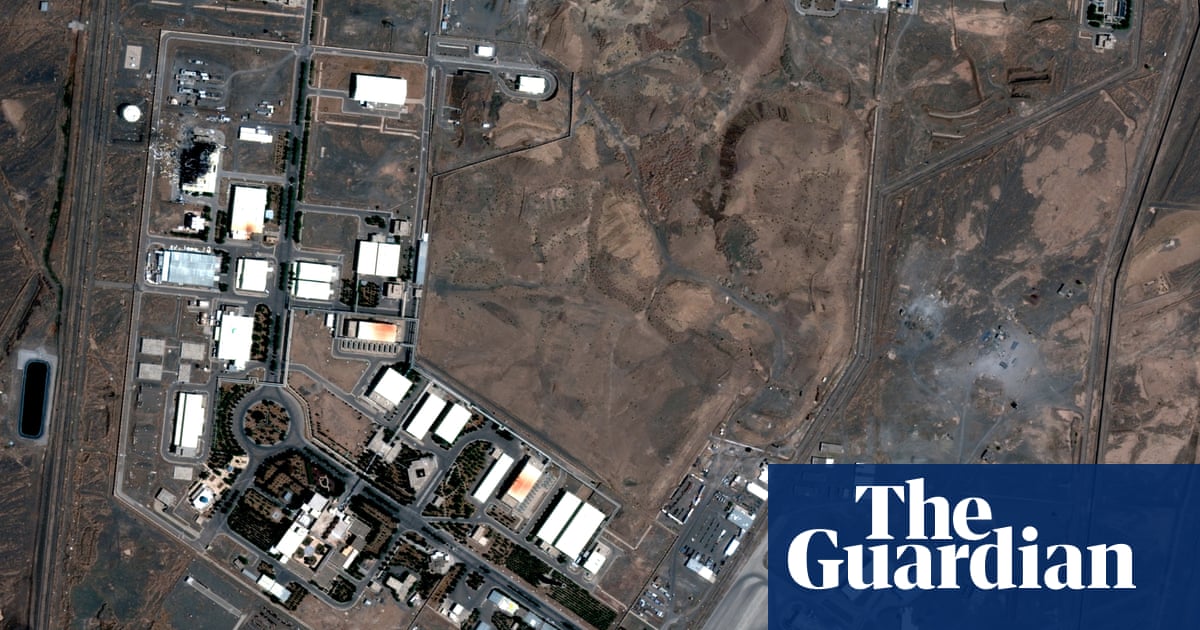
A concerted campaign by the United States and Israel, reportedly aimed at dismantling Iran's nuclear capabilities, carries the significant risk of an unintended outcome: potentially accelerating Tehran's pursuit of a clandestine nuclear weapon, according to warnings from proliferation specialists. This aggressive approach seeks to resolve a protracted 24-year dispute surrounding Iran's atomic ambitions. While Iranian authorities have consistently maintained that their nuclear endeavors are exclusively for peaceful civilian applications and that they harbor no intentions of constructing a weapon, international observers have regarded the program with profound skepticism. This distrust intensified following the discovery of two previously undisclosed facilities in 2002, which were identified as sites for uranium enrichment and the production of heavy water plutonium, respectively. The current strategy, intended to curtail Iran's nuclear progress, might paradoxically compel the regime to intensify its efforts in secrecy, thereby undermining the very objective it aims to achieve, experts suggest.
The historical backdrop to this escalating tension is crucial for understanding the current predicament. The international community's deep suspicion of Iran's nuclear program largely stems from the 2002 revelations of undeclared sites dedicated to uranium enrichment and heavy water plutonium production. These discoveries directly contradicted Iran's public assertions of a purely civilian program, fueling concerns about potential military applications. In an effort to curb these developments, a landmark nuclear agreement was forged in 2015, imposing stringent limitations and comprehensive inspection protocols on Iran's nuclear activities. This accord was widely seen as a significant diplomatic achievement, designed to prevent Iran from developing nuclear weapons while allowing for peaceful nuclear energy use. However, the agreement's stability was severely undermined when the United States withdrew from it in 2018, a decision that ultimately led to its collapse. Following this withdrawal, reports indicate that Iran significantly escalated its work on uranium enrichment and other critical aspects of its nuclear program, reigniting international anxieties.
Compounding the international community's apprehension, Iran had, by the summer of the previous year, amassed a substantial quantity of highly enriched uranium (HEU). Reports indicate this stockpile exceeded 440 kilograms, enriched to a purity level of 60%. This particular enrichment level is a critical threshold, as experts note that transitioning from 60% purity to 90% – the recognized standard for weapons-grade uranium suitable for a compact warhead – represents a comparatively minor technical hurdle. Furthermore, analyses suggest that if this 440-kilogram reserve were to undergo further enrichment and subsequent conversion from its gaseous state to metallic form, it would possess sufficient material to construct more than ten nuclear warheads. This alarming accumulation of enriched uranium, which occurred in the period following the effective dissolution of the 2015 nuclear agreement, served as the primary catalyst for the US-Israeli military actions against Iran, which reportedly took place last June, aiming to address the immediate threat posed by this stockpile.
Proliferation experts have voiced significant concerns that the current US-Israeli military pressure, described as an 'onslaught' by some, could inadvertently produce the opposite of its intended effect. While the stated goal of these actions is to resolve the long-standing standoff over Tehran's nuclear program and prevent it from acquiring a nuclear weapon, analysts warn that such aggressive tactics might instead compel the Iranian regime to pursue a covert nuclear weapons program. This 'backfiring' scenario suggests that rather than dismantling Iran's nuclear ambitions, the intensified pressure could drive them underground, making monitoring and control far more challenging for the international community. Such a development would not only escalate regional tensions but also create a more unpredictable and dangerous situation, potentially pushing Iran to develop a secret bomb out of perceived necessity for deterrence, thereby undermining global non-proliferation efforts and increasing the risk of wider conflict.
In conclusion, the ongoing US-Israeli campaign against Iran's nuclear program, while intended to resolve a decades-long dispute, faces a critical strategic dilemma. Experts caution that these actions, rather than achieving their stated goal of disarmament, risk inadvertently pushing the Iranian regime towards developing a secret nuclear weapon, a move that would significantly destabilize the region and global security. The accumulation of highly enriched uranium by Iran, particularly after the collapse of the 2015 nuclear deal, underscores the urgency of the situation. As the international community grapples with this complex challenge, the potential for unintended consequences remains a paramount concern, demanding careful consideration of all diplomatic and strategic pathways to prevent proliferation while avoiding an escalation that could lead to a more dangerous and less transparent nuclear landscape in the Middle East.