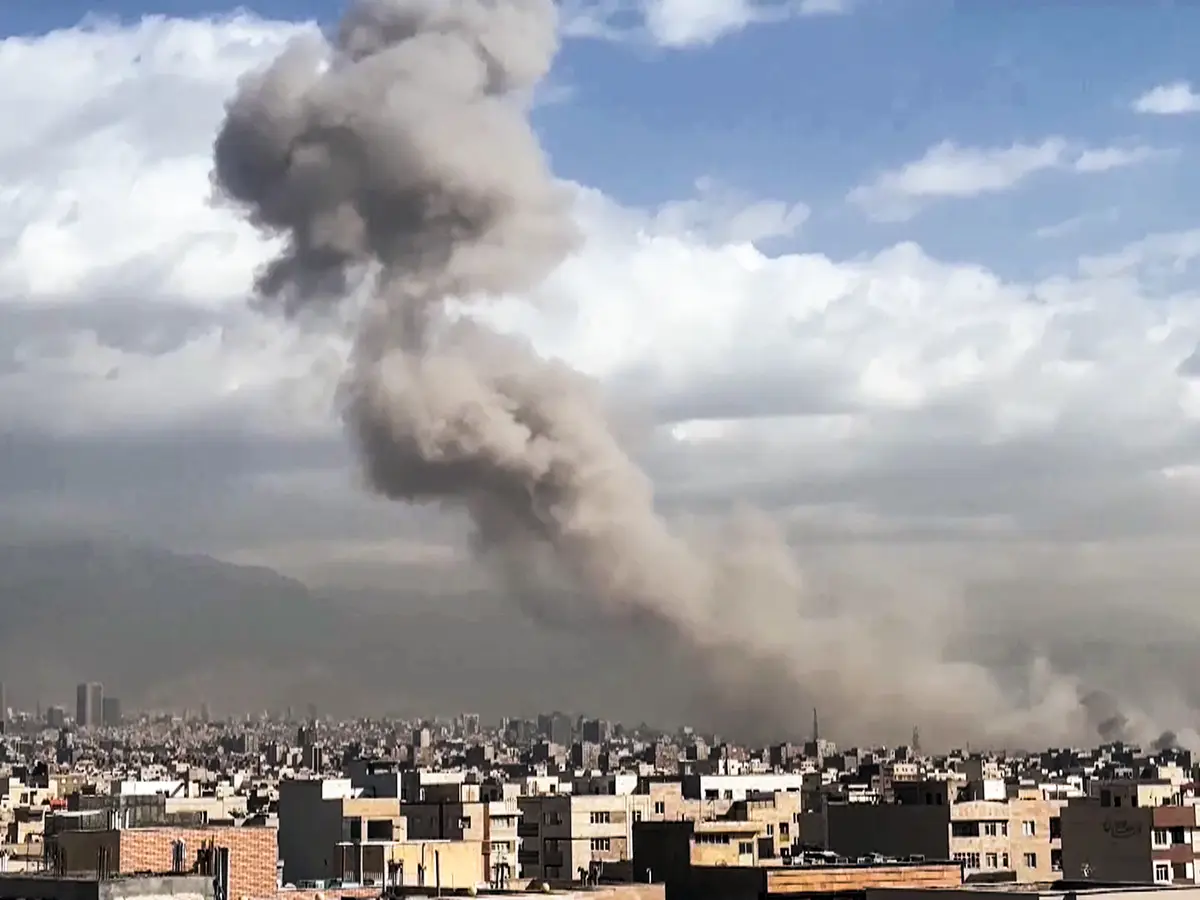
Recent developments suggest Iran is on an accelerated path toward acquiring nuclear weapons capability, a drive intensified by significant military setbacks. According to a confidential assessment released by the International Atomic Energy Agency (IAEA) in February 2026, Tehran had amassed an estimated 440.9 kilograms of uranium enriched to 60% purity before a recent series of joint military operations conducted by the United States and Israel. These strikes reportedly inflicted severe damage on Iran's conventional military assets, including its sophisticated ballistic missile systems and integrated air defense networks. This degradation of its traditional defensive capabilities has fundamentally altered Iran's strategic calculus, prompting its leadership to prioritize the rapid development of a nuclear deterrent. Sources indicate that this shift is seen as an essential measure for the regime's long-term survival and to avert potential future preemptive military interventions, pushing Iran dangerously close to crossing the nuclear threshold. The existing uranium stockpile, if further enriched, represents a significant leap towards developing a functional nuclear arsenal, raising profound concerns across the international community regarding regional stability and global non-proliferation efforts.
The 60% uranium enrichment level cited in the IAEA report is particularly alarming to international observers, as it represents a significant technical hurdle already overcome, placing Iran within a short distance of weapons-grade material. Experts explain that while 90% purity is typically required for a functional nuclear weapon, the gap between 60% and 90% is considerably smaller and less complex to bridge than the initial steps from natural uranium to lower enrichment levels. The sheer volume of this material, approximately 440.9 kilograms, is also a critical factor. Based on IAEA metrics, this quantity, once further processed, could theoretically yield enough fissile material for nearly ten nuclear devices. Iran's nuclear ambitions have been a source of international tension for decades, leading to numerous sanctions and diplomatic efforts aimed at curbing its program. The Joint Comprehensive Plan of Action (JCPOA), a landmark agreement, sought to limit Iran's enrichment activities in exchange for sanctions relief, but its future has been uncertain following various withdrawals and re-evaluations. The current situation, with Iran possessing such a substantial amount of highly enriched uranium, underscores the persistent challenges in preventing proliferation and highlights the critical juncture the international community now faces.
The recent coordinated military actions by the United States and Israel have had a profound and immediate impact on Iran's conventional defense posture. Reports confirm that these strikes specifically targeted and severely compromised key components of Iran's military infrastructure, including critical ballistic missile launch sites, manufacturing facilities, and its integrated air defense systems. The degradation of these capabilities means that Tehran's ability to project conventional power or defend against aerial assaults has been significantly diminished. However, a crucial detail emerging from the aftermath of these operations is the apparent survival of Iran's vital nuclear material stockpiles. Despite the extensive bombardment, sources indicate that the core inventory of enriched uranium, including the 440.9 kilograms at 60% purity, remained intact. This survival, coupled with the weakening of its conventional forces, has, according to officials, fundamentally reshaped Iran's strategic priorities. The leadership in Tehran now perceives an urgent and unprecedented need to accelerate its nuclear program, viewing a definitive nuclear deterrent as the ultimate guarantee for the regime's continued existence and a safeguard against further external military pressure or invasion. This perceived necessity overrides previous considerations, pushing the nation closer to a nuclear weapons capability.
Analysts widely interpret Iran's intensified pursuit of nuclear weapons as a direct consequence of its perceived vulnerability following the recent military strikes. With its conventional military capabilities severely degraded, Tehran's leadership, according to expert perspectives, likely views a nuclear deterrent as the most potent and perhaps only reliable means to ensure its long-term security and prevent future attacks. This strategic pivot carries significant implications for regional stability, potentially triggering a dangerous arms race in the Middle East as other nations might feel compelled to develop their own nuclear capabilities in response. International non-proliferation efforts, already under strain, face an immense challenge. The prospect of Iran crossing the nuclear threshold could destabilize the global security framework, making it harder to enforce existing treaties and prevent other states from seeking similar paths. Furthermore, the situation presents a complex diplomatic dilemma for world powers, who must weigh the risks of further military action against the dangers of a nuclear-armed Iran. The coming months will be critical in observing how Tehran proceeds and how the international community responds to this rapidly evolving and highly sensitive geopolitical landscape.
In summary, the confluence of Iran's existing, substantial stockpile of highly enriched uranium and the recent degradation of its conventional military forces has created an urgent imperative for Tehran to achieve nuclear weapons capability. A confidential IAEA report from February 2026 highlighted Iran's possession of 440.9 kilograms of 60% enriched uranium, a quantity sufficient for multiple nuclear devices if further processed. The US-Israeli strikes, while damaging conventional assets, appear to have left critical nuclear material intact, thereby strengthening the regime's resolve to develop a definitive nuclear deterrent for its survival. The international community now faces a critical period, with the immediate challenge being to monitor Iran's accelerated enrichment activities and to formulate a cohesive strategy to de-escalate tensions and prevent further proliferation. The coming weeks and months will be crucial in determining whether diplomatic channels can be reopened or if the region will be plunged into an even more precarious security environment, with the specter of a nuclear-armed Iran looming large.