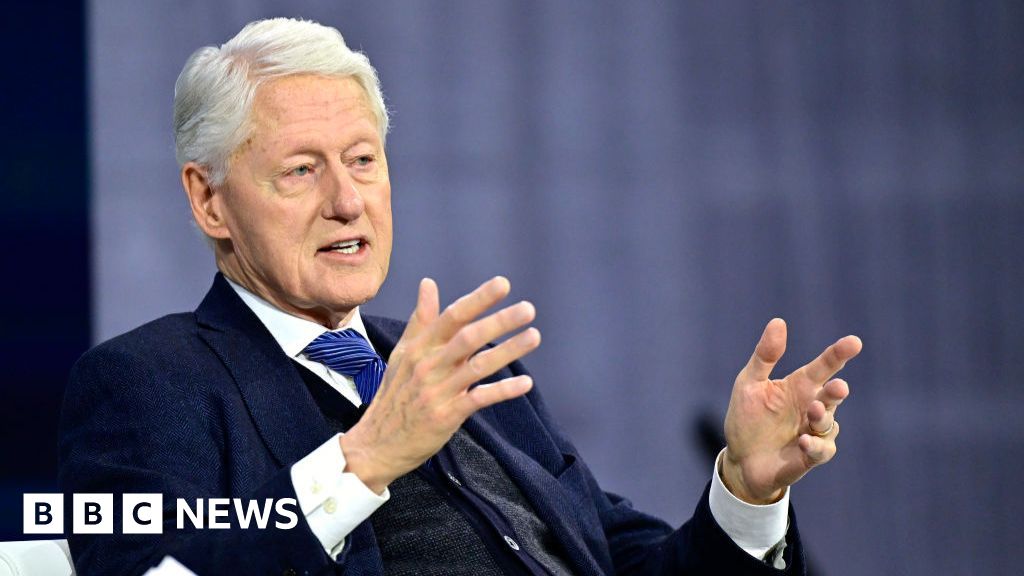
Former President Bill Clinton recently provided testimony to a congressional committee in New York, asserting his complete lack of awareness regarding the criminal activities of the late financier and convicted sex offender, Jeffrey Epstein. During an extensive, closed-door hearing, the former commander-in-chief maintained that he observed no illicit conduct and was not involved in any wrongdoing related to Epstein. A significant portion of the inquiry, according to reports, focused on Clinton's appearance in newly disclosed documents pertaining to Epstein, including a photograph depicting him in a hot tub with an unidentified individual. Clinton explicitly stated to lawmakers that he did not recognize the person in the image. This testimony followed closely on the heels of his wife, former U.S. Secretary of State Hillary Clinton, who also appeared before the same committee and similarly denied any prior knowledge of Epstein's extensive criminal enterprise, emphasizing her ignorance of his actions.
The context for these high-profile testimonies stems from the ongoing public and legal scrutiny surrounding Jeffrey Epstein's network and the release of numerous files detailing his associations. It is crucial to note, as officials have indicated, that the mere presence of an individual's name or image within these documents does not automatically imply their involvement in or knowledge of Epstein's crimes. To date, neither Bill nor Hillary Clinton has faced accusations of misconduct from any of Epstein's survivors who have come forward. According to statements released by the former president, he adamantly asserted that had he possessed even the slightest suspicion of Epstein's illicit activities, he would have immediately severed all ties, refrained from using his private aircraft, and personally reported him to law enforcement authorities. Both Clintons initially resisted subpoenas from the congressional panel, dismissing them as politically motivated attempts, but ultimately agreed to testify as the prospect of contempt-of-Congress proceedings loomed against them, underscoring the gravity of the committee's demands.
During his appearance before the House Oversight Committee, a key point of interrogation for former President Clinton revolved around a specific photograph that has garnered significant public attention. The image reportedly shows him relaxing in a hot tub alongside a person whose face was obscured, presumably to protect their identity, though they appeared to be a woman. When pressed on the matter, Clinton unequivocally informed the lawmakers that he had no recollection of the individual in the photograph. Prior to his testimony, an opening statement was made public, outlining his defense. Following the all-day session in New York, he further reinforced his position through a video message, largely reiterating the points made in his initial statement. In this video, Clinton emphasized his complete ignorance of Epstein's criminal behavior, asserting this truth 'regardless of how many photos they show of me,' thereby seeking to dismiss any implications drawn from the visual evidence.
The testimonies of Bill and Hillary Clinton mark a significant development in the protracted legal and public saga surrounding Jeffrey Epstein, highlighting the continued efforts by congressional bodies to unravel the full scope of his illicit network. Former President Clinton's public call for greater transparency, urging others with knowledge to come forward and for the Justice Department to release all relevant files, underscores the immense pressure on authorities to provide comprehensive answers. His stated hope that 'this never happens again' for the sake of the survivors reflects a broader societal demand for accountability and justice. While their appearances before the committee address the immediate congressional inquiries, the broader implications suggest that public scrutiny of high-profile individuals associated with Epstein will persist. The distinction between being named in files and facing direct accusations of misconduct remains a critical aspect of the ongoing narrative, yet the public's desire for clarity on these associations continues to drive the investigation forward.
In summary, former President Bill Clinton's recent testimony before a congressional panel firmly reiterated his stance of complete ignorance regarding Jeffrey Epstein's extensive criminal activities. Despite being questioned about his presence in newly released files, including a notable hot tub photograph, Clinton maintained his innocence and denied any knowledge of wrongdoing or the identity of the individual in the image. His testimony, alongside that of his wife, Hillary Clinton, who offered similar denials, came after initial resistance to subpoenas, underscoring the intense political and legal pressures surrounding the Epstein scandal. Moving forward, observers will be closely watching for any further releases of documents by the Justice Department, additional testimonies, and the broader impact of these high-profile appearances on the ongoing pursuit of justice for Epstein's many victims, as the call for full transparency continues to resonate.